

Black Children Under the Gaze
What does it mean to be a child? Does it mean having the ability to experience freedom without worry? Have fun, play with other children, and grow without eyes watching you 24/7? For Black children, this is rarely what they experience. From an early age, they are looked at, judged, and often misread, seen as older, less innocent, and less in need of protection than their peers. Today, you can see this again and again within the media, and it dates back to slavery. So, who is watching Black children, and what are they looking for? This curation of pieces uses Adultification Bias Theory to look at how race, class, and gender take away the safety of being a child. By mixing this with ideas about "the gaze", the exhibition explores how Black children are exploited, labeled, or forced to grow up too fast, rather than enjoy an innocent childhood. This is a form of dehumanization, which strips Black children of their innocence before they are even given the chance to experience it. Alongside this theory, the exhibition relates to Bell Hooks' quote, 'There is power in looking.' Historically, that power has belonged to the white gaze, a gaze that has controlled, labeled, and exploited Black children. If there is power in looking, then who has held that power over Black children, and what have they used it for? Together, these ideas show that every image of a Black child can become intersectional. It is shaped by more than one kind of gaze, but by multiple simultaneously. There is historical, social, and personal context that all contribute to this current issue. The exhibition is curated in chronological order. It opens with Kara Walker's A Subtlety, which looks back to slavery, showing how Black children were historically seen as labor and product rather than as individuals deserving protection. Following Walker's piece is Carrie Mae Weems' Untitled (Colored People Grid), which shows how these racist scripts became systemized, sorting and labeling Black children by color before they had any say in how they were seen. Next, Kerry James Marshall's School of Beauty, School of Culture. This piece moves into a beauty salon, a space where children absorb beauty standards simply by being there, shaping how they see themselves and how others see them. Then we look at Njideka Akunyili Crosby's "The Beautiful Ones" Series #9, which adds to the conversation on a global scale, showing a child stepping into an adult caretaking role, an example of adultification bias shaped by socioeconomic status rather than by choice. The exhibition closes with LaToya Ruby Frazier's Grandma Ruby and Me, which explores how environment, poverty, and generational hardship shape a child's life before they're even born, shaping how the adult gaze is passed down and perceived across generations.
Artworks
- School of Beauty, School of Culture (2012) — Kerry James Marshall's "School of Beauty, School of Culture" uses scale, color, and pattern to celebrate Black beauty culture. The bright, busy salon scene fills the canvas with life and pride, but the distorted figure on the floor sets a confusing/unsettling presence within that celebration. This contrast between lively presence and hidden distortion makes the viewer question what's really going on beneath the surface of an everyday space. Marshall's painting is both a symbol of Black culture and a quiet warning about how outside ideas can sneak into such spaces. That warning can be seen in the children scattered throughout this setting. This piece shows how beauty standards surround Black children even in a space made for them. The kids in the painting are playing, but the environment is full of messages about how they should look. It shows how the "adult gaze" isn't always a person staring; sometimes it's built into the environment itself, especially around girls and their appearance.
- The Beautyful Ones (2018) — Akunyili Crosby's "The Beautyful Ones Series #9" uses collage, pattern, and contrast to show how personal history and present life go hand in hand. The mix of a detailed collage covering the shelves and the children's clothing represents memory, family, and Nigerian culture, while the flat, solid colors of the furniture represent a modern American setting. By combining both styles, Akunyili Crosby shows that identity isn't about choosing one culture over another, but about living with both at once. The children's gaze towards the viewer represents pride and connection to where they come from. But there's more going on with these children than just identity. This piece also represents the idea of adultification bias. This is presented by the child who is holding and caring for a younger child, stepping into an adult responsibility. At the same time, the child looking back at the viewer shows they know they're being watched. The idea of Adultification bias is not singular to the U.S but is shaped by economic and familial necessity worldwide. When resources are limited, older children are often required to become caretakers, giving up their own protected childhood for the family's functioning/success.
- Untitled (Colored People Grid) (2009) — Carrie Mae Weems's "Untitled (Colored People Grid)" uses color, repetition, and a grid to connect to and challenge abstract art. Since the 1980s, Weems has explored Black identity and race through photography, often altering historical images and ideas to bring perspectives that were left out. In this specific piece, the solid color panels give it a minimalist look, but the addition of portraits of children, colored the same way, adds real faces and the topic of race into that style. By reclaiming the old term "colored people" through color, Weems turns a racist label into something that can mean pride and diversity. The work shows how identity comes from both shared history and personal experience. This work fits because it shows Black children being sorted and labeled by color, almost like a filing system. It connects to the "bias" and "innocence" parts of the theme, since these kids are being judged and categorized before anyone sees them as just children. It shifts the story from slavery to a more modern, systemic perspective.
- Grandma Ruby and Me (2005) — Frazier's "Grandma Ruby and Me" uses a black-and-white tone to connect personal family history to the story of Braddock's economic decline. By capturing herself and her grandmother together in a personal moment at home. Frazier makes the viewer feel like they're witnessing a private moment/bond. The choice of black and white ties the image to older documentary traditions, suggesting that her family's experience is part of a long pattern of struggle in working-class American communities, specifically Black communities. This personal approach turns a family photo into evidence of how industrial decline and health inequities affect real people and how struggles get passed down through generations. The child in this photo isn't just affected by people looking at them, but by the conditions they were born into, for example, things like poverty and environment. Two major factors that were shaped long before they existed. Showing the cycle hasn't been broken.
- A Subtlety (2014) — Kara Walker's "A Subtlety" uses scale, contrast, and material to make viewers face the lasting impacts of slavery that have passed on to modern times. This massive white sugar sculpture, shaped as a sphinx with "Mammy" caricature features, is accompanied by sugar-coated sculptures of Black children, “sugar babies.” These children are depicted as molasses workers, who were enslaved children. During this era in history, Black children were not seen as innocent children, but rather were seen as objects for labor. Therefore, not something worth protecting. Kara’s choices make this piece powerful and dehumanizing. Walker's choice of sugar as the medium directly links the sculpture to that history, making the work a confrontation with how slavery's impact continues in America. By presenting these children's bodies as sugar, Walker shows that the 'adult gaze' directed at Black children has roots that run deeper than modern-day bias. This bias against Black children continues to come from a system that saw them as labor and product rather than as children deserving protection. The absence of Black childhood innocence is not a new idea, but one with long historical roots.
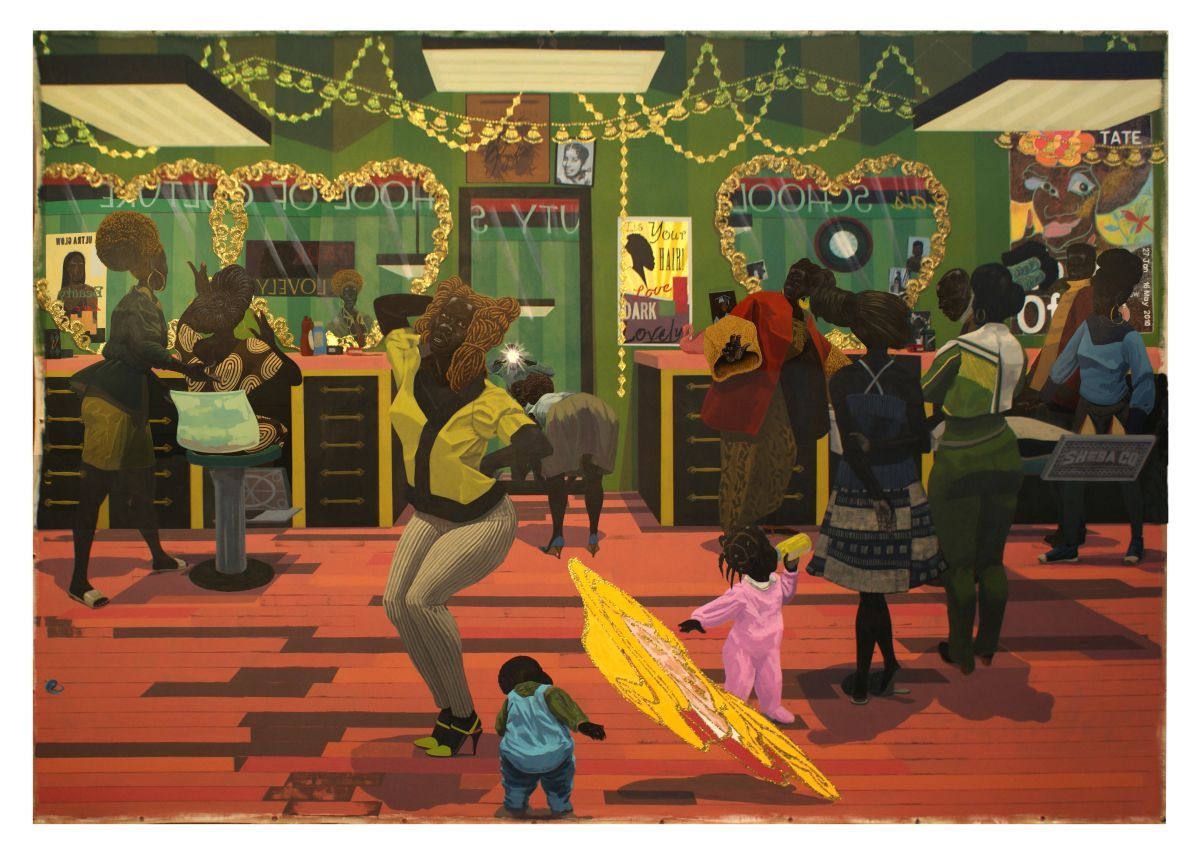
School of Beauty, School of Culture
2012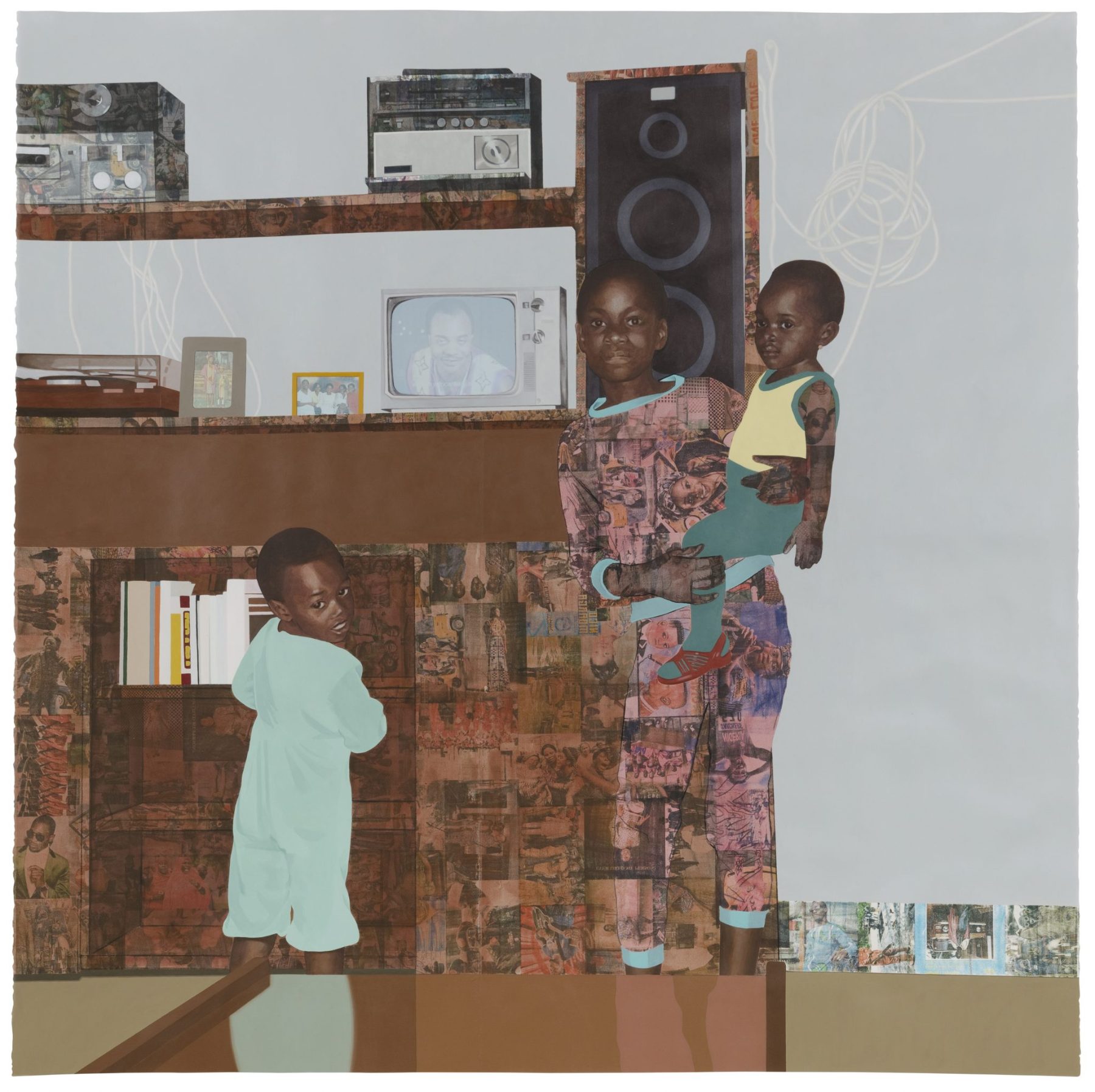
The Beautyful Ones
2018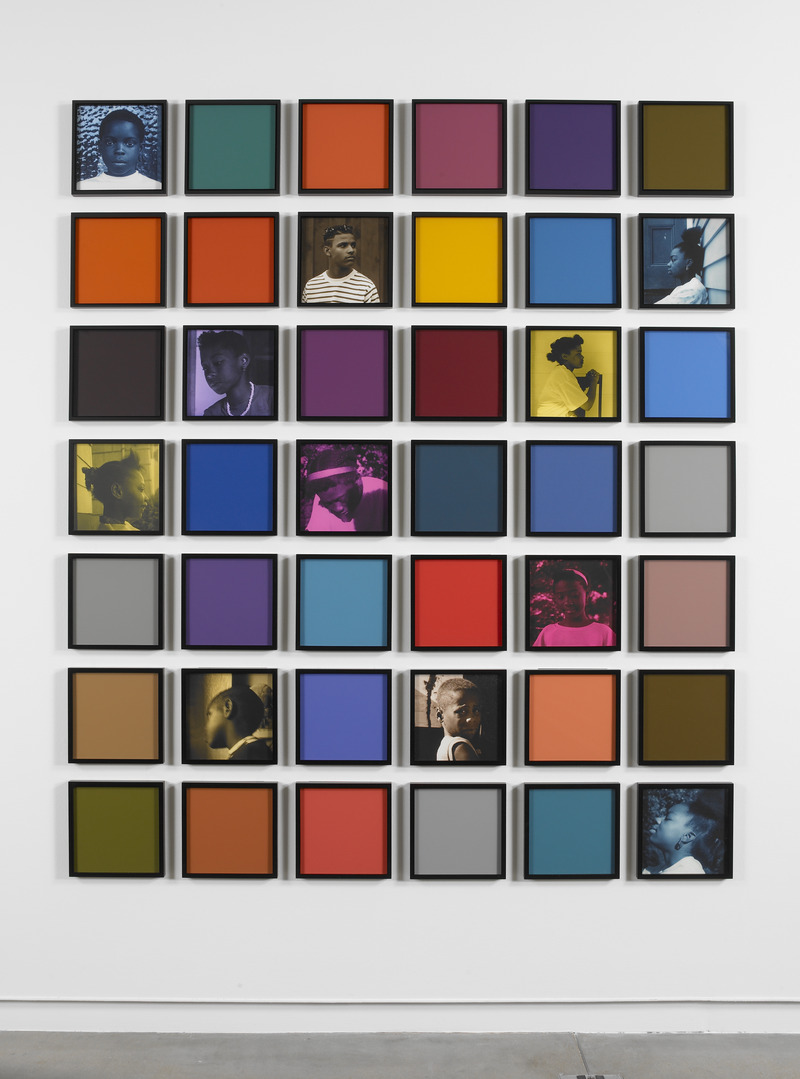
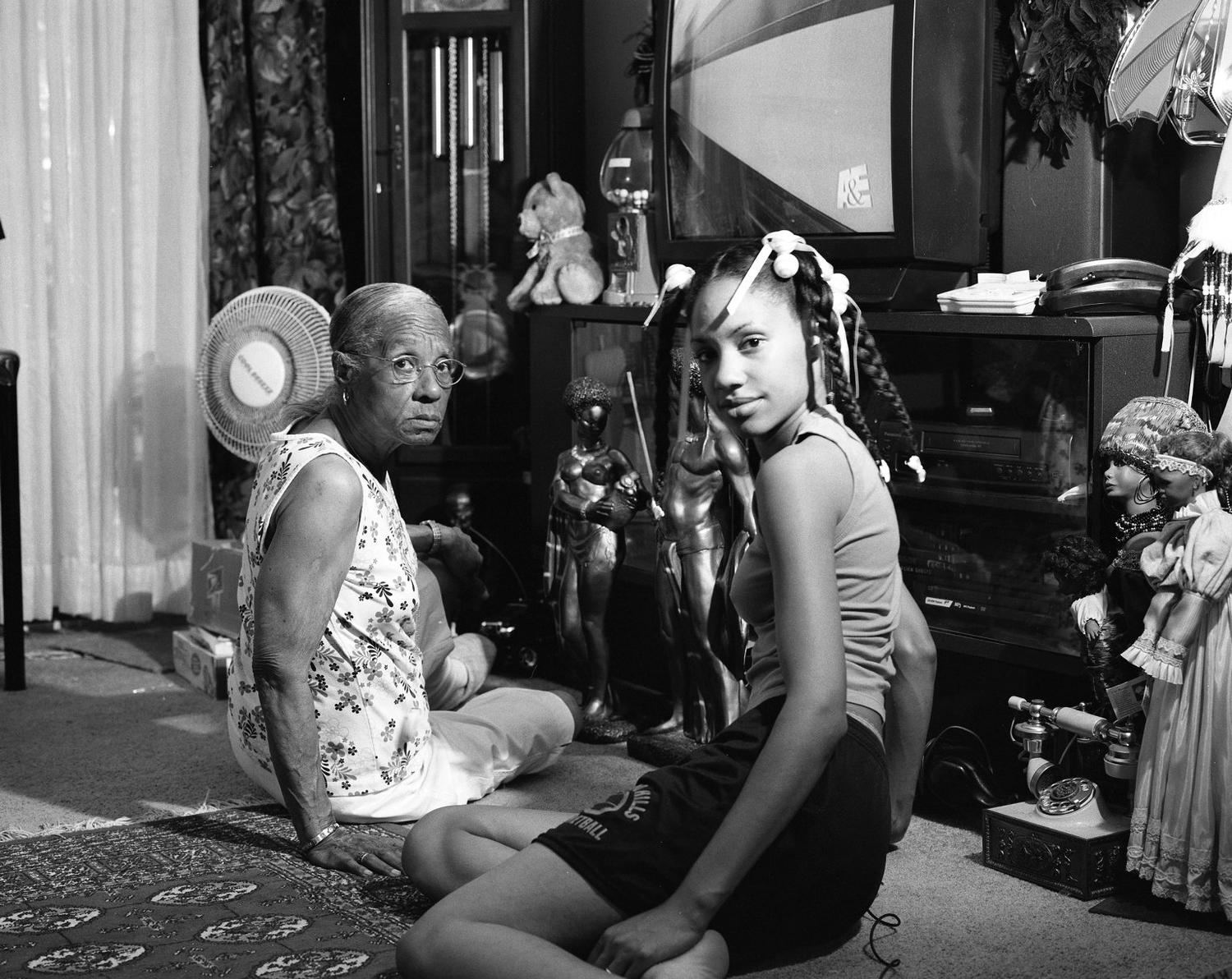
Grandma Ruby and Me
2005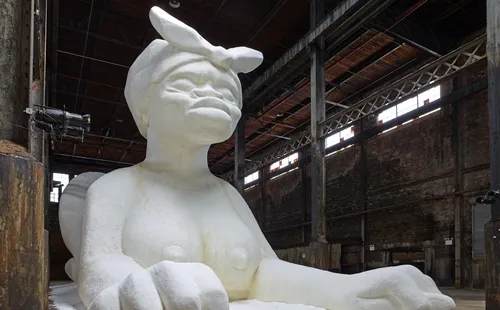
A Subtlety
2014Immersive Experience
Walk through this gallery in 3D
Step inside a virtual gallery space. Walk up to each artwork. See them as they were meant to be seen.
React to this gallery
Guestbook
Sign in to leave a comment.
Loading…