

Bodies of Memory: Identity Through Presence, Ritual, and Trace
Identity is usually conveyed via its external manifestations, namely physical appearance or portrait photography. However, it also manifests in other ways, through memory, experience, ritual, and the physical traces that a person's presence leaves behind. Bodies of Memory: Identity Through Presence, Ritual, and Trace seeks to explore various manifestations of identity that extend beyond the person's physical body. Via performance, installation, photography, and multimedia works of art, the participating artists reject the common assumption that identity cannot exist outside direct representation in any form. The exhibition is influenced by performance studies scholar Amelia Jones, who posits that “the locus of identity is always elsewhere.” According to Jones, the locus of identity does not lie within one static object or even one visual representation; instead, it is constructed through relationships, experiences, memory, and interpretation. This concept guides the exhibition as each work of art presented at Bodies of Memory conveys identity beyond the mere physical aspect of its manifestation, through bodily performance, memory, presence, participation, and legacy. The first artwork is Marina Abramovic’s performance entitled Rhythm 10 from 1973. Using her own body as a medium of art, she shows how identity can be formed through the process of repeating and taking risks and endurance, rather than being represented visually. This piece introduces the main theme of the exhibition, i.e., the possibility of using actions to express identity. Moving from individual identities, represented by one’s body, to ethnic and cultural aspects, the viewer sees the artwork entitled Artifact Piece created by James Luna and dated back to 1987. He uses his own body as the subject of art and, at the same time, shows how culture may limit our perception of people and make us see them as representatives of certain cultures, rather than human beings. It shows how we construct identities based on representations offered by institutions. The last group of works represents absence as an element of expression, namely, Ana Mendieta’s Silueta Series created in 1973-1980. She does not present herself, but leaves impressions of her body in the natural environment. Thus, although her body is not seen anymore, it still leaves marks, which create its memory. Gonzalez-Torres’s Untitled (Portrait of Ross in L.A.) (1991) goes even further, pushing back on corporeality. Through an installation made out of pieces of candy that people are encouraged to take with them, the work makes the notion of identity a matter of ritual, trace, participation, and remembering. The body of Ross, the subject of this piece, is absent but ever-changing, disappearing and regaining its presence. Finally, the exhibition comes full circle through the work of Kara Walker with her monument made of sugar A Subtlety (2014). In a way that speaks about racial relations, exploitation, colonial past, and power dynamics, the piece explores the idea of identity as a broader phenomenon beyond one’s own individuality. Although it refers to the body of an African-American woman as the core of the project, the artist’s message relates to the historical context in which identity is formed. Thus, the works under consideration allow for following a progression that moves from corporeal identity to its disappearance and further development. Identity can be understood in terms of ritual, trace, participation, memory, and history, thus proving the idea that the most powerful manifestations of identity are those hidden from plain sight.
Artworks
- Silueta Series (1980) — The work of Ana Mendieta is that of bodily impressions existing in an area between presence and absence. The figures are made using earth, flowers, grass, and fire and thus become part of the landscape through which a body once existed but has since disappeared.The use of curved lines and natural textures adds movement and variation while at the same time highlighting the silhouette of the body. The repetition in multiple environments causes the body to exist not as an object but as an impression. Identity becomes an issue in many of the works of Ana Mendieta because of the influence of her experiences with displacement and exile. Like the rest of the pieces in this exhibit, the idea of identity here is not presented as a portrait of the person.Instead, it is represented by impressions and traces left behind.
- The Marvelous Sugar Baby, A Subtlety (2014) — Kara Walker uses sugar to make a large sculpture that deals with the issue of race, labor, and identity. First of all, the size of the reclining figure takes the central place within the industrial space by dominating physically and visually. The bright color of the sugar contrasts dramatically with the darker architecture. The curvilinear design and extreme proportions create tension and highlight certain features and parts of the sculpture while causing attraction and discomfort. Finally, using sugar as material is very significant since the material has symbolic meaning related to labor processes and exploitation in colonial societies. By using both elements of beauty and discomfort, the artist encourages the audience to reflect on the issues of identity formation. Contrary to other artworks in the gallery that emphasize the bodily experiences of an individual, A Subtlety broadens the understanding of identity to include the role of historical contexts.
- Artifact Piece (1987) — As part of his installation piece, Luna has created a sculpture of himself that raises issues surrounding identity and representation. Displayed horizontally inside a glass case with labels and personal objects around him, Luna's work initially takes on characteristics of an anthropological exhibit. While the layout of the piece seems familiar to us, there is something about the presence of a living being that makes us uneasy. This is because Luna's work involves physical distance between himself as the artist and the viewers. Luna's work employs the conventions of museums to question the treatment of Indigenous people in anthropology museums. This is where identity becomes something that is constructed by means of systems of representation. Just like Abramović, Luna has turned the idea of physicality into the medium of his piece, but he does not focus on the issue of endurance. Instead, he focuses on the idea of cultural identity.
- Rythm 10 (1973) — Through her performance Marina Abramovic takes a simple knife game and turns it into an intense exploration of memory and identity through physicality. The process is one of repeated actions, sound recording, and the danger of the body to shift focus away from the visual towards experience. The art requires time and presence and is not dependent on the physical ownership of an object. In this performance, there is a sense of danger created by the awareness that something bad will inevitably happen, whether a mistake or an injury. By repeating actions after hearing sound recording, Abramovic indicates that repetition and memory lead to identity, not representation. This artwork is a part of the exhibition that serves as an introduction in the sense that identity is expressed not in terms of portraiture but action.
- (1991) — By using everyday objects, Felix Gonzalez-Torres makes the ordinary into an emotional expression of self and memorializing. The bright candy may be perceived as playful at first; however, with the inclusion of the audience, the artwork conveys messages of sickness and loss. The installation captures both the process of deteriorating due to AIDS and the act of remembering. Contrary to other forms of portraiture, Ross is not memorialized with his picture or any resemblance; he is memorialized by an interactive art piece.Ross's identity is formed with the involvement of others who alter the artwork. In the context of this exhibition, Untitled (Portrait of Ross in L.A.), like many others in the exhibit, is an example of the trend moving away from a portrait of the body. Like Mendieta and Abramović's works, this piece expresses identity through absences and traces of presence.
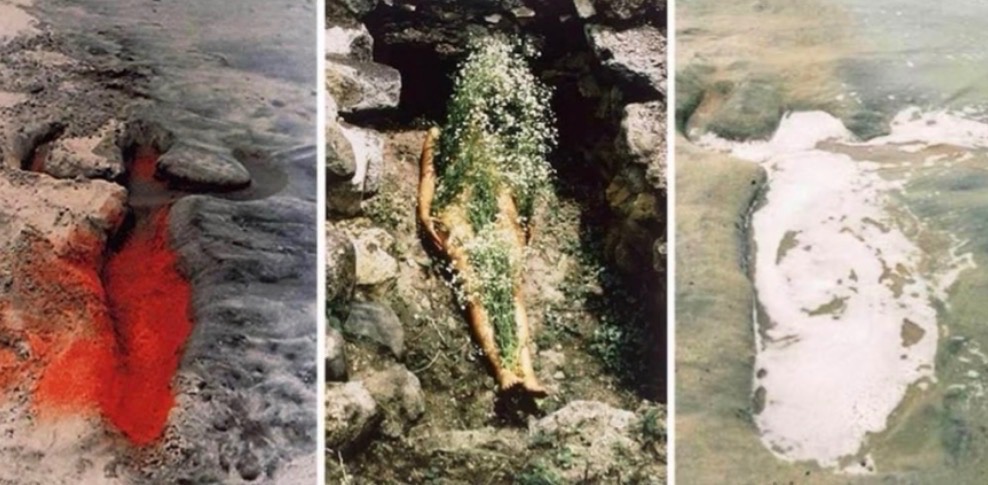
Silueta Series
1980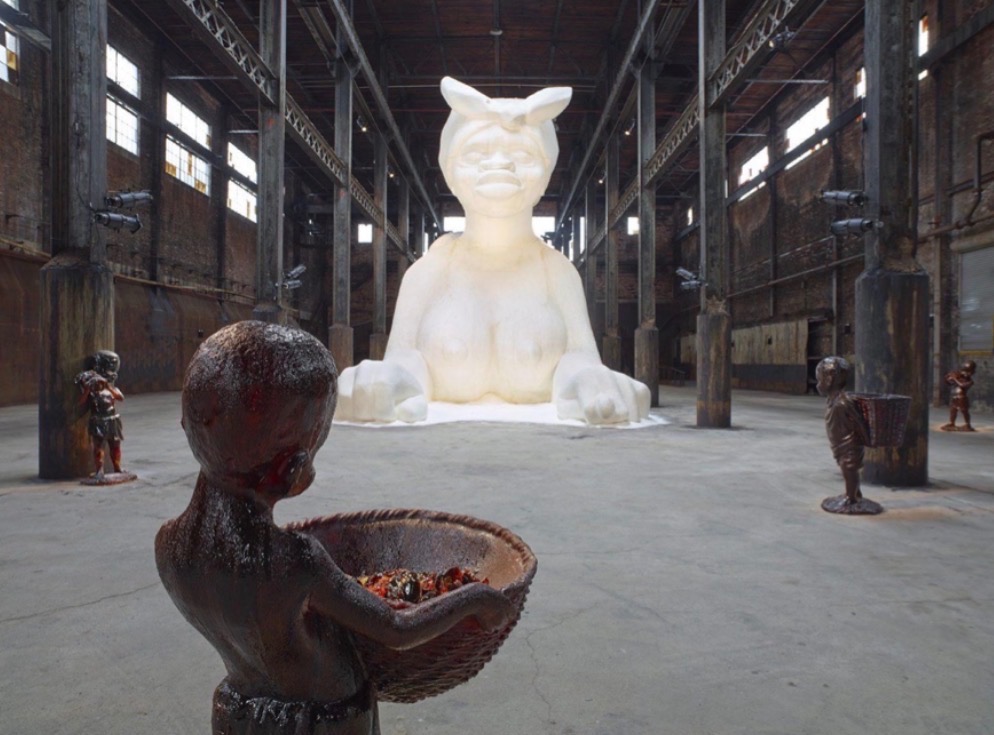
The Marvelous Sugar Baby, A Subtlety
2014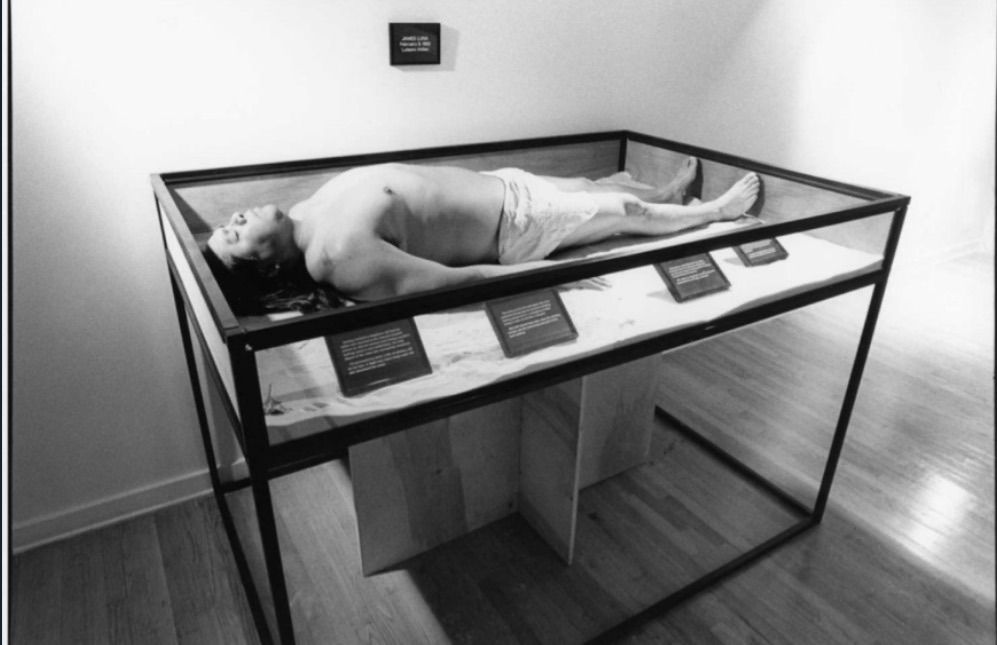
Artifact Piece
1987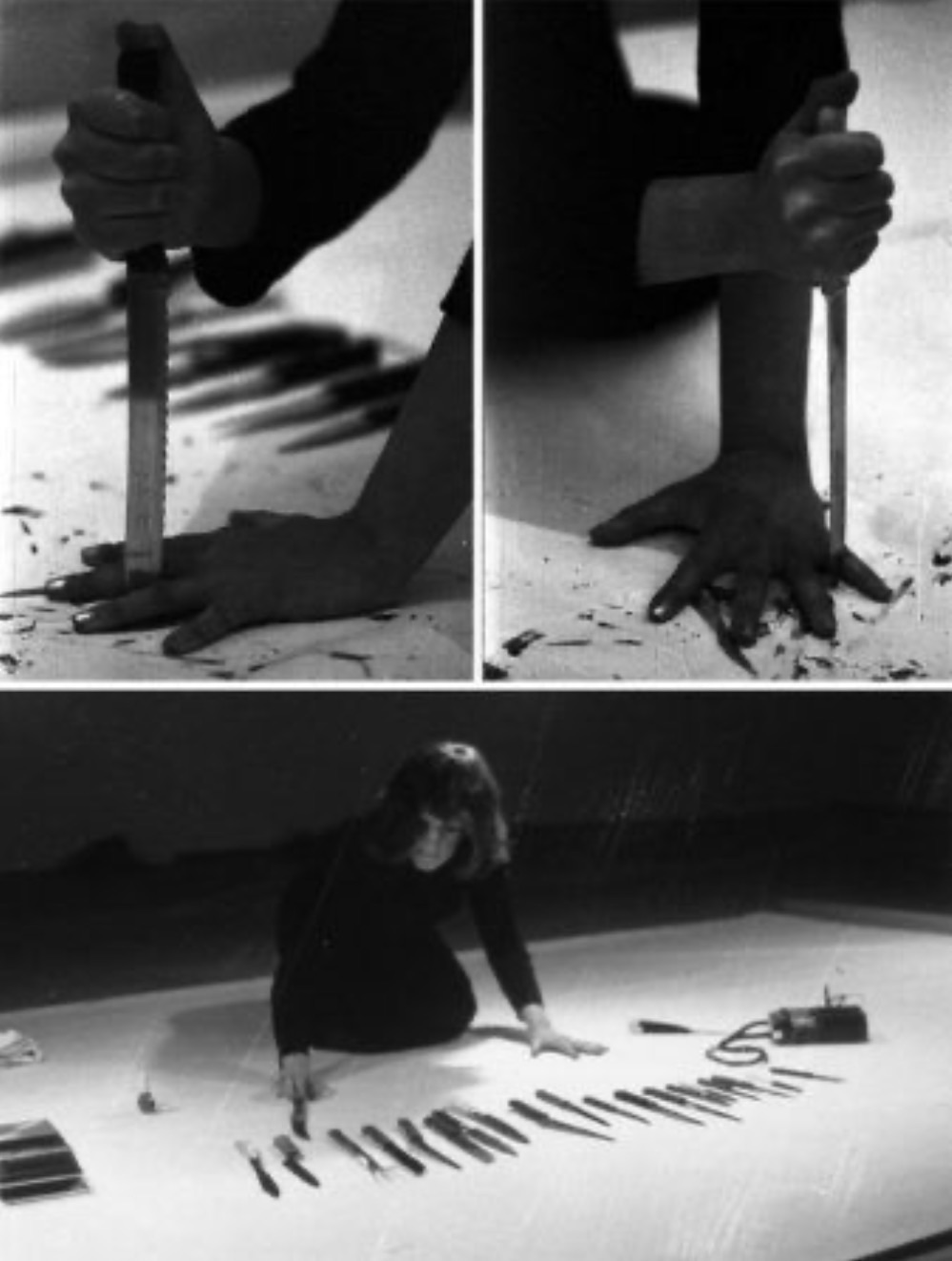
Rythm 10
1973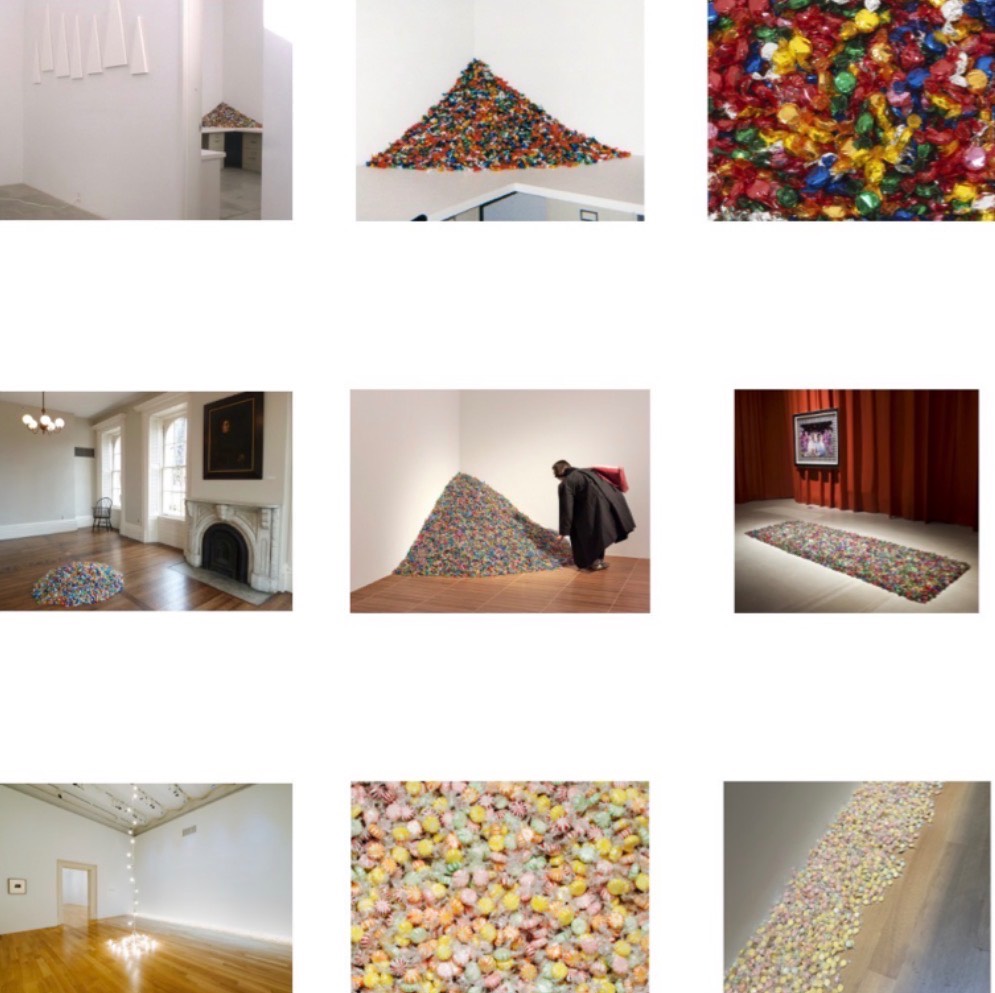
Immersive Experience
Walk through this gallery in 3D
Step inside a virtual gallery space. Walk up to each artwork. See them as they were meant to be seen.
React to this gallery
Guestbook
Sign in to leave a comment.
Loading…
Galerra
Create your own exhibition
Upload your work and we build a walkable 3D show in about a minute. Free to start.