

Curated Exhibition Project
Who Controls the Gaze? Identity, Representation, and Power in Portraiture Portraiture is often understood as a way of recording a person's appearance, but the act of creating and viewing a portrait also determines how a person is understood. This exhibition explores the changing relationship between the viewer and subject by examining who controls representation, how identity is constructed, and who is given the authority to occupy the position of the subject. The five artworks are arranged chronologically and conceptually to move the viewer from interpreting another person's identity toward recognizing the subject's increasing control over how they are represented. The exhibition begins with Leonardo da Vinci's Saint John the Baptist (c. 1508–1516). The centralized figure, dramatic chiaroscuro, ambiguous smile, and direct gaze create a subject who is recognizable but psychologically difficult to understand. The viewer is placed in the position of interpreting Saint John's identity while Leonardo controls what is revealed. This establishes the exhibition's starting point: the viewer looks at the subject, while the artist controls the representation. Frida Kahlo's The Two Fridas (1939) changes this relationship by making the artist herself the subject. Kahlo presents two versions of herself, using contrasting clothing, exposed hearts, and connected blood vessels to construct an identity that is multiple rather than singular. The viewer is no longer simply interpreting someone else's identity; the artist actively determines how her identity is presented. Kehinde Wiley's Napoleon Leading the Army over the Alps (2005) expands the question of identity into one of historical power. Wiley appropriates the visual language of European equestrian portraiture and replaces Napoleon with a contemporary Black man. The work challenges the colonial gaze and the historical exclusion of Black subjects from monumental representations of authority. By changing who occupies
Artworks
- Barkley L. Hendricks: Lawdy Mama (1969) — Medium: Oil and acrylic on canvas Judgment: Lawdy Mama depicts a Black woman presented from the waist upward against a simplified golden background, with her large hair, brightly colored clothing, and frontal pose establishing her as the dominant figure. The centralized composition, symmetrical balance, saturated colors, and circular form surrounding her head create strong visual emphasis and direct the viewer toward her face and gaze. The painting builds on Wiley’s Napoleon Leading the Army over the Alps by continuing the exhibition’s movement toward Black subjects occupying positions of visual authority. Wiley challenges the historical exclusion of Black people from monumental representations of power, while Hendricks shifts the focus toward the individual subject and the act of looking itself. The simplified background removes environmental distractions and concentrates attention on the woman’s appearance, posture, and expression. Her direct gaze is particularly important because it establishes a reciprocal relationship with the viewer. Through the concept of the oppositional gaze, the subject does not simply remain available to be observed; she appears to observe the person looking at her. This continues the exhibition’s progression from the viewer interpreting a subject to the subject becoming increasingly conscious of and assertive within the encounter.
- Amy Sherald: Michelle LaVaughn Robinson Obama (2018) — Medium: Oil on linen Judgment: Sherald’s Michelle LaVaughn Robinson Obama depicts Michelle Obama seated against a plain blue-gray background, with her angled body, composed expression, and large geometric dress establishing her as the central figure. The repeated patterns of the dress create rhythm and emphasis, while the simplified background removes competing details and keeps attention on the sitter. The restrained color relationships and controlled composition contribute to a sense of visual unity. As the final work, the portrait synthesizes the exhibition's progression from Leonardo’s mysterious Saint John the Baptist to increasingly self-determined forms of representation. Leonardo places the viewer in the position of interpreting a subject whose identity remains partially concealed. Kahlo then presents multiple versions of her own identity, Wiley challenges the historical exclusion of Black subjects from positions of authority, and Hendricks establishes a direct and reciprocal relationship between subject and viewer. Sherald extends this progression through a quieter form of authority. Obama's direct gaze acknowledges the viewer without relying on an exaggerated gesture, while her clothing and distinctive skin tones challenge conventional expectations of portraiture. The work demonstrates that monumental representation does not require theatrical displays of power. By ending with a contemporary Black woman presented as an individual and cultural figure, the exhibition ultimately shifts the viewer from interpreting the subject to recognizing the subject's control over how she is seen and understood.
- Kehinde Wiley: Napoleon Leading the Army over the Alps (2005) — Medium: Oil on canvas Judgment: Wiley’s Napoleon Leading the Army over the Alps depicts a young Black man mounted on a rearing horse, positioned prominently against a densely patterned floral background. The large scale of the horse and rider, their central placement, strong diagonal lines, and contrast between the realistic figures and decorative background establish the sitter as the dominant visual element. The painting builds on The Two Fridas by expanding the question of self-representation into a question of historical representation and power. Kahlo presents multiple versions of her own identity, while Wiley places a contemporary Black subject into a visual position historically associated with European military authority. His appropriation of Jacques-Louis David's composition is central to this meaning because the viewer recognizes the original portrait tradition while simultaneously encountering a different subject occupying its central position. The contrast between the sitter’s contemporary clothing and the heroic equestrian pose further emphasizes this disruption. Wiley does not simply reproduce a historical portrait; he changes who is permitted to occupy its position of authority. Within the exhibition, the work therefore shifts the relationship between viewer and subject from personal identity to the larger systems that determine whose identities are represented as powerful, heroic, and worthy of monumental recognition.
- Leonardo da Vinci: Saint John the Baptist (1516) — Medium: Oil on walnut panel Judgment: Leonardo da Vinci’s Saint John the Baptist depicts a half-length male figure emerging from a nearly black background, with his illuminated face, exposed chest, and raised hand creating the primary visual emphasis. The centralized composition and strong chiaroscuro direct the viewer toward the figure while simultaneously concealing parts of his body within the darkness. His upward-pointing finger identifies him as Saint John and connects the figure to his religious role, while his direct gaze and ambiguous smile create uncertainty about his thoughts and emotions. These formal qualities support the painting’s meaning by creating a tension between what the viewer can see and what remains unknown. Although the subject is identifiable, Leonardo does not provide enough visual information for the viewer to completely understand him. The contrast between the illuminated figure and dark background reinforces this sense of partial revelation. In the context of the exhibition, this establishes the viewer as an interpreter who looks at and attempts to construct meaning about another person. As the opening work, Saint John the Baptist establishes the exhibition’s initial relationship between viewer and subject: the viewer looks, while the artist controls what the viewer is allowed to know. The following artworks will complicate this relationship by introducing artists and subjects who increasingly assert control over their own identities and representations.
- Frida Kahlo: The Two Fridas (1939) — Medium: Oil on canvas Judgment: The Two Fridas depicts two versions of Frida Kahlo seated side by side, connected by their hands and a network of blood vessels. The balanced composition, repeated figures, and contrasting clothing establish visual unity while also emphasizing differences between the two figures. The exposed hearts and red vessels create strong focal points against the pale clothing and gray-blue background, making the internal connection between the figures visually prominent. The painting builds on Leonardo's Saint John the Baptist by changing who controls the identity being presented. In Leonardo's work, the viewer interprets a figure whose thoughts and identity remain partially concealed through his ambiguous expression and dark surroundings. Kahlo instead presents herself through two deliberately constructed versions of her own identity. The exposed hearts and connected vessels make aspects of the subject visible that Leonardo leaves psychologically uncertain. This shift is important to the exhibition because Kahlo moves the viewer from interpreting another person's identity to encountering an identity actively constructed by the artist herself. The viewer still looks at the subject, but Kahlo determines that the subject will not have a single, uncomplicated identity.
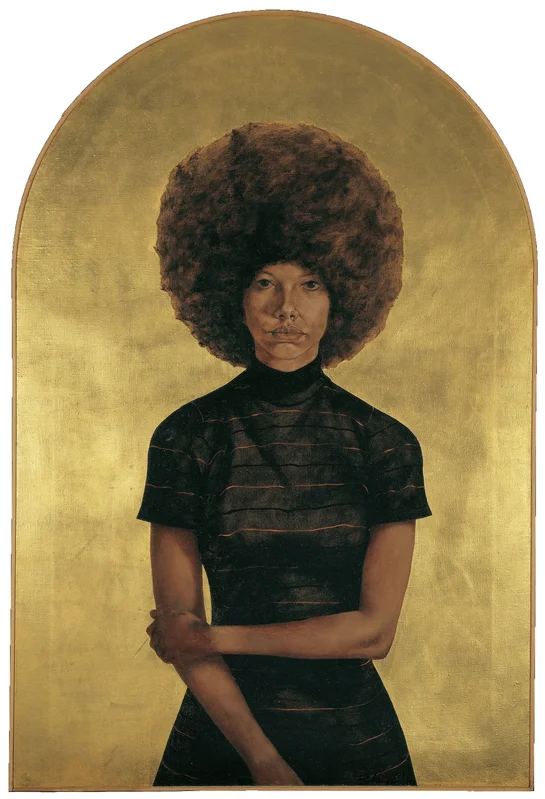
Barkley L. Hendricks: Lawdy Mama
1969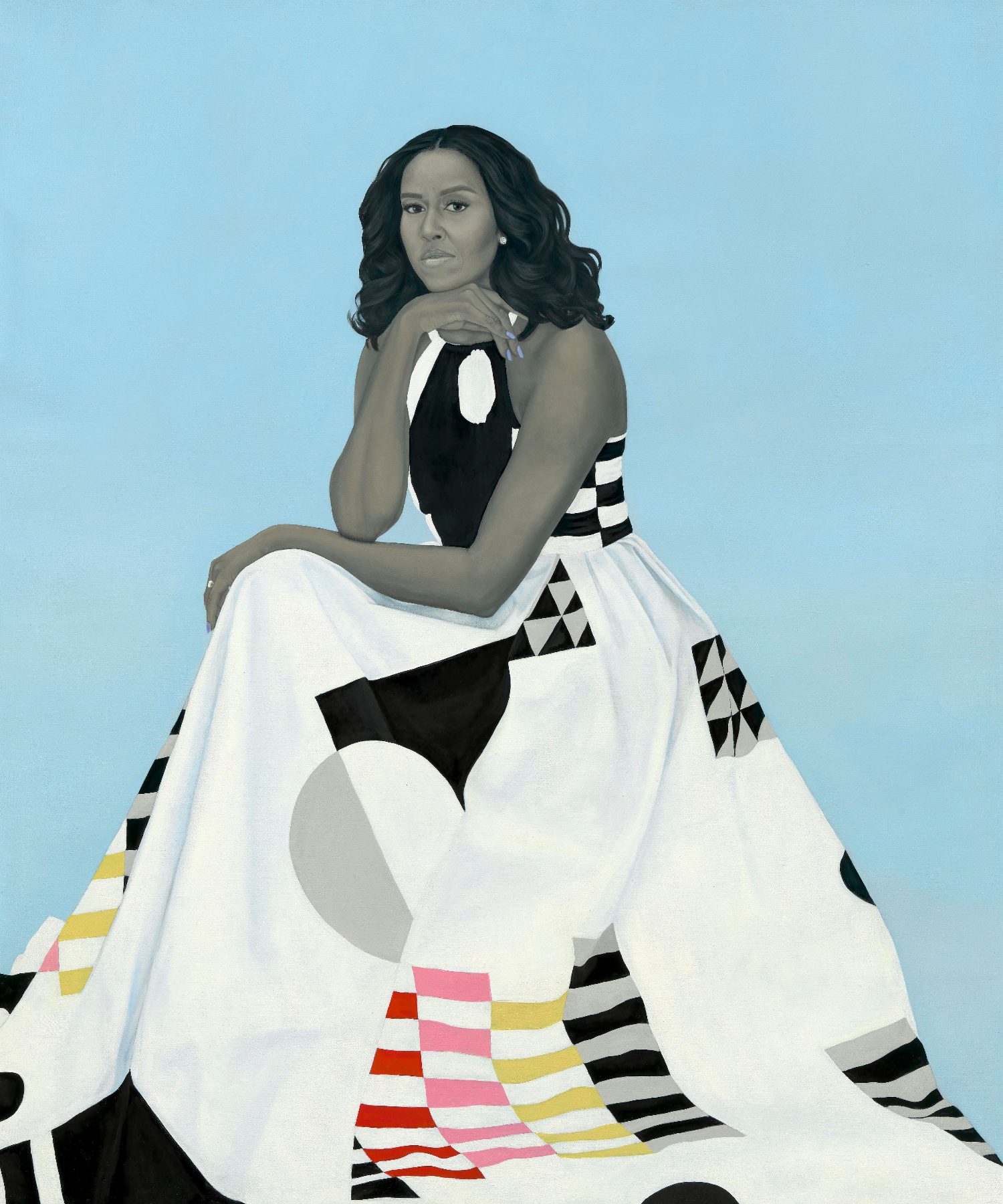
Amy Sherald: Michelle LaVaughn Robinson Obama
2018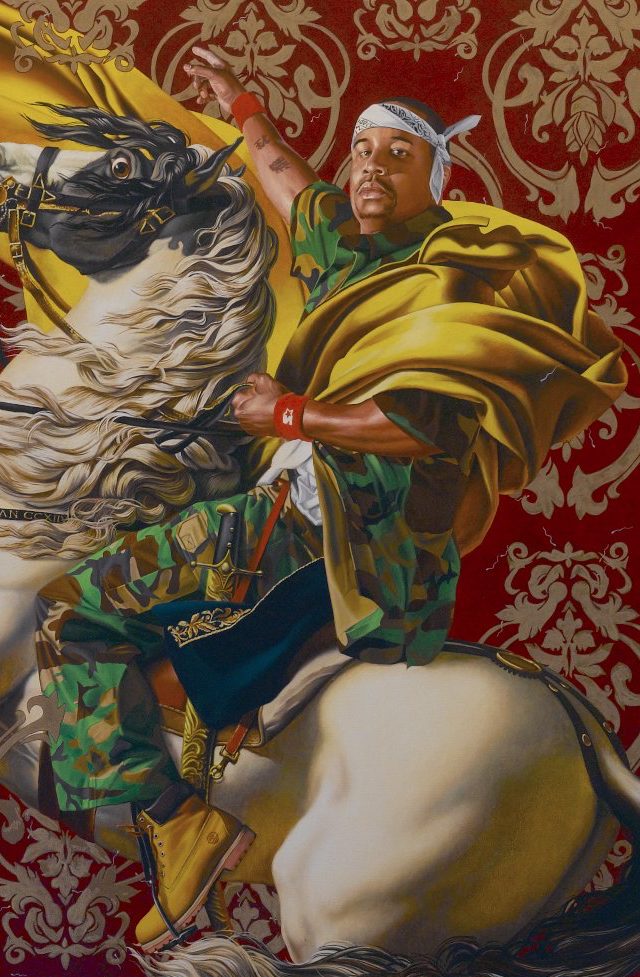
Kehinde Wiley: Napoleon Leading the Army over the Alps
2005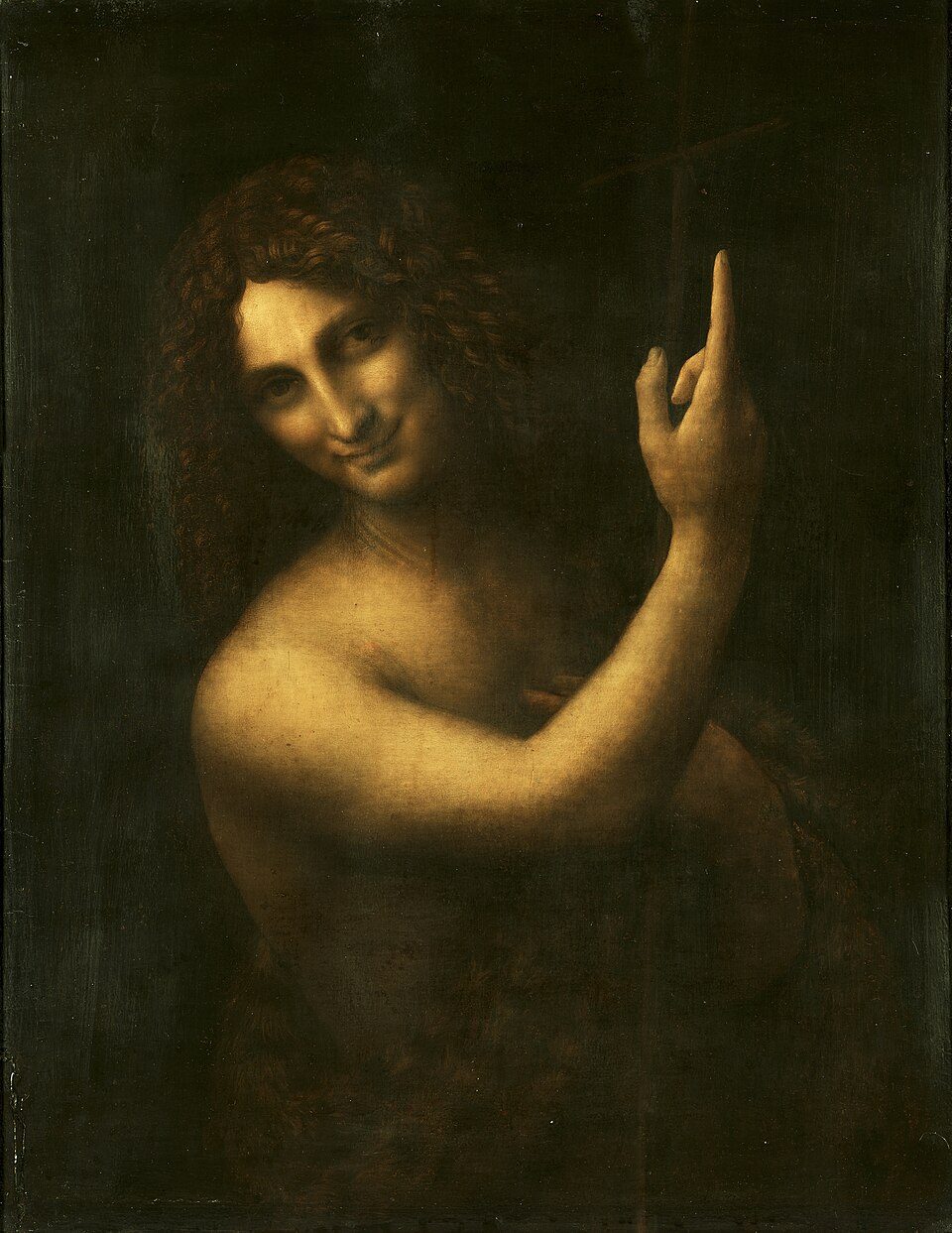
Leonardo da Vinci: Saint John the Baptist
1516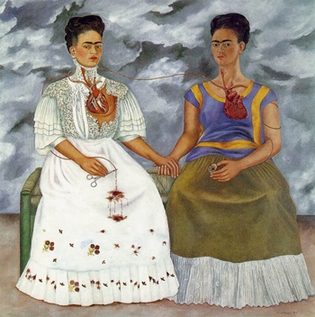
Frida Kahlo: The Two Fridas
1939Immersive Experience
Walk through this gallery in 3D
Step inside a virtual gallery space. Walk up to each artwork. See them as they were meant to be seen.
React to this gallery
Guestbook
Sign in to leave a comment.
Loading…
Galerra
Create your own exhibition
Upload your work and we build a walkable 3D show in about a minute. Free to start.