

Echoes of Country
Artworks
- Nganampa Ngura – Our Country by Betty Chimney & Raylene Walatinna, Acrylic on linen (2024) (2024) — Nanampa Ngura (Our Country) by Betty Chimney and Raylene Walatinna represents a major shift within the exhibition because it introduces an Indigenous understanding of land that directly challenges Western ideas of landscape. Rather than using realistic representation, the artists use abstraction, layered dot patterns, circular forms, flowing lines, repetition, and texture to communicate pathways, waterholes, movement, and ancestral connections across the land. The work reflects contemporary Indigenous Australian painting traditions that function not simply as visual expression but as a way of preserving cultural knowledge, storytelling, and spiritual relationships to Country. Unlike colonial landscape paintings that often portray land as passive scenery, this artwork presents Country as alive and inseparable from identity, ancestry, and collective memory. It belongs in Echoes of Country because it marks the exhibition’s transition away from colonial perspectives toward Indigenous voices reclaiming cultural narratives. The painting challenges viewers to understand land not as property or physical environment alone, but as something deeply spiritual and historically connected to generations of cultural survival. Positioned in the center of the exhibition, the work shifts the narrative and introduces a perspective in which land becomes a living source of identity rather than an object to observe.
- The White Cloud, Head Chief of the Iowas by George Catlin, Oil on canvas (1844–45) (1844) — George Catlin’s The White Cloud, Head Chief of the Iowas expands the exhibition by exploring the complex relationship between colonial representation and Indigenous identity. The portrait uses detailed realism, strong emphasis, and careful attention to ceremonial clothing, jewelry, feathers, and facial expression to portray White Cloud with dignity and authority. At the same time, the work reflects the perspective of a European-American artist documenting Indigenous cultures during a period of westward expansion and colonial control. This dual perspective makes the artwork significant because it preserves aspects of Indigenous identity while also revealing how colonial systems influenced the way Indigenous people were visually represented. The work belongs in Echoes of Country because it serves as a transitional piece between European colonial perspectives and later Indigenous-centered works. While the painting acknowledges Indigenous identity, it still presents that identity through an outsider lens rather than through self-representation. Positioned after Glover’s landscape, it helps viewers recognize how colonial systems extended beyond land itself and influenced the ways Indigenous cultures were observed, documented, and understood. It prepares the exhibition’s movement toward artworks created by Indigenous artists who reclaim control over representation and cultural identity.
- The Bath of Diana by John Glover, Oil on canvas(1767-1849) (1767) — John Glover’s The Bath of Diana is an important starting point for Echoes of Country because it reflects how colonial artists shaped early European understandings of Australia through idealized representations of the land. The painting uses soft lighting, atmospheric perspective, balanced composition, and natural scenery to create a peaceful and visually harmonious environment influenced by European Romantic landscape traditions. Although aesthetically beautiful, the work reflects colonial attitudes that presented Australia as an untouched and empty landscape ready for settlement while largely erasing Indigenous presence and existing cultural connections to the land. This artwork belongs in the exhibition because it establishes the colonial perspective that historically dominated visual representations of Country. It introduces the idea that landscapes are not neutral but are shaped by power, ideology, and cultural assumptions. As the opening piece, it provides an important contrast to the Indigenous artworks later in the exhibition, allowing viewers to understand how representations of land shifted over time from colonial ownership toward Indigenous understandings of belonging, ancestry, and cultural survival.
- Wandjina rock art Traditional Indigenous artwork, Natural pigments on rock surface — The traditional Wandjina Painting from the Kimberley region deepens the spiritual dimension of Echoes of Country by emphasizing the sacred relationship between land, ancestry, and Indigenous cosmology. The artwork features large ancestral spirit figures with bold outlines, patterned bodies, repetition, and highly symbolic imagery that create a ceremonial and visually powerful composition. Within Indigenous Australian culture, Wandjina figures represent ancestral cloud and rain spirits connected to creation stories and the continuing relationship between spiritual beings and Country. Unlike European traditions that often separate humans from nature, this work demonstrates that land and spirituality exist as interconnected forces that shape cultural identity and collective memory. The artwork belongs in the exhibition because it strengthens the Indigenous perspective introduced in Nanampa Ngura while expanding the idea that Country is more than physical geography. It reinforces the understanding that land carries sacred meaning rooted in ancestral knowledge passed across generations. Positioned after contemporary Indigenous work, the painting highlights the continuity of Indigenous traditions and emphasizes cultural survival despite the history of colonization. It allows viewers to recognize that Indigenous relationships with land are deeply spiritual and extend far beyond Western concepts of landscape as scenery or territory.
- Palm valley by Albert Namatjira, Watercolor on painting (1936-1940) (1936) — Albert Namatjira’s Palm Valley serves as the concluding artwork in Echoes of Country because it brings together both Indigenous cultural identity and European artistic tradition, creating a powerful final statement about resilience and adaptation. The watercolor painting uses careful naturalistic detail, atmospheric perspective, subtle color variation, and realistic observation to depict rocky cliffs, reflective water, desert vegetation, and the environment of Central Australia. Although the work uses Western watercolor techniques introduced through colonial artistic traditions, Namatjira transforms the landscape genre by expressing a personal and cultural relationship with Country as an Indigenous artist. Rather than presenting the land as distant or available for possession, the painting reclaims the landscape as lived experience connected to identity and belonging. This artwork belongs in the exhibition because it demonstrates how Indigenous artists adapted colonial artistic forms while reclaiming authority over representation. It serves as a strong conclusion because it symbolizes survival and the enduring presence of Indigenous culture within Australian art history. Ending with Palm Valley allows the exhibition to move from colonial representations that erased Indigenous voices toward an artwork where Indigenous identity and connection to Country are fully reasserted, completing the exhibition’s narrative of transformation, resistance, and cultural continuity.
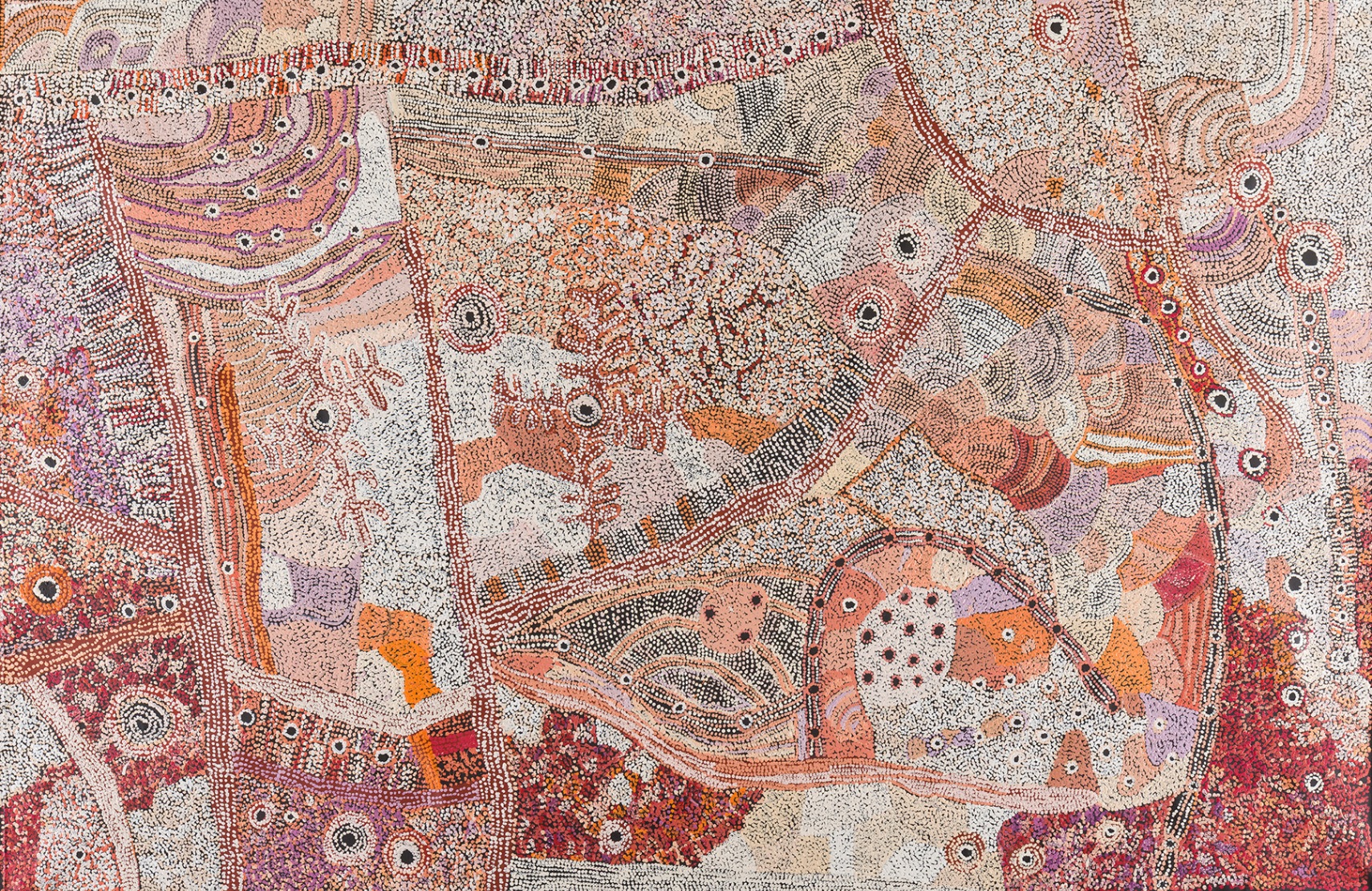
Nganampa Ngura – Our Country by Betty Chimney & Raylene Walatinna, Acrylic on linen (2024)
2024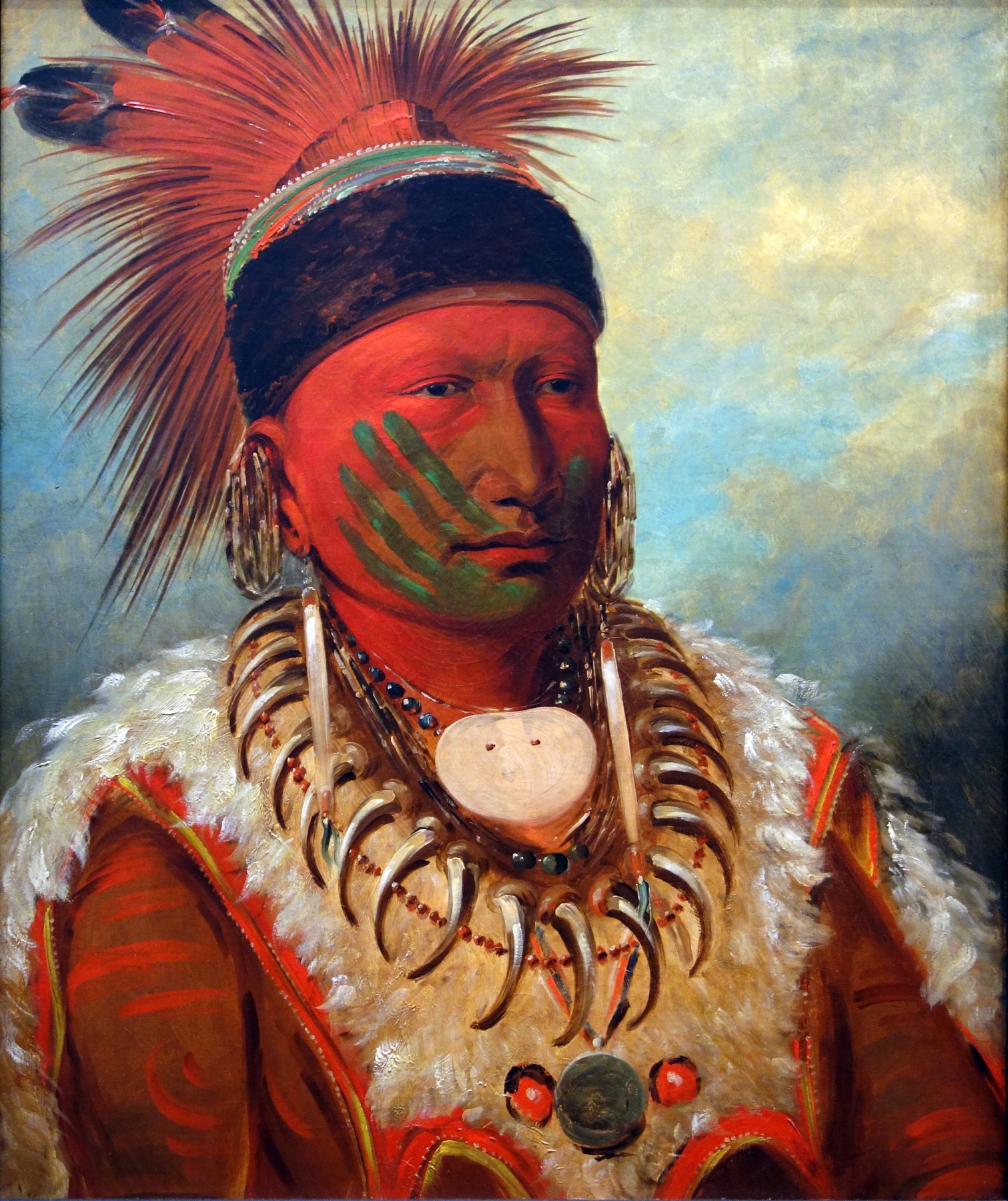
The White Cloud, Head Chief of the Iowas by George Catlin, Oil on canvas (1844–45)
1844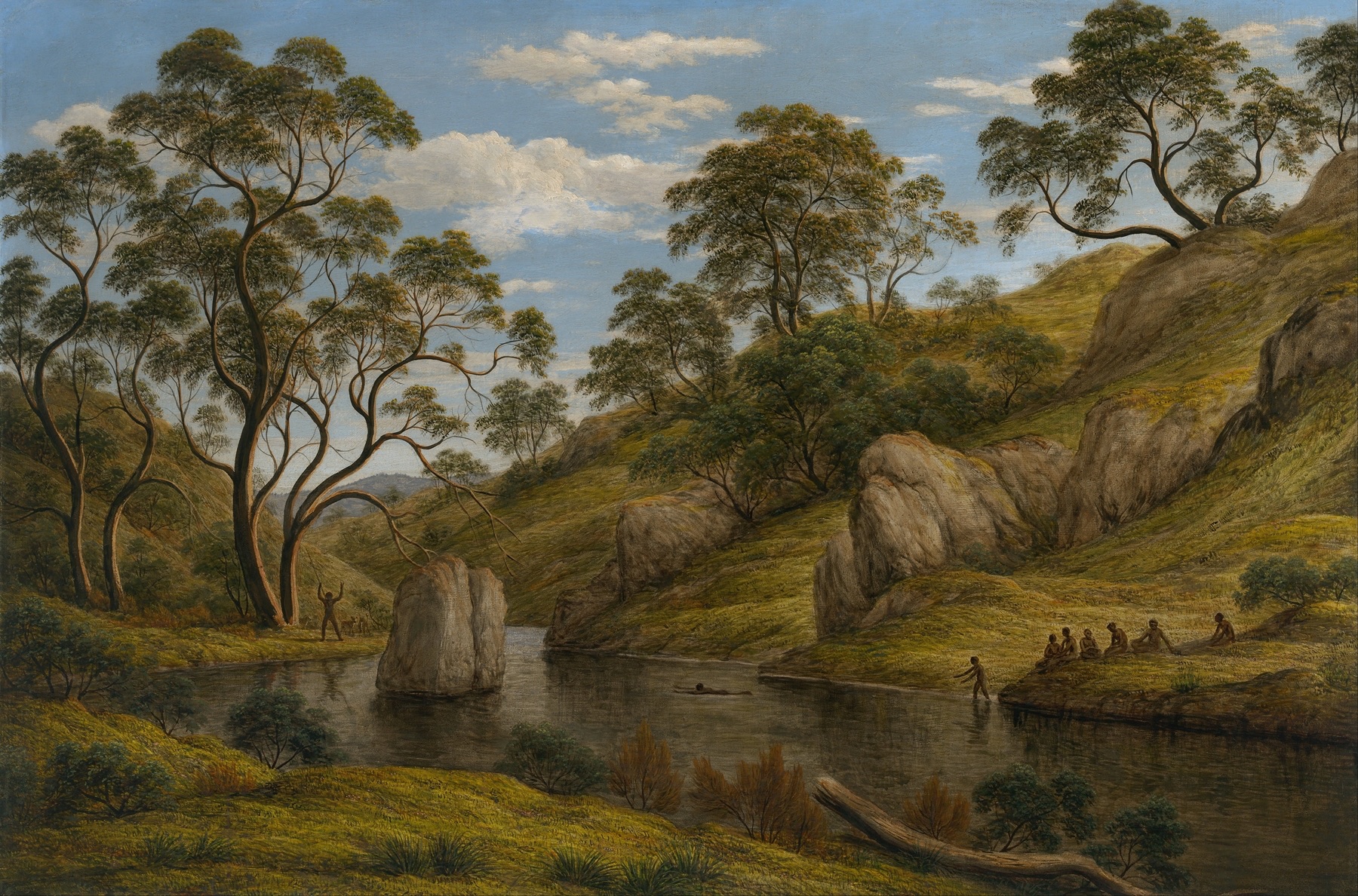
The Bath of Diana by John Glover, Oil on canvas(1767-1849)
1767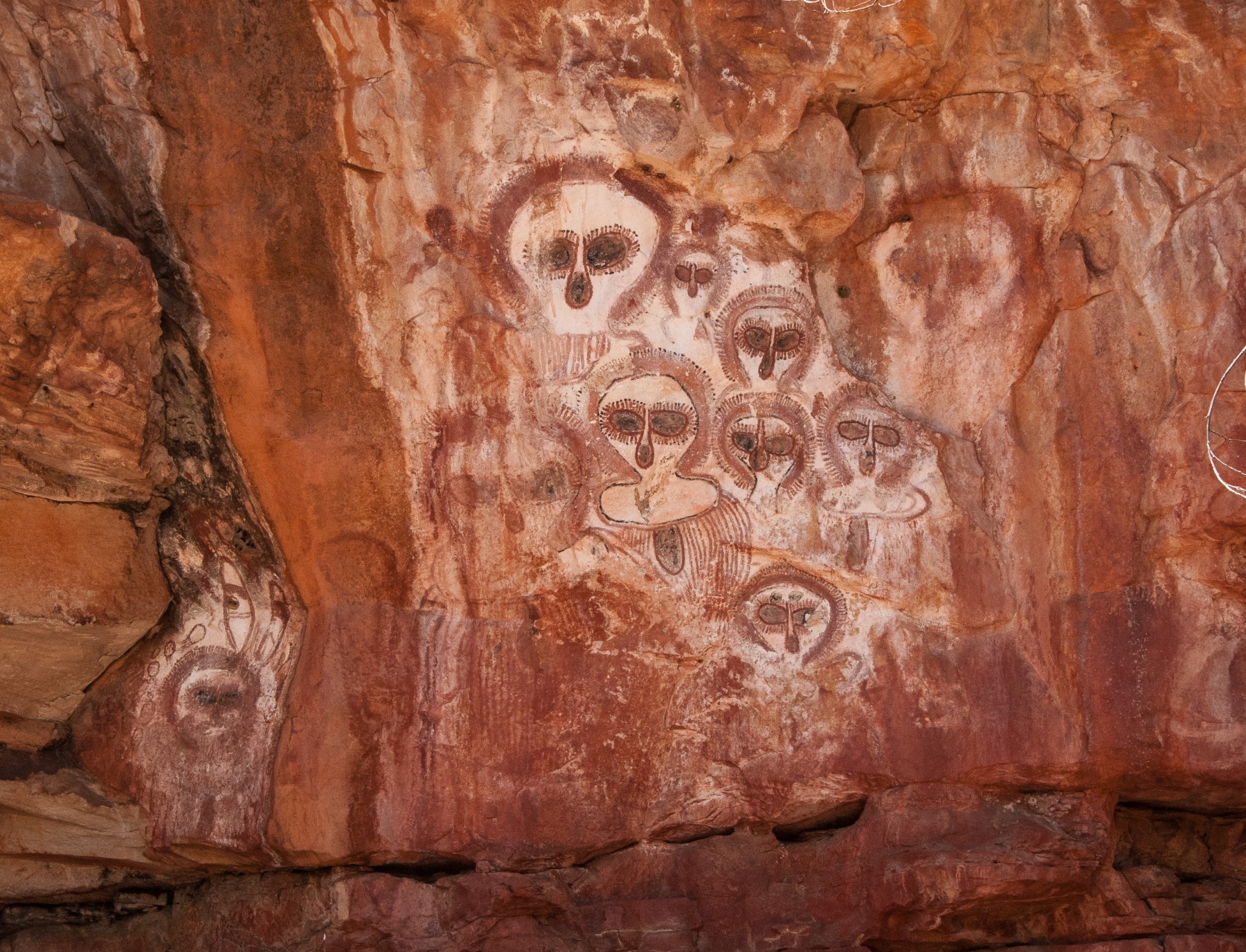
Wandjina rock art Traditional Indigenous artwork, Natural pigments on rock surface
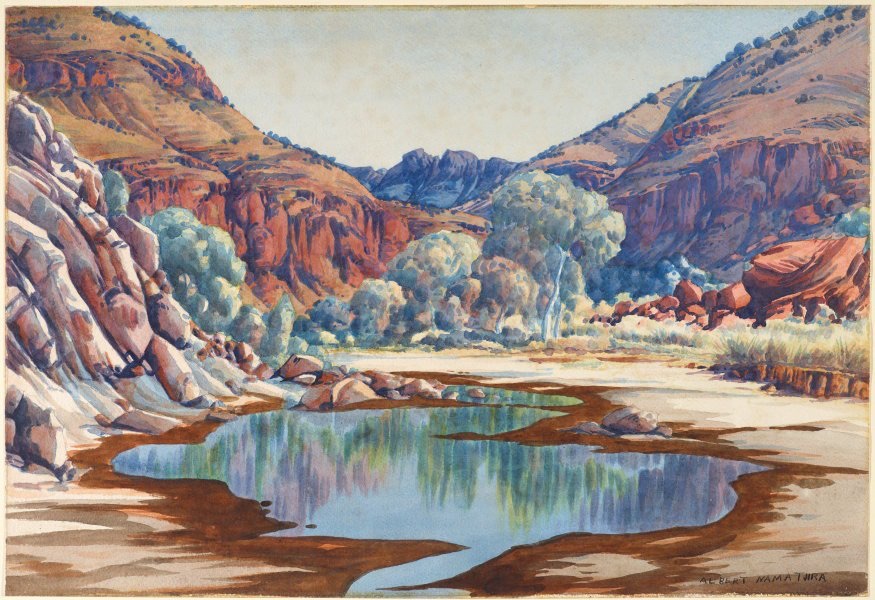
Palm valley by Albert Namatjira, Watercolor on painting (1936-1940)
1936Immersive Experience
Walk through this gallery in 3D
Step inside a virtual gallery space. Walk up to each artwork. See them as they were meant to be seen.
React to this gallery
Guestbook
Sign in to leave a comment.
Loading…
Galerra
Create your own exhibition
Upload your work and we build a walkable 3D show in about a minute. Free to start.