
![[REDACTED]](https://media.galerra.art/_pb_users_auth_/grjqnojeh2e2wps/acg8oc_jpio_quwqc2z_rjo5uo8_yzc_exm8_nt_k5p_n1555r2c_xa_io8hi7b_duy_s96_c_9nm961dto6_by0gn8bcvc.png)
Of the Many Faces of Death
Artworks
- Island of the Dead (1880) — By Arnold Böcklin "Island of the Dead" is a painting that evokes equal parts mystery and comfort— a homage to a commissioner's loved one paired with the mystery of where death will take them, what that place holds— the conflicting visuals of a dark, looming island and the boat lovingly carrying a coffin to it's final resting place among bright buildings hidden in the island's geometry. The idea of a physical location serving as the realm of death is not a new one by any means, yet this particular location is a novel one.
- Souls on the Banks of the Acheron (1898) — By Adolf Hirémy-Hirschl This piece is one laden with known figures and symbolism, but it depicts that which has not yet been seen in this exhibition. Hermes, the figure emphasized by a divine halo and a pale blue glow— a color that is generally unnatural as a light source. He is reached out to by those surrounding him and is a figure from Greek mythology, as is Acheron (the body of water at which the souls sit) and the distant ferryman. This form of death, in many aspects, is a more popular and well-known one, at least in contemporary times— though, in contemporary works, the river Styx is more commonly represented as the entrance to the underworld, rather than Acheron. This is also the first piece in this exhibition to depict the more common fear of death, in the crowd's desperation, grasping for Hermes.
- The Shore of Oblivion (1889) — By Eugen Bracht Eugen Bracht's The Shore of Oblivion is a different take on a similar concept to that of Island of the Dead— here, we are closer within the piece, present in the landscape itself. But the land here is empty of guides or any life at all. Instead of comfort, it offers isolation— though it could be said that isolation can be a comfort of itself. It, too, depicts large, dark cliffs that take up much of the canvas, but here those cliffs battle with bright, barren sand— and it's the sand that truly makes it feel like the "Oblivion" in the title. If the artist had instead chosen lush greenery to litter the bottom of the cliffs, this location may look more inviting and alive, but, of course, that lush greenery does not exist. This depiction of death, though similar to Böcklin's on the surface, is undeniably distinct in it's complete absence of any human figures and expansive, empty shoreline.
- The Garden of Death (1896) — By Hugo Simberg This piece was created in 1896, and it depicts death in the more common form of a skeleton in black clothing, though it is far from the fearsome, terrifying foe it is often depicted as. This form of death is kind, careful, considerate— it attends to all equally, in the same way that death itself will visit all. The artwork makes use of warm colors throughout the piece, a color scheme that often evokes feelings of comfort and feels inviting to a viewer. This depiction of death is not one to be feared, yet it isn't quite the stoic guide depicted in the following piece either.
- Ophelia (1852) — By John Everett Millais And here we reach the final depiction of death, bereft of destinations and guiding figures— it is more literal, more personal, despite that which it depicts being a fictional character, Ophelia, from the play Hamlet. The riverbanks are lush and alive with color, though the water itself is dark and foreboding, similar to other paintings within this exhibition, and Ophelia wears a dress of more muted tones, those more associated with the dead. Here, we look down upon Ophelia— her death is not grand, there is nothing divine or supernatural about her dying. All we are presented with is a broken woman, embracing her end.

Island of the Dead
1880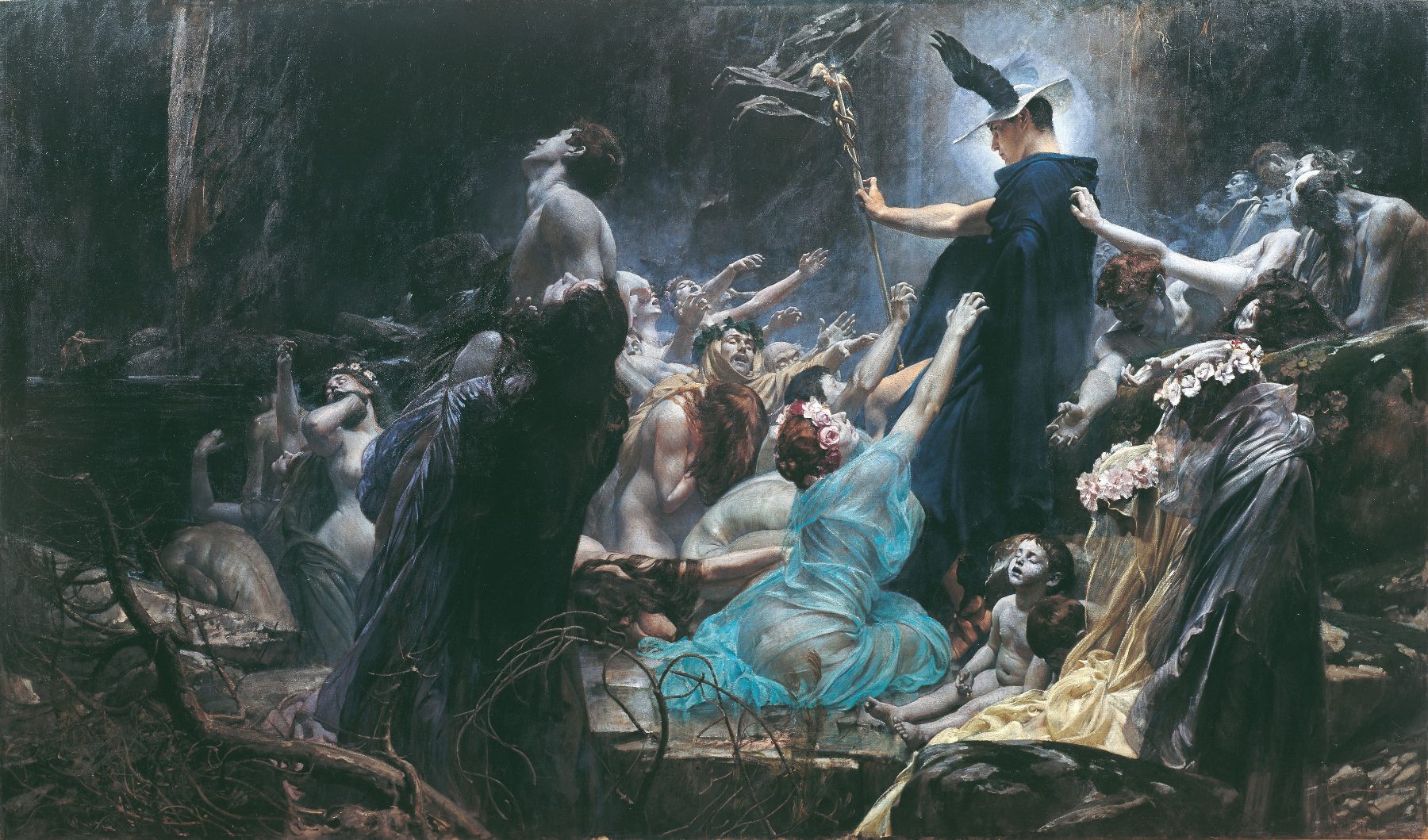
Souls on the Banks of the Acheron
1898
The Shore of Oblivion
1889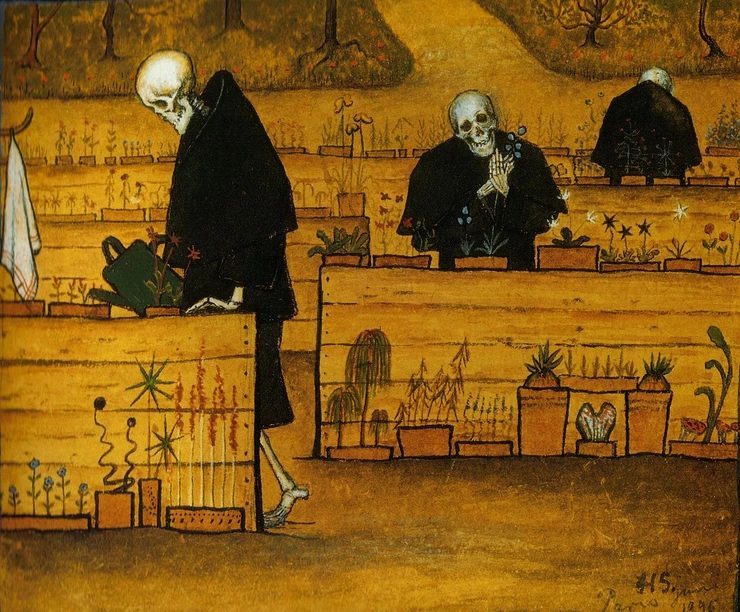
The Garden of Death
1896
Ophelia
1852Immersive Experience
Walk through this gallery in 3D
Step inside a virtual gallery space. Walk up to each artwork. See them as they were meant to be seen.
React to this gallery
Guestbook
Sign in to leave a comment.
Loading…
Galerra
Create your own exhibition
Upload your work and we build a walkable 3D show in about a minute. Free to start.