

Organic Matter
"We are the land, and the land is us. The earth is not an object to be possessed, but a relative with whom we share a mutual biological and spiritual existence." — Dr. Gregory Cajete Organic Matter is an exhibition that explores the transient human form, our place in nature, and the transition of energy back into the earth through death. Guided by Dr. Gregory Cajete’s framework of Indigenous ecology, which positions the earth as a living relative, this exhibit redefines our understanding of the body as simply a temporary form of organic matter in transition. Grounded in Indigenous spirituality and kinship philosophy, this curation challenges the Western, colonial worldview that separates us from other aspects of the natural world and asks us to reevaluate how we experience nature through our senses, how we impact it through our actions, and how the human form mirrors and eventually returns to the earth. Rather than following a traditional linear progression, the exhibition represents an alternative view of the cycle of life by beginning with the traditionally “final” stage of death, moving into decomposition and the undifferentiated stage of energy transfer that happens beyond our human perception, and ending with (re)birth, the traditional “beginning”. This continuous flow of matter is traced across five distinct phases of energy transfer, represented by five individual artists from multiple eras, working together to highlight the multiple kinds of reciprocal relationships we share with animals and the universe. Together, they illustrate that we never truly leave the earth because we are an integral part of it. The five stages are as follows: Death (Ana Mendieta): The cycle begins with Mendieta's earth-body performances, representing the physical body merging into the earth through burial. This captures the first stages of energy transfer, where the body begins to remember its original form and becomes overgrown. Its form has not yet begun to decompose and still retains easily recognizable human features. Decomposition (Dasha Plesen): Transitioning into Plesen's bio-art sculptures, this phase isolates specific aspects of the human form to represent decomposition. It highlights the nourishment and biological sustenance that the dying body provides to the earth and its microscopic organisms. Compost (Paul Nudd): Here, the boundaries of the human form dissolve entirely. Nudd's illustrations represent compost, the visceral stage where the human body loses its definition and becomes completely indecipherable from the natural world around it. Energy Transfer (Magdalena Abakanowicz): Shifting from the physical to the cosmic, the textile sculptures of Abakanowicz represent energy transfer. They display the undefined body, rearranging its shape and merging seamlessly with the natural environment, becoming one with the wider universe where anything is possible. Rebirth (Kiki Smith): The cycle closes and begins anew. Smith's sculptures represent rebirth, showcasing the body reemerging, revitalized, and born fresh from the womb of the natural world to complete the cycle of creation. She breaks down the barriers that separate humans from animals in the most intimate way.
Artworks
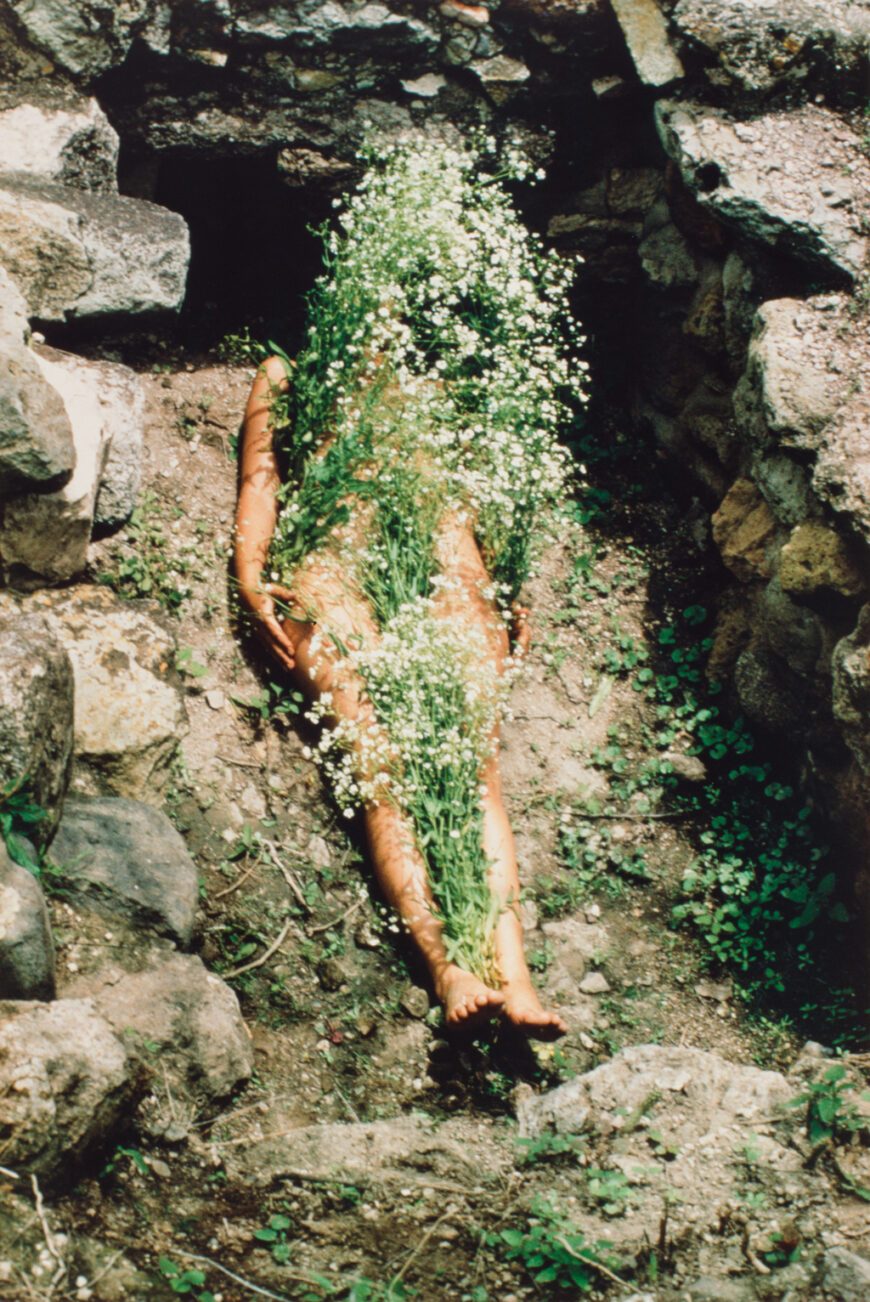
- Imagen de Yagul (Image from Yagul) from the Silueta Series by Ana Mendieta (1973) — Ana Mendieta’s Imagen de Yagul is a photograph that captures an earth-body performance where the artist lies inside a pre-Columbian Zapotec tomb, her nude form blanketed by a shroud of white yapo flowers. By utilizing a high, flattening overhead angle and contrasting the coarse texture of the ancient stone grave against the organic, brightly illuminated flora, the photograph documents a moment of reclamation by the earth and the beginning of the transition from human back into soil. By merging her physical silhouette with the historical Mexican landscape, Mendieta returns herself to the land that was once taken from her. Death is framed as a beautiful merging with nature instead of something tragic or final.
- The Elephantionysus Man by Paul Nudd (2011) — Paul Nudd’s The Elephantionysus Man is a large mixed-media drawing that depicts a distorted, asymmetric humanoid figure overrun by vibrant tumors, lesions, and cellular mutations. By utilizing a monumental scale and contrasting the layered, hyper-detailed textures of watercolor and gouache against the stark blankness of the paper, the artwork documents a visceral state of bodily decay and chaotic biological growth. By merging the historical trauma of the Elephant Man with the fertile mythology of Dionysus, Nudd subverts the traditional human form into a monstrous yet beautiful multicellular network, forcing the viewer to question the boundary between humanity and raw mutation. The scale and exaggerated features of the drawing demonstrate the monstrous side of having a body through the continuous growth of tumors and diseases, but also the beautiful details that make up our bodies as a multicellular network. It asks, what makes us human? Is it our shape and form, our cells, or something else?
- Alternative Venus by Dasha Plesen — Alternative Venus by Dasha Plesen is a photograph that captures a moment during the live bio-art sculpture performance of a woman’s chest, molded from silicone, becoming overgrown with colorful mold. By contrasting the smooth, translucent texture of the synthetic skin against the fuzzy, granular surfaces of the organic growths, the photograph documents a transformation where art and biology, beauty and decay collide. By allowing vibrant, toxic mold to colonize the iconic, untouchable beauty of the Venus archetype, Plesen subverts traditional standards of static feminine beauty, shifting the viewer’s perspective to find an evolving aesthetic within the natural process of rot and regeneration. There are no identifiable features; she has become a piece of nature taken over completely by the mold. Plesen asks, where does beauty end and rot begin?
- Born by Kiki Smith (2002) — Born by Kiki Smith is a sculpture that depicts a scene where the nude figure of an adult woman appears to be emerging from the body of a deer as if being born from it. The sculpture represents the collapse of the categories of hunter and prey, human and animal, and creator and created. By using a monochromatic dark grey bronze, Smith physically binds the two figures as parts of a singular substance, taking on two different forms. Inspired by the Germanic legend of Saint Genovefa, the sculpture moves beyond mere biological reproduction to include mythological and spiritual awakening. The woman is reborn fully grown, and the deer is no longer a passive target or a dead carcass, but a sacred vessel. They are interconnected equals, serving as a reminder that the natural world is not something we can master because it is the very origin from which we emerge.
- Abakan Red by Marta Magdalena Abakanowicz-Kosmowska (1969) — Magdalena Abakanowicz’s Abakan Red is a 13ft x 12ft three-dimensional textile sculpture featuring an ambiguous, organic form woven from blood-red sisal fibers and suspended in mid-air. Utilizing a massive scale and contrasting the rhythmic, parallel lines of the woven fabric against the raw, frayed textures of the drapery, the artwork creates an interplay of light and deep shadow that asserts its imposing presence in the space. Pioneered in the late 1960s as a revolutionary form of installation art and a direct act of political defiance against the restrictive Soviet Communist regime, this piece represents the primordial awe of creation and survival. By weaving an ambiguous form reminiscent of undifferentiated male and female genitalia, Abakanowicz subverts traditional, decorative tapestry into a towering, confrontational environment. Ultimately, Abakan Red synthesizes the trauma of war with the forward march of life, enveloping the viewer in a space that evokes both fear and primordial safety, while celebrating the resilient, universal potential for birth and regeneration.
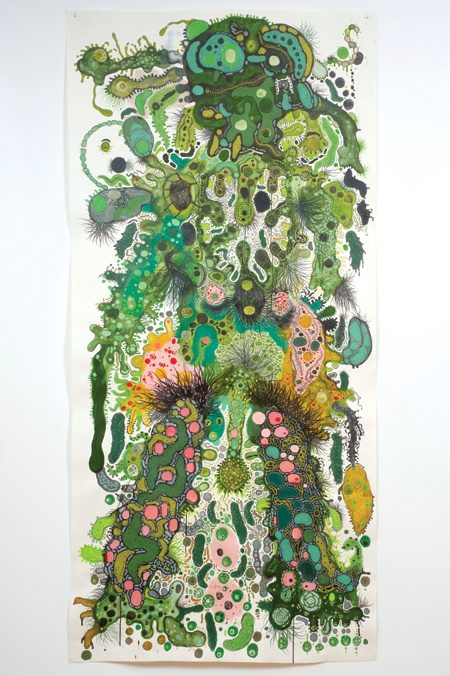
The Elephantionysus Man by Paul Nudd
2011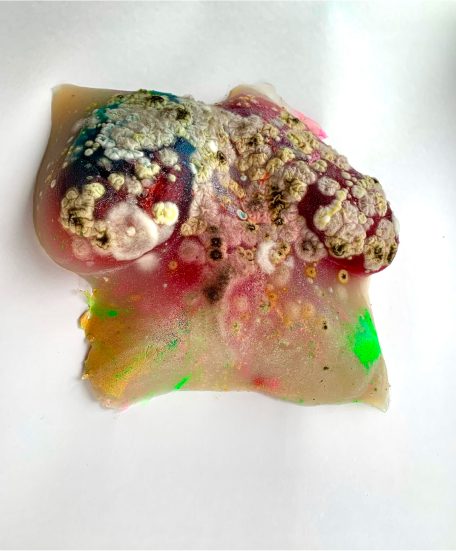
Alternative Venus by Dasha Plesen
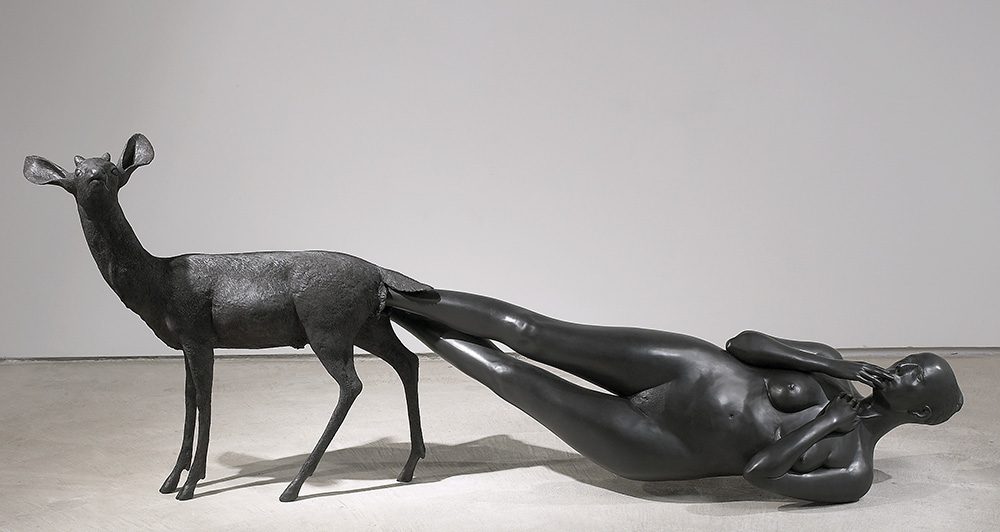
Born by Kiki Smith
2002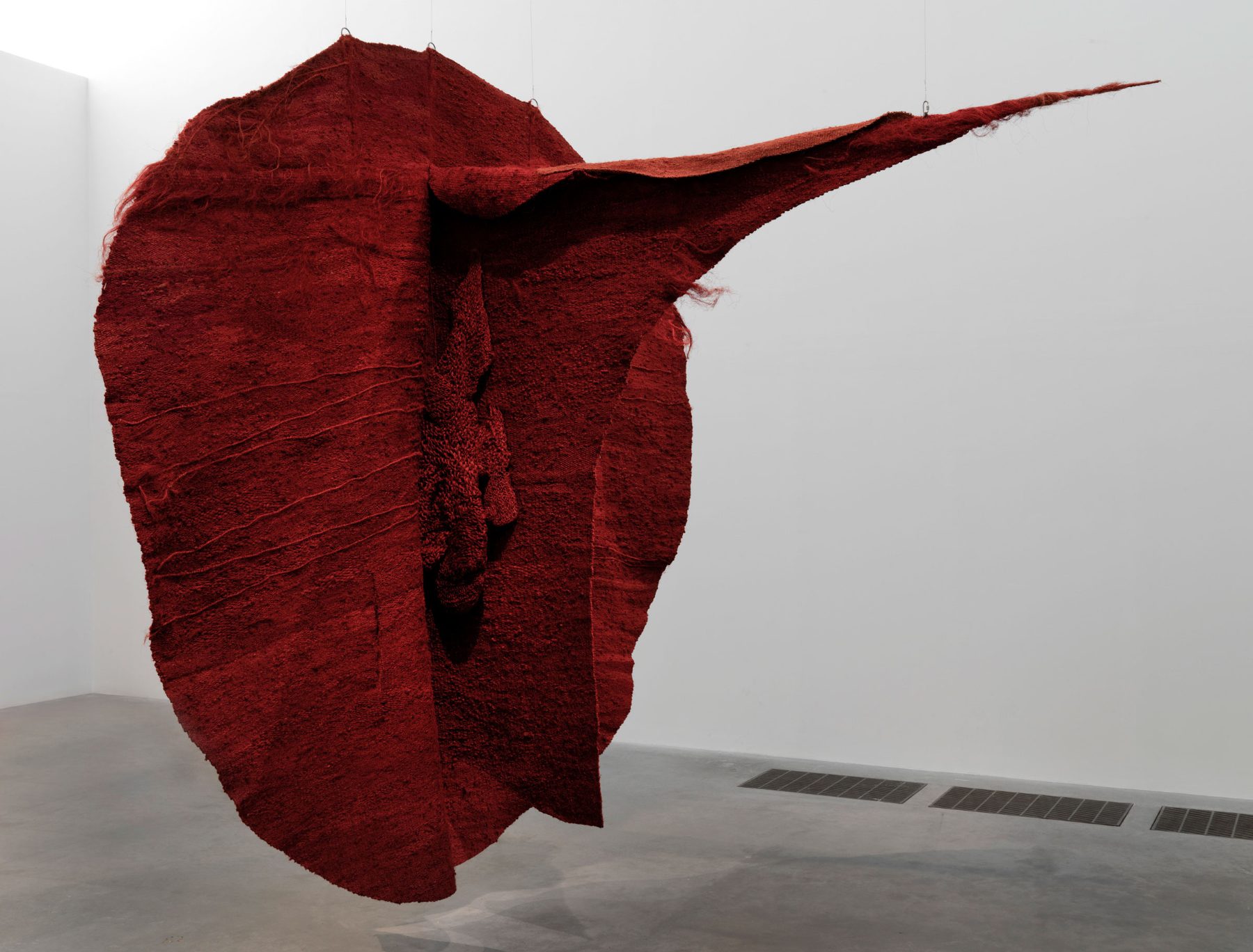
Immersive Experience
Walk through this gallery in 3D
Step inside a virtual gallery space. Walk up to each artwork. See them as they were meant to be seen.
React to this gallery
Guestbook
Sign in to leave a comment.
Loading…
Galerra
Create your own exhibition
Upload your work and we build a walkable 3D show in about a minute. Free to start.