

Power and the People
Power is often talked about through governments, political leaders, and major historical events, but the people who are most affected by it are often ordinary individuals just trying to live their lives. This exhibition explores how systems of power shape human experiences through segregation, social conflict, colonization, political oppression, and war. Rather than focusing on the people who create or hold power, these artworks focus on the people who have to live with the consequences of it. Together, they ask viewers to think about how authority is created, how injustice is maintained, and how people respond through survival, resistance, and resilience. Ai Weiwei once said, "Everything is art. Everything is politics" (Art21, 2011). I think this quote connects well to this exhibition because all of these artworks show that politics are not separate from everyday life. Decisions made by people in power affect where people can go, how they are treated, what stories are remembered, and sometimes whether entire communities survive. Even though these artworks were created in different countries and time periods, they all show the impact that power and injustice can have on ordinary people. The exhibition begins with Norman Rockwell's The Problem We All Live With. By focusing on Ruby Bridges as a child walking to school, Rockwell shifts attention away from legal debates about segregation and instead shows what those decisions looked like in one person's everyday life. Faith Ringgold's The American People Series #20: Die expands that focus by showing the violence and division that can grow within communities affected by larger social tensions. Rather than offering a clear answer or someone to blame, Ringgold forces viewers to sit with the human cost of conflict. Kent Monkman's mistikôsiwak (Wooden Boat People): Resurgence of the People shifts the conversation toward Indigenous experiences of colonization. Instead of celebrating leaders or conquest, Monkman focuses on families, elders, children, and communities trying to survive together. The painting highlights both the damage caused by colonization and the resilience of the people who continue to endure it. Yue Minjun's The Execution explores another response to power by focusing on the emotional and psychological effects of oppression. The laughter in the painting feels uncomfortable because it makes it difficult to know what the figures are actually feeling. It suggests that people do not always show fear or respond to injustice in obvious ways. The exhibition concludes with Pablo Picasso's Guernica, one of the most famous anti-war paintings in history. Instead of focusing on military victory or political leaders, Picasso emphasizes fear, grief, and suffering. The people in the painting are left to deal with the consequences of violence and decisions made by those in power. I arranged these artworks to move from individual experiences of injustice toward broader examples of conflict and oppression while keeping people at the center of each story. Even though the situations are different, all of these works remind us that real people are the ones living with the consequences of decisions made by others. They also show the strength people can have through survival, resilience, and resistance, even during some of the most difficult circumstances.
Artworks
- The Problem We All Live With, Norman Rockwell, 1964, Oil on Canvas (1964) — The Problem We All Live With shows a young girl walking to school while surrounded by federal marshals. The white dress immediately draws attention to her, while the graffiti and smashed tomato reveal the hostility she faces. What stands out to me most is that the painting focuses on the experience of one child rather than the political debate surrounding school integration. Rockwell uses composition and contrast to make her the clear focal point of the image. Even though the marshals are physically larger, they feel secondary to her presence. To me, the painting is powerful because it shows the human impact of segregation through a simple everyday moment. Instead of focusing on politicians or laws, it focuses on the person directly affected by them. This connects strongly to my exhibition because it shows how systems of power shape the lives of ordinary people while also highlighting resilience in the face of injustice.
- mistikôsiwak (Wooden Boat People): Resurgence of the People, Kent Monkman, 2019, Acrylic on Canvas (2019) — Resurgence of the People shows a crowded boat of Indigenous people trying to survive rough waters while surrounded by destruction and uncertainty. The movement of the water, dramatic sky, and emotional expressions create a sense of chaos, while the bright colors help draw attention to the people rather than the background. Kent Monkman often challenges traditional versions of history, and this painting does that by shifting the focus away from powerful leaders and toward the people who were affected by colonization. What stands out to me most is that there is no single hero in the painting. Instead, the focus is on families, elders, children, and communities trying to survive together. Some figures appear frightened or exhausted while others are helping those around them. That makes the painting feel more human and emotionally honest. By borrowing the composition of famous historical paintings and changing who is centered in the story, Monkman creates a powerful statement about Indigenous resilience and survival. To me, the painting shows not only the damage caused by systems of power, but also the strength of the people who continue to endure them.
- The American People Series #20: Die, Faith Ringgold, 1967, Oil on Canvas (1967) — The American People Series #20: Die presents a chaotic scene filled with fear, violence, and confusion. The crowded composition, bright colors, and dramatic gestures immediately create a sense of tension. What stands out to me most is how the painting focuses on the human consequences of conflict rather than a specific political event. The figures appear trapped in a cycle of violence, and there is no obvious sense of victory or resolution. Ringgold uses color, movement, and repetition to communicate both emotional intensity and social division. To me, the painting is effective because it forces viewers to confront the impact of conflict on ordinary people. Rather than focusing on those who hold power, it shows the individuals who must live with its consequences. This connects strongly to my exhibition because it highlights the effects of injustice, violence, and social tension on human lives.
- Guernica, Pablo Picasso, 1937, Oil on Canvas (1937) — Guernica shows a chaotic scene filled with people and animals reacting to violence, loss, and destruction. The black, white, and gray color palette immediately creates a serious mood, while the distorted figures and sharp angles make the scene feel confusing and overwhelming. Picasso painted the work after the bombing of the Spanish town of Guernica, but instead of showing the attack itself, he focuses on the suffering left behind. What stands out to me most is the amount of pain visible throughout the painting. No one appears safe, and every figure seems to be reacting to fear, grief, or loss. The crowded composition and dramatic expressions help communicate those emotions to the viewer. To me, the painting is powerful because it focuses on the human cost of war rather than politics or military victory. Instead of celebrating power, it shows the damage that can happen when power is abused. The work connects strongly to my exhibition because it shifts the focus away from governments and leaders and toward the ordinary people whose lives are affected by conflict and political decisions.
- The Execution, Yue Minjun, 1995, Oil on Canvas (1995) — The Execution shows a group of laughing figures facing what appears to be an execution, even though no weapons are actually shown. The bright colors, repeated faces, and exaggerated smiles immediately stand out, but they create a strange contrast with the serious subject matter. Yue Minjun is known for using these laughing figures throughout his work, and in this painting the laughter feels uncomfortable rather than joyful. What stands out to me most is how difficult it is to tell what the figures are really feeling. They appear happy on the surface, but the situation suggests fear, pressure, or even helplessness. The repeated faces also make the people seem less like individuals and more like symbols of a larger experience. To me, the painting is effective because it creates confusion and discomfort at the same time. Instead of showing violence directly, it focuses on the emotional and psychological effects of living under powerful systems. The work connects strongly to my exhibition because it explores how people respond to power and oppression, even when those responses are not always obvious. Even when resistance is not direct or visible, people adapt, conceal fear, and find ways to navigate systems designed to control them.
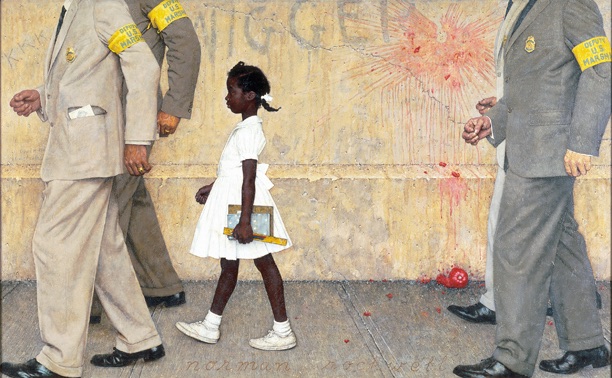
The Problem We All Live With, Norman Rockwell, 1964, Oil on Canvas
1964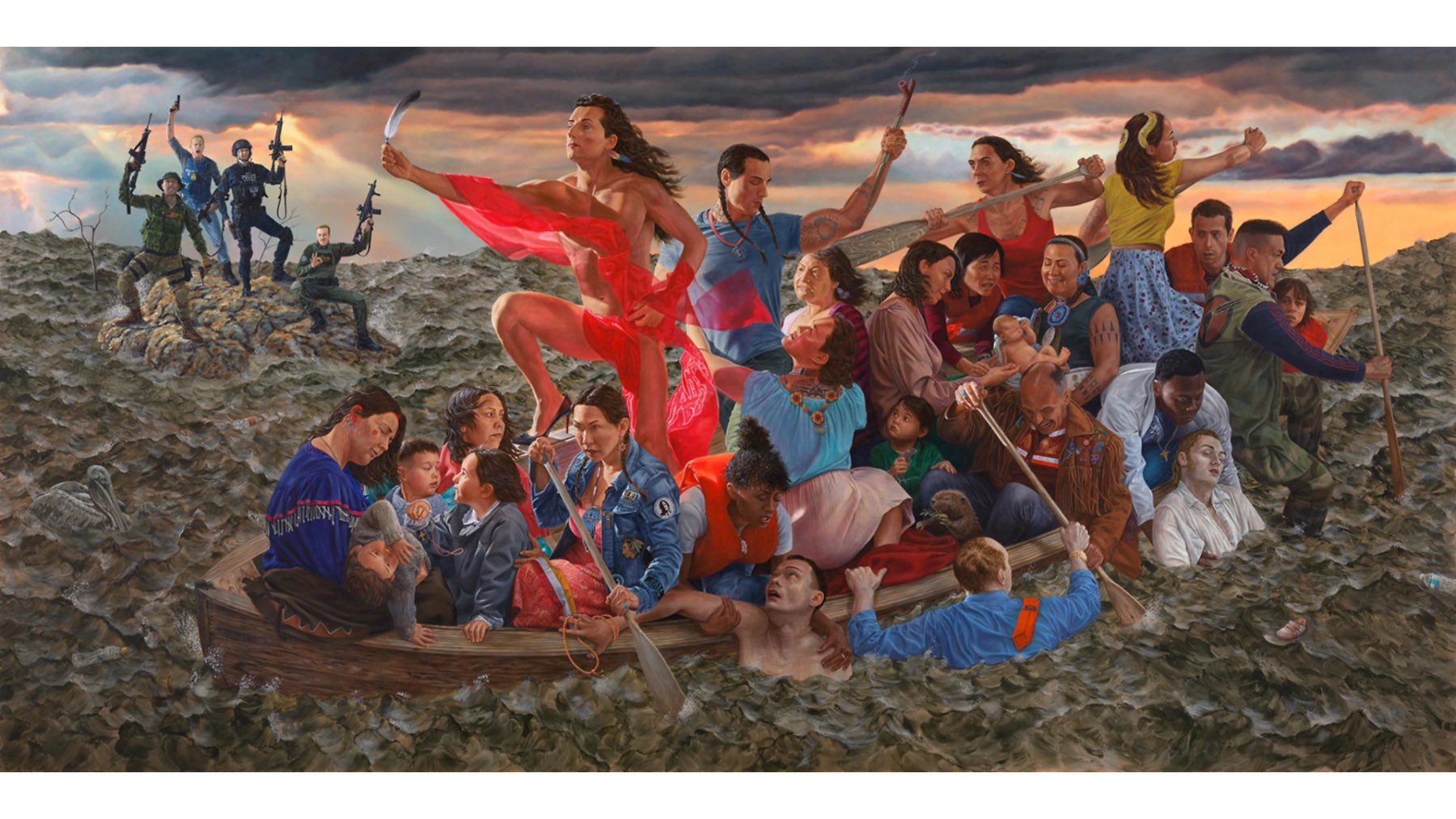
mistikôsiwak (Wooden Boat People): Resurgence of the People, Kent Monkman, 2019, Acrylic on Canvas
2019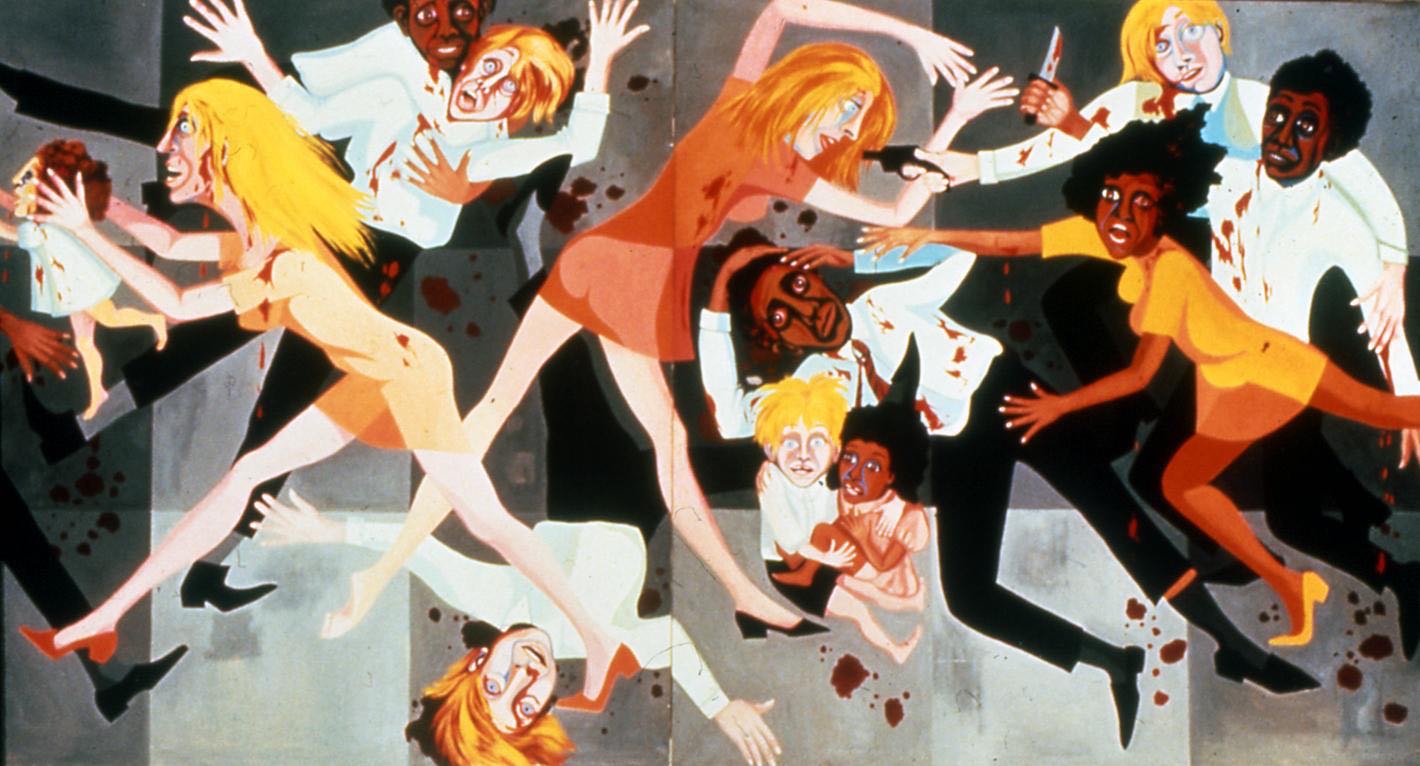
The American People Series #20: Die, Faith Ringgold, 1967, Oil on Canvas
1967
Guernica, Pablo Picasso, 1937, Oil on Canvas
1937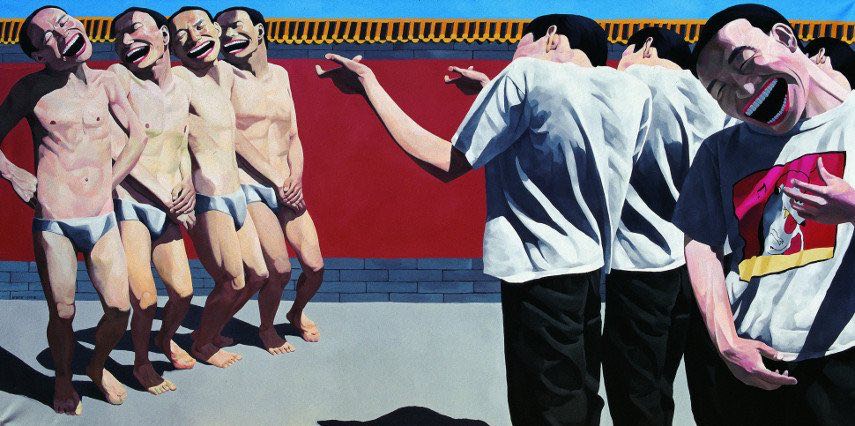
The Execution, Yue Minjun, 1995, Oil on Canvas
1995Immersive Experience
Walk through this gallery in 3D
Step inside a virtual gallery space. Walk up to each artwork. See them as they were meant to be seen.
React to this gallery
Guestbook
Sign in to leave a comment.
Loading…
Galerra
Create your own exhibition
Upload your work and we build a walkable 3D show in about a minute. Free to start.