

Reflections of Us
I chose the theme of identity and art while focusing specifically on women’s stereotypes and representation. My exhibition, Reflections of Us, explores different expectations society has placed on women and how artists have shown or challenged those expectations. Some of the stereotypes I focus on are the idea that women should be quiet and passive, that women are mainly valued for their appearance or bodies, they are naturally supposed to be caregivers, and how their accomplishments are often less recognized. These stereotypes can make women feel as if they need to fit into one specific role instead of being able to have different identities, emotions, experiences, and goals. The artworks in my exhibition show different sides of women’s identities and demonstrate how art can challenge these limited ideas. The main theory I am using for this exhibition is self-representation. Women have often been represented through images and expectations created by society that can lead to stereotypes about how they look or act. Self-representation allows women to have more control over their own stories, bodies, emotions, cultures, and identities. Frida Kahlo’s statement, “I paint self-portraits because I am often so alone, because I am the person I know best,” connects to this idea because she uses her own body and experiences to represent herself. Barbara Kruger challenges the expectation that women should remain quiet, Judy Chicago brings overlooked women into historical appreciation, and Faith Ringgold represents Black women through creativity, community, and storytelling. I chose The Two Fridas by Frida Kahlo because it shows that a woman’s identity can have many different sides. The two figures represent different parts of Kahlo’s identity, including her cultural background and personal experiences. The painting challenges the idea that women should be defined by one role or relationship. I chose Rage + Women = Power by Barbara Kruger because it challenges the stereotype
Artworks
- Rage+Women=Power, 1992 Barbra Krugar. Photolithograph 10 3/4 x 8 3/8 in (1992) — Barbara Kruger uses bold red, black, and white text onto a photograph of a woman's face, producing a direct and confrontational composition. The big words "RAGE + WOMEN = POWER" at once highlight the connection between women's anger and their capacity to challenge social expectations. The strong contrast between the colors and the large typeface gives a feeling of urgency and makes the message hard to ignore. The woman's face acts both as the subject and as the background for the statement, linking her identity with the words placed on her. The significance of the work lies in its challenge to the stereotype that women should be quiet, passive, or emotionally restrained. The word "rage" is transformed from something which might traditionally be seen as inappropriate for women into a source of strength and resistance. Within the context of Kruger's feminist art and her use of advertising style images and text, the piece questions the way society controls the behavior and self-expression that is expected of women. The combination of the woman's image and the assertive text presents female anger as a form of power rather than a weakness.
- The Dinner Party, 1974–1979 Judy Chicago. Ceramic, porcelain, textile; triangular table, 576 x 576 in (1974) — The triangular table repeats 39 place settings in an order so that every woman has a visible spot in the composition. The patterned plates, stitched fabric (textiles), embroidered napkins/cloths and silverware/utensils relate the artwork to the familiar space of a dining table. However, by being at such a large size, Chicago transforms the dining area into an exhibit of art history. The repeating images of women on the plates may represent the physical body of women and their identity. The names written under the table expand the scope of the artwork to include more than the 39 women included at the table. Chicago created this piece within the context of the feminist art movement which relates it to the historical exclusion of women from the mainstream of both art and history. Chicago is attempting to change the perception that women's work occurs solely within the private realm of the home or that women's accomplishments do not warrant inclusion in our collective historical record.
- The Sunflower Quilting Bee at Arles, 1991 Faith Ringgold. Acrylic on canvas with a pieced fabric border 22.5 in x 30 in (1991) — Ringgold places the women closely together in the center of a colorful landscape, creating a composition based on community rather than isolation. The large sunflowers fill the background and surround the figures, while the patterned clothing and fabric border creates repeated textures while connecting the painting to quilting traditions. The quilting bee symbolizes women's creativity, cooperation, and the passing down of stories, while the sunflowers symbolize growth and acceptance. The fabric border reinforces the connection between traditional women's work and artistic expression. In the context of Ringgold's focus on African American history, feminism, and storytelling, the artwork presents Black women as creators, historians, and active participants in their communities. The work challenges stereotypes that limit Black women to simplified roles by showing them as individuals with cultural knowledge, creativity, and their own stories.
- The Two Fridas, 1939 Frida Kahlo. Oil paint on canvas 173.5 cm x 173 cm (1939) — The two ladies who are put side by side, create a balanced piece by placing two versions of Kahlo directly beside each other, while their blood vessels visually connect them together. The contrast between the white European dress and the colorful Mexican dress emphasizes the differences between the two identities, while the repeated bodies and connected hearts show that these identities still belong to the same person. The exposed hearts and blood suggest emotional vulnerability, while the stormy background creates a lonely and serious mood. Because of Kahlo's personal experiences and interest in Mexican identity, the painting can be understood as a representation of the different parts of herself that she carried at the same time. The work challenges the stereotype that women can be understood through one simple role or identity by showing a woman defining and representing herself through her own experiences.
- Woman Drawing Water at the Cistern, 1733-1739 Jean-Siméon Chardin. Oil Paint on canvas 15 5/8 in x 12 1/2 in (1733) — Chardin shows a woman close to a large cistern as she bends down to draw water, together with a child who is placed nearby. The figures are situated in the middle of the picture, the rest of the interior being darker and less detailed. The use of dull colors, the soft lighting, and the simple layout give the scene a quiet, domestic air. The woman's body is oriented towards the cistern, which draws the viewer's attention to the physical task she is carrying out, and the child introduces another aspect of domestic duty. The significance of the painting can be linked to the traditional expectations regarding women's role in looking after the household and carrying out every day domestic work. The act of collecting water stands for the physical and repetitive kind of work needed to keep a home going, and the fact that the child is present ties the woman to her responsibilities as a career. In eighteenth-century European society women's roles were generally closely tied to the home, the family, and domestic duties. By focusing on an ordinary woman engaged in an everyday activity, Chardin presents domestic labor as an important element of daily life and at the same time reflects the restricted roles that many women had at that time.
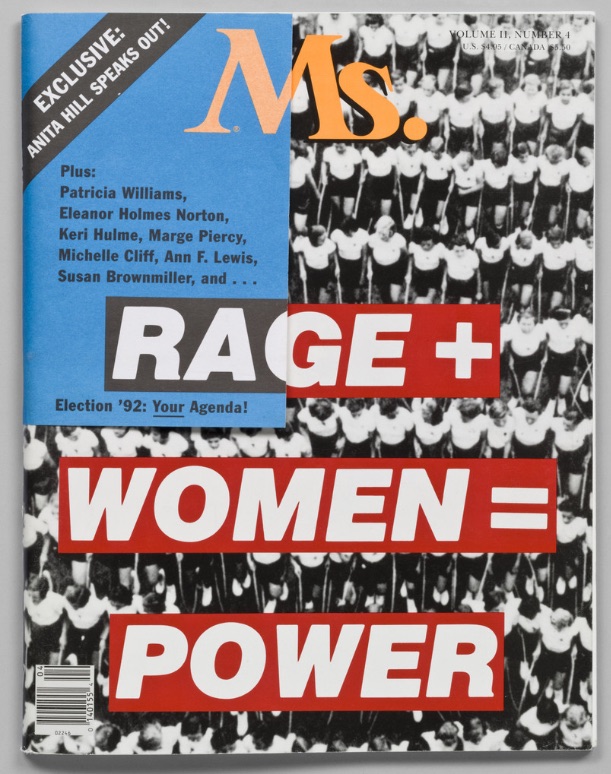
Rage+Women=Power, 1992 Barbra Krugar. Photolithograph 10 3/4 x 8 3/8 in
1992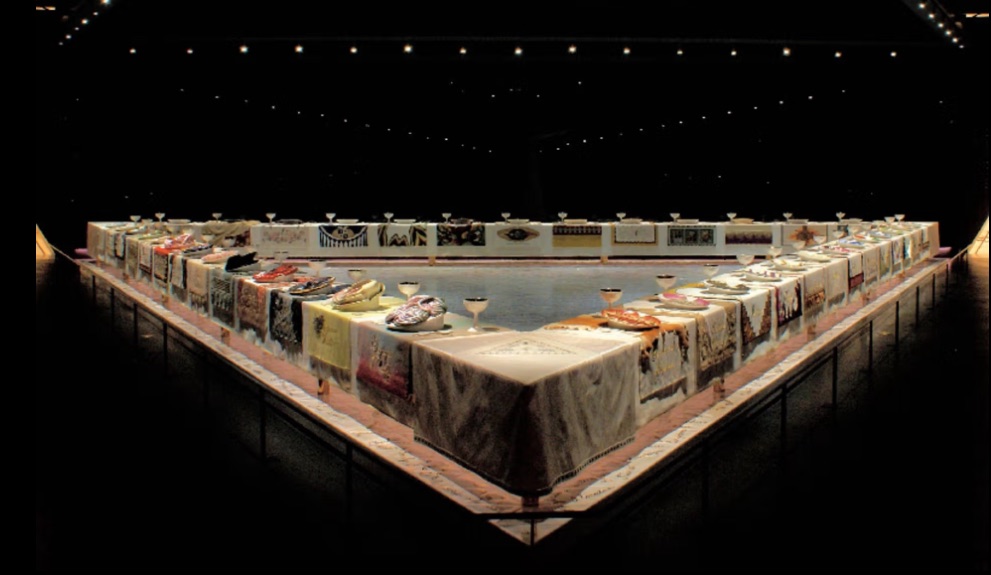
The Dinner Party, 1974–1979 Judy Chicago. Ceramic, porcelain, textile; triangular table, 576 x 576 in
1974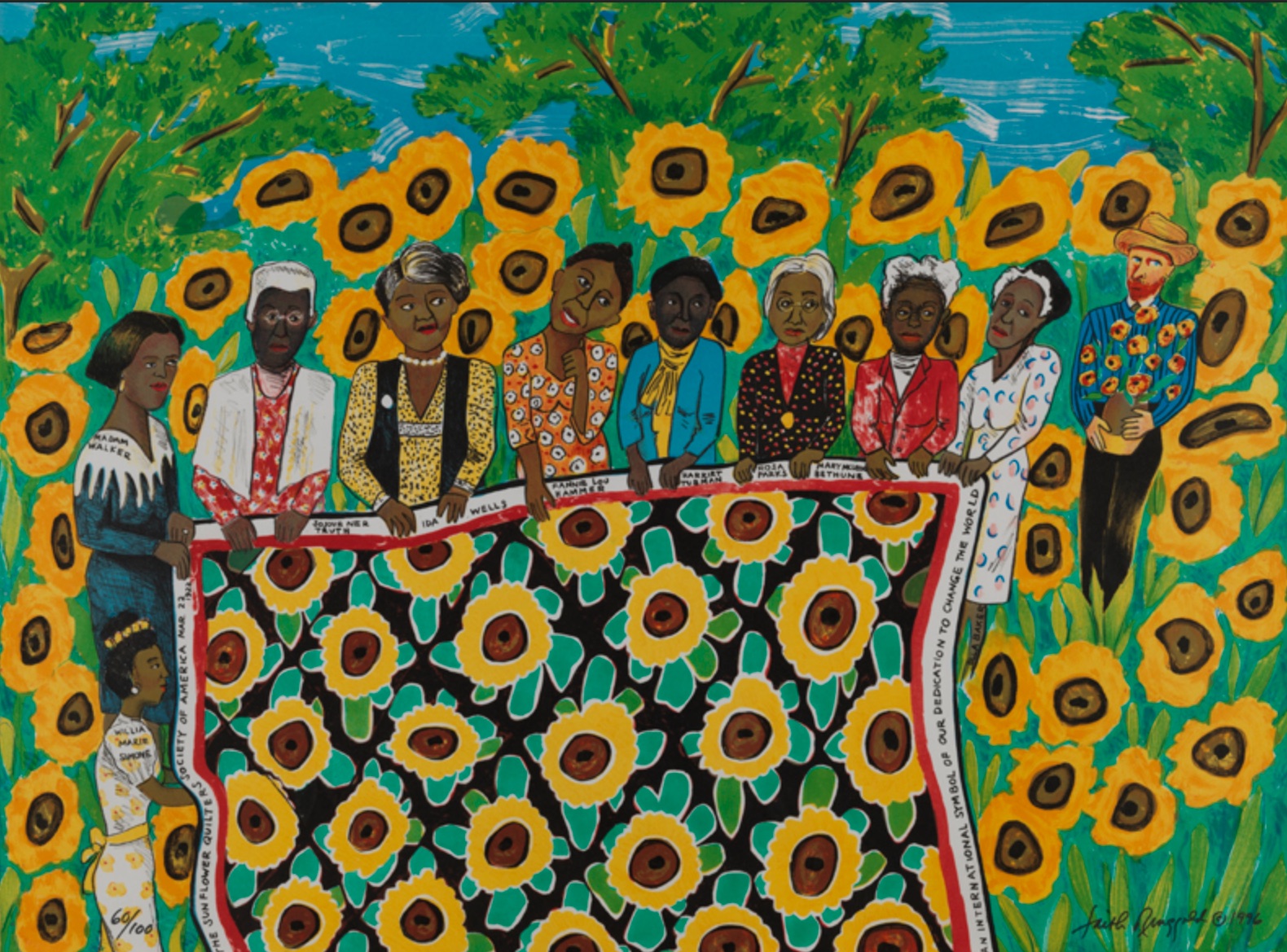
The Sunflower Quilting Bee at Arles, 1991 Faith Ringgold. Acrylic on canvas with a pieced fabric border 22.5 in x 30 in
1991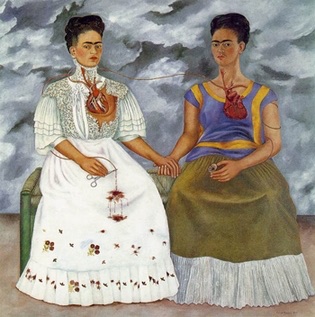
The Two Fridas, 1939 Frida Kahlo. Oil paint on canvas 173.5 cm x 173 cm
1939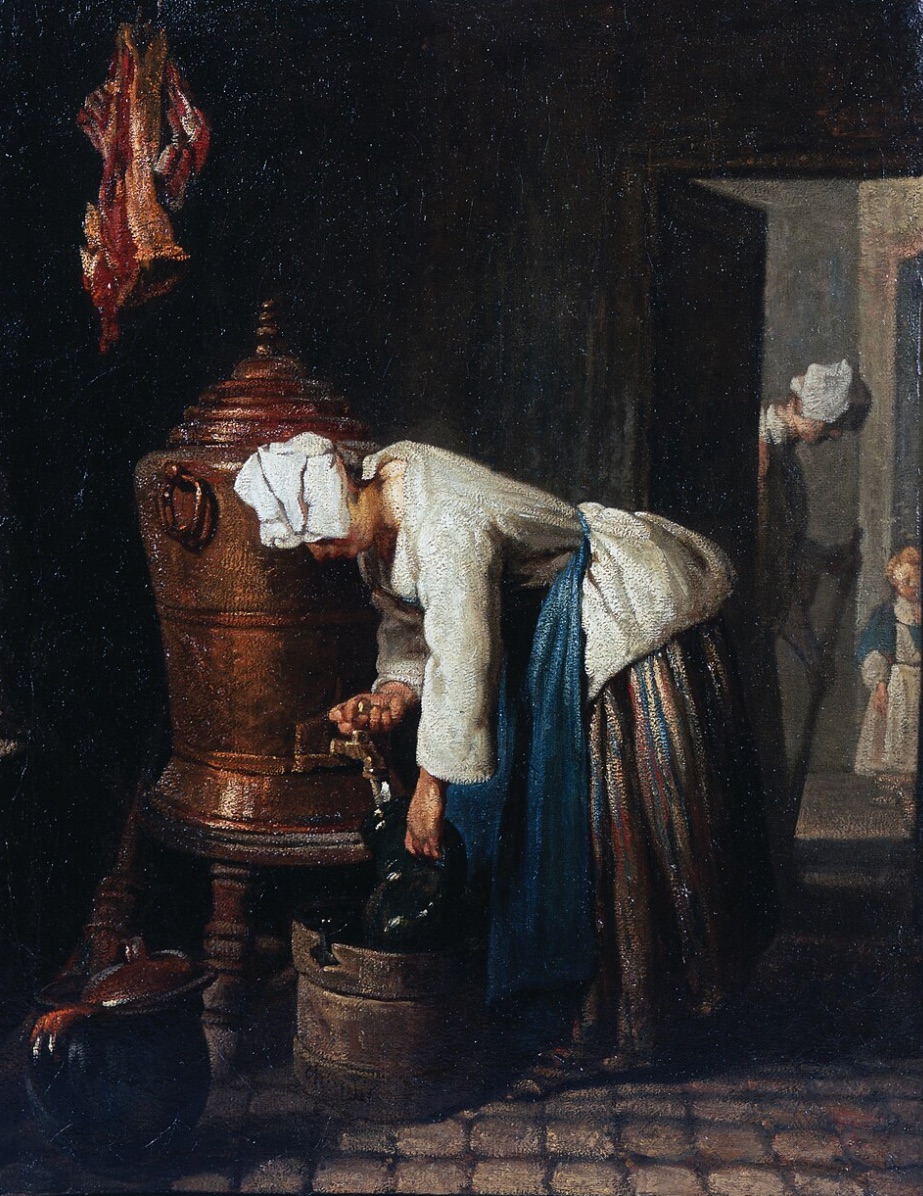
Woman Drawing Water at the Cistern, 1733-1739 Jean-Siméon Chardin. Oil Paint on canvas 15 5/8 in x 12 1/2 in
1733Immersive Experience
Walk through this gallery in 3D
Step inside a virtual gallery space. Walk up to each artwork. See them as they were meant to be seen.
React to this gallery
Guestbook
Sign in to leave a comment.
Loading…
Galerra
Create your own exhibition
Upload your work and we build a walkable 3D show in about a minute. Free to start.