

Roots and Resonance: Identification and Black Expression
In this exhibit, Roots and Resonance: Identification and Black Expression, the artwork explores the concept of expression through abstraction and symbolism. The pieces touch base on how the black community has expressed their individuality and showcased their freedom/rights through all the hate in history. The artists all shared the centralized concept/idea that there is importance in expressing one's history and one's individual personalities/identity. Along with creating that strong sense of expression and identity, they place importance on the connection to their culture. Utilizing several different mediums, colors, and portrayals, their pieces are not shown through the concept of typical historical paintings of racism, but shown through bright colors connecting to their culture, spiritual conceptions on how the intended subjects felt, and abstract ideas that give the subject identity. According to a renowned curator who focuses on building exhibits with the same premise and importance, Thelma Golden states, “For me, it’s about considering the implications. It’s considering the implications of what this generation has to say about us. It’s considering what it means for these artists to be both out in the world as work travels but also in their communities, as people who are seeing and thinking about the issues that face us. It’s also about thinking about the creative spirit and nurturing it, and imagining, typically in urban America, about the nurturing of the spirit. Reimagining this cultural discourse in an international context.” -TED Talk, 2013. In this TED Talk, she talks about wanting to help young black artists create their narratives. She spent her career helping these artists showcase the concept of identification and individualism, and the importance of the black community and black/African American art. She puts importance on expressing one’s identity and culture through one's own narrative and art, which is the concept I wanted to portray in my exhibition. In the exhibit Roots and Resonance: Identification and Black Expression, I specifically ordered this assortment of paintings to slowly but intensely represent one’s individuality and how one’s sense of self and narrative can become confusing and jumbled. Starting with how one feels about themselves, even with misrepresentation and automatic judgment, a concept shown in the Chicken Thief created by Michael Armitage, to eventually ending with a piece that shows the split in someone’s narrative and life and how lost someone can feel in their identity/culture, shown in Seasons Change by Joyce Owens. The three works in the middle put gradual importance on one’s body image, expression through clothing, and one’s mind and thought processes. Showcasing the significance and give attention to the individual structures and stories of their subjects. All connect to the bigger idea of representing one’s individuality and culture despite the restrictions of skin color and stereotypes/hate from outside sources, and showing out-of-body experiences, metaphorical representations, and then abstract representations of one’s culture and self.
Artworks
- Pride and Presence, 2019 Bisa Butler. 60 x 60in. Textured and patterned cloth to create a quilt. (2019) — Bisa Butler creates a portrait that depicts a woman who is made of colorful quilts and patterns resembling her cultural heritage. It is an individualistic narrative portraying one’s culture and sense of self in the quilt Pride and Presence. Through the metaphorical use of color for the subject’s skin, texture, and differing materials for the clothing, and a specific pattern in the background, she establishes a narrative and cultural connection. She portrays beauty in having pride for one’s culture and heritage, but also beauty in expressing oneself.
- The Chicken Thief, 2019 Micheal Armitage. 200 x 150cm. Oil paint on Lubugo bark cloth. (2020) — The Chicken Thief by Michael Armitage shows a black man carrying a chicken running from an obscene figure in a market setting and portrays a debated topic that has been presented in history several times on how politicians prey on their supporters and “consume the vulnerable”. The artist shows the concept through magical realism in the piece, utilizing a main subject as the focal point, and giving him a narrative. The artist also shows contrast in the figures, intended chaos through bright saturated colors, and emphasized movement creating a figurative rush for the subject. Michael Armitage taps into one of the viewpoints from being not only an underappreciated supporter but also a minority, and represents one of the hidden harsh realities that he faces in this piece.
- State of Mind 6, 2022 Damola Ayegbayo. 47 x 36 in. Acrylic paint on canvas. (2023) — Damola Ayegbayo creates a painting that depicts a black woman with colorful streaks on the center of her face that expand into her hair, and a white background to put emphasis on this figure. It is meant to connect and stress to the viewer the importance of one’s expression and individuality. Not only does he tap into the beauty and importance of black culture with the subject and her key features, but he also taps into the beauty of the mind and individualism. He does this through highly saturated colors, contrast with the background, and specific streaks, putting emphasis on structures in the face, but also creating a representation of an emergence of individualism and one’s own thoughts from one’s mind. Celebrating individualism, expressionism, and one’s own mind and body through this painting.
- Seasons Change, 2005 Joyce Owens. 11 x 14in. Acrylic paint on canvas. (2005) — In the piece Seasons Change by Joyce Owens, it creates a four-way perspective with four different subjects that all show individualism in their expressions and clothes. The colors depicted and style show their culture. She connects to the bigger fight of proper cultural representation, self-identity, and the multiple layers to an individual. She shows the masks of an individual through transparency, shading, and repeated elements. But she also shows the vibrancy and beauty of one’s culture and individuality through the bright saturated hues in the background and the stylistic approach. Their clothing, the simplistic shapes, and the highlights and linework done to represent their features all connect to the concept of individualism and one’s portrayal of oneself.
- Colorful Dreams, 2021 Ernest Larbi Budu. 24 x 28in. Acrylic paint and marker on canvas. (2021) — Colorful Dreams, created by Ernest Larbi Budu, depicts the portrait of a black woman looking at the viewer, with colorful marker-like streaks around her eye and in her hair. It shows the beauty and determination of a black woman and African American culture. The artist does this by showing contrast in the background and main concept. Utilizing highly saturated, colorful, textured streaks positioned around the subject's head, and incorporates detailed work, shadows, and highlights on the subject. The portrayal of determination also comes in the subject's gaze. The gaze and colorful streaks give this piece narrative and show individualism in the subject.
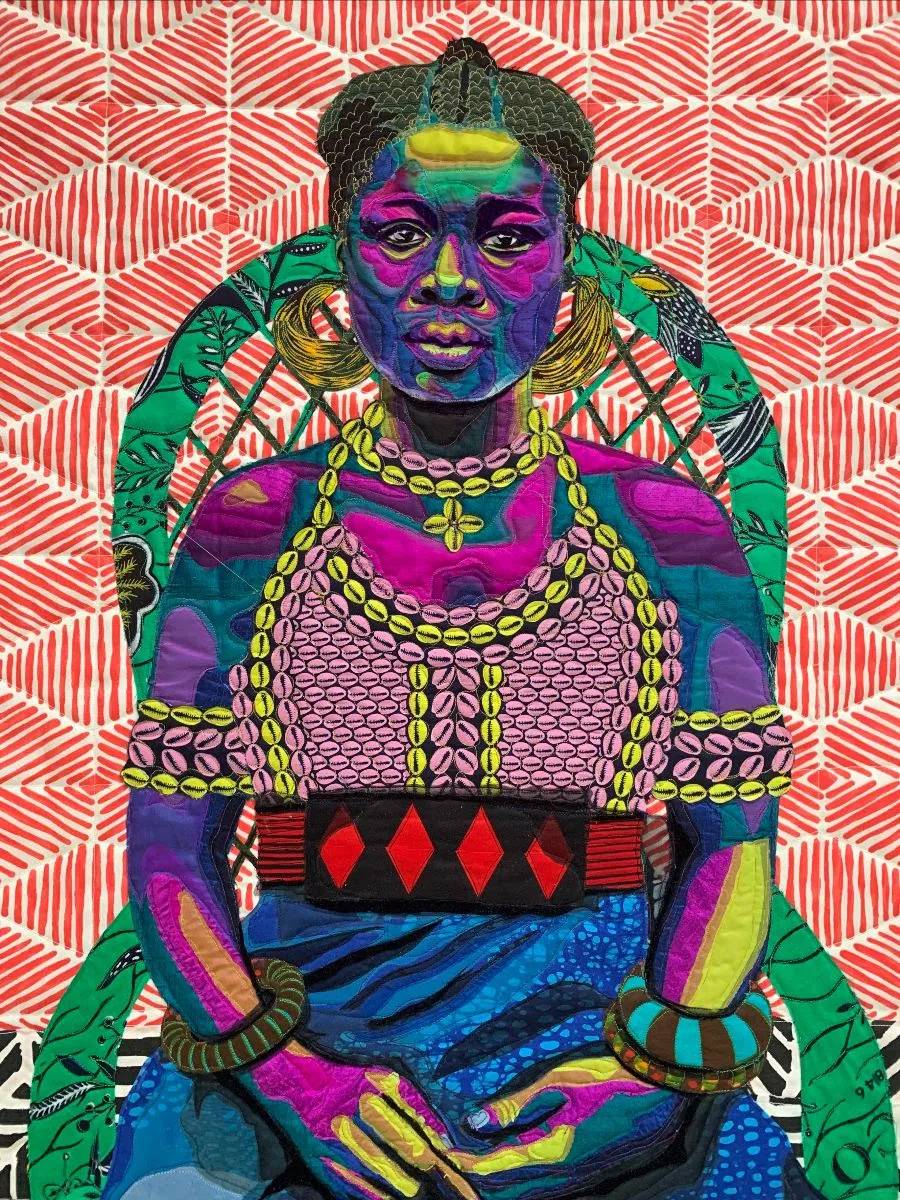
Pride and Presence, 2019 Bisa Butler. 60 x 60in. Textured and patterned cloth to create a quilt.
2019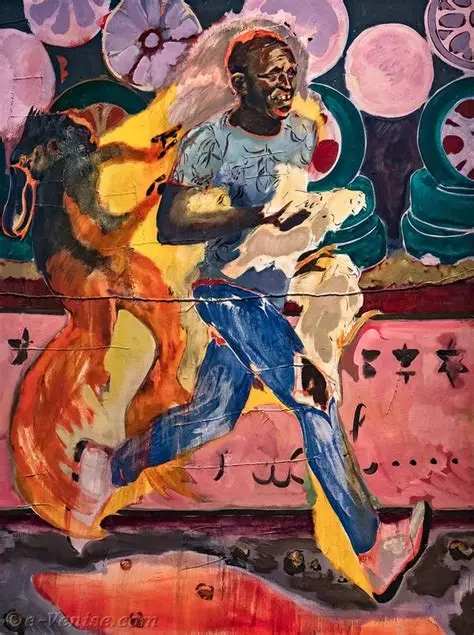
The Chicken Thief, 2019 Micheal Armitage. 200 x 150cm. Oil paint on Lubugo bark cloth.
2020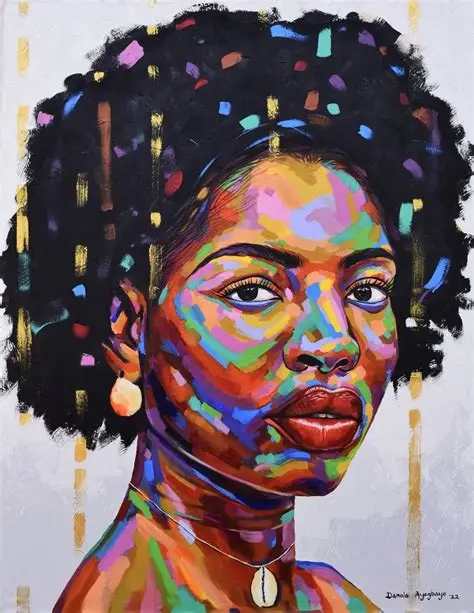
State of Mind 6, 2022 Damola Ayegbayo. 47 x 36 in. Acrylic paint on canvas.
2023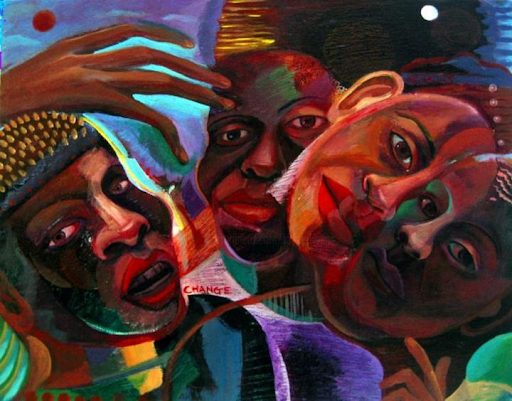
Seasons Change, 2005 Joyce Owens. 11 x 14in. Acrylic paint on canvas.
2005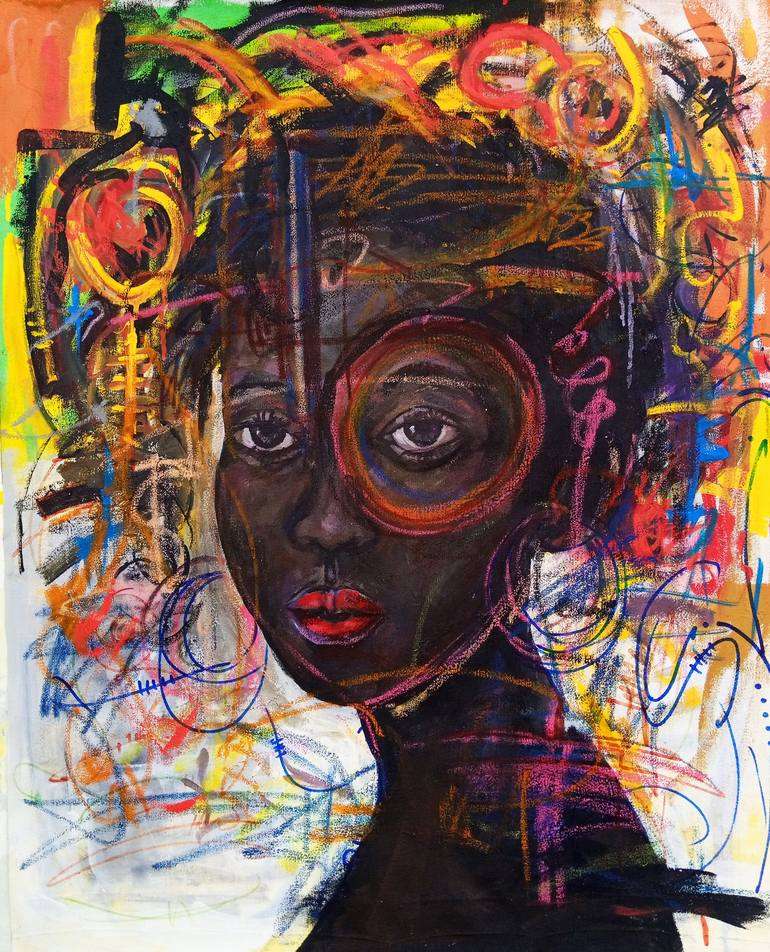
Colorful Dreams, 2021 Ernest Larbi Budu. 24 x 28in. Acrylic paint and marker on canvas.
2021Immersive Experience
Walk through this gallery in 3D
Step inside a virtual gallery space. Walk up to each artwork. See them as they were meant to be seen.
React to this gallery
Guestbook
Sign in to leave a comment.
Loading…
Galerra
Create your own exhibition
Upload your work and we build a walkable 3D show in about a minute. Free to start.