

Silent Speech: Gesture and Emotion in Renaissance Art
Silent Speech: Gesture and Emotion in Renaissance Art explores how Renaissance artists made the body speak. Across these five works, folded arms signal acceptance, raised hands register surprise, pointing fingers spread suspicion, and a near-touch holds recognition and loss. The exhibition asks how a still image can make thought, feeling, and intention understandable without written dialogue. Rather than treating gesture as decoration, it considers the body an essential storytelling device that guides viewers through each event. Its focus on gesture, gaze, posture, and expression connects sacred narratives with ordinary family life while showing the Renaissance interest in humanism, naturalism, and the believable representation of emotion. The exhibition is guided by Renaissance humanist Leon Battista Alberti's statement in On Painting (1435): "These movements of the soul are made known by movements of the body." For Alberti, a figure's outward movement should reveal an inward state. This idea provides the exhibition's framework: bodies are not simply arranged within each composition; they carry the narrative. Hands, faces, and physical distance allow viewers to recognize humility, fear, grief, restraint, confidence, and amusement. The sequence begins with two versions of The Annunciation to show how the same sacred message can be communicated through different degrees of movement. In Fra Angelico's painting, Gabriel and Mary mirror one another with crossed arms and bowed postures. Their symmetry gives the exchange a quiet formality. Botticelli revisits the subject with a more immediate reaction: Gabriel advances, Mary bends backward, and their extended hands almost connect across the architectural divide. Placed together, the paintings move from calm acceptance toward visible surprise and individual response. Leonardo da Vinci's The Last Supper forms the exhibition's emotional center. Christ's announcement of betrayal produces a chain of disti
Artworks
- Noli me Tangere (1514) — Medium: Oil on canvas In a dawn landscape, Mary Magdalene kneels in a red dress and reaches toward the resurrected Christ, who looks down at her while turning away. Their hands approach but do not meet. Opposing diagonals structure the encounter: Mary's body and arm rise toward Christ, while his curved pose and white shroud pull back. A tree and sloping hillside guide the eye toward the space between their hands, and atmospheric perspective softens the distant fields. The scene comes from John 20:14-18, when Mary first mistakes Christ for a gardener and then recognizes him. Her gesture conveys devotion and the desire to recover someone she believed lost; his movement answers with both connection and refusal. The gap between them marks a transition from physical presence to spiritual faith. Following the many reactions in The Last Supper, Titian reduces silent communication to two bodies and one suspended interval. Noli me Tangere belongs in the exhibition because it shows that absence of contact can communicate as powerfully as touch. Recognition, longing, grief, and restraint become visible in the opposing movement of two hands.
- The Annunciation (1490) — Medium: Tempera and gold on wood In this small horizontal panel, Gabriel kneels at the left edge of a classical interior while Mary turns from her book at right. Columns separate the open loggia from her bedchamber, yet the figures lean across that division and extend their hands toward one another. One-point perspective and patterned floor tiles create depth; flowing drapery and opposing diagonals add movement within the controlled space. Gabriel's raised hand delivers the message, while Mary's hand at her chest suggests an inward reaction and her other hand reaches outward in response. Renaissance viewers would have recognized the lily as a sign of Mary's purity and the interrupted book as evidence of private devotion. Unlike Fra Angelico's calm, mirrored exchange, Botticelli presents the announcement as a moment of surprise and adjustment. The narrow opening between the figures becomes an active space through which the message seems to pass. Within Silent Speech, this painting advances the exhibition from formal acceptance to a more individual and physically immediate response. Mary's turning body allows viewers to see the instant when reading stops, attention shifts, and a life-changing message is received.
- The Annunciation (1425) — Medium: Tempera on poplar panel A square altarpiece places Adam and Eve's expulsion in a garden at left and the Annunciation beneath a stone portico at right. Gabriel bends toward Mary with his arms crossed over his chest, and Mary repeats the gesture while seated. Columns, arches, and tiled flooring create an orderly architectural setting, while a diagonal ray of light carries a dove toward her. Gold halos and sacred details preserve the devotional character of the scene, but coherent perspective, natural light, and measured bodily interaction make the encounter feel present and human. The contrast between the exiles' movement and Mary's stillness links the Fall to the promise of redemption. Most importantly, Gabriel and Mary communicate through mirrored posture: his crossed arms convey reverence, while hers express humility and acceptance. Their physical symmetry makes the divine message understandable before any text is read. As the opening work in Silent Speech, Fra Angelico's restrained exchange introduces the exhibition's central idea in its quietest form. A slight bow and folded arms carry the emotional and theological weight of the scene, making inward devotion visible through the body.
- The Last Supper (1475) — Medium: Tempera and oil on dry plaster Christ sits at the center of a long table as twelve apostles react to his announcement that one of them will betray him. Leonardo organizes the apostles into four groups of three, but their overlapping arms, turning heads, open palms, and pointing fingers create a continuous wave of movement. The ceiling and wall lines converge near Christ's head, making him the visual focus, while his stable triangular form contrasts with the apostles' agitated diagonals. Painted for the refectory of Santa Maria delle Grazie in Milan, the mural joins a sacred meal with close observation of human behavior. Each apostle responds differently: some question, some deny, some accuse, and others recoil. Judas withdraws into shadow while gripping the money bag; Christ extends his hands with calm acceptance. The body therefore reveals individual psychology as well as narrative action. At the center of Silent Speech, this work expands one message into a full range of visible reactions. Its balance and perspective establish order, but gesture gives the scene urgency. Viewers can almost trace Christ's words as they move outward through the group, turning speech into a landscape of fear, doubt, anger, and grief.
- The Chess Game (1555) — Medium: Oil on canvas Three sisters gather around a chessboard outdoors while an older maid watches from the right. Lucia smiles toward the viewer with a hand near the board, Europa laughs between her sisters, and Minerva raises one hand as if questioning or protesting a move. The chessboard anchors the foreground, while the sisters' faces and gestures form a connected triangular group. Alternating gazes lead the eye from one response to another, creating the rhythm of conversation. Painted by Sofonisba Anguissola, the scene presents her sisters as educated young women engaged in strategy, competition, and shared amusement. Their embroidered clothing indicates family status, but their distinct expressions make personality more important than display. Chess symbolizes intellect, yet the small gestures keep the scene warm and informal. As the conclusion of Silent Speech, the painting carries the exhibition's visual language from sacred revelation into everyday family life. No biblical text is needed to understand that a move has just changed the game: confidence, laughter, and playful disagreement are already visible in the figures' bodies. Anguissola shows that ordinary interaction can hold the same narrative richness as religious history.
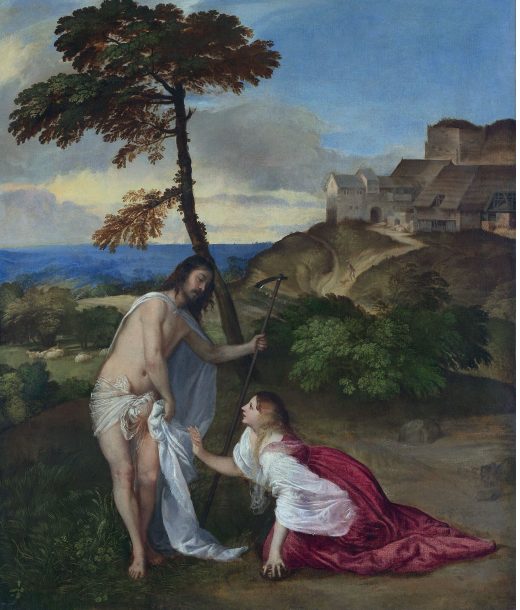
Noli me Tangere
1514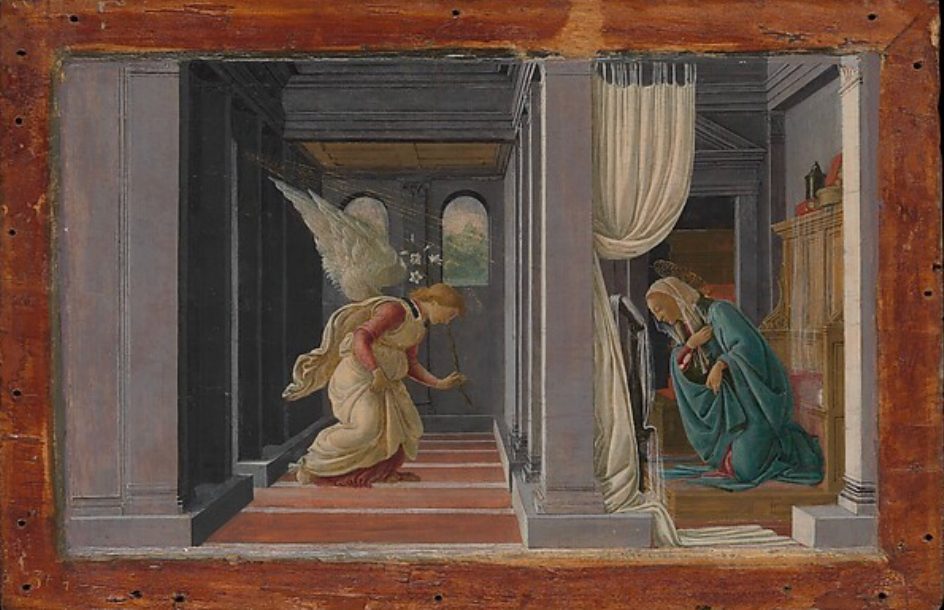
The Annunciation
1490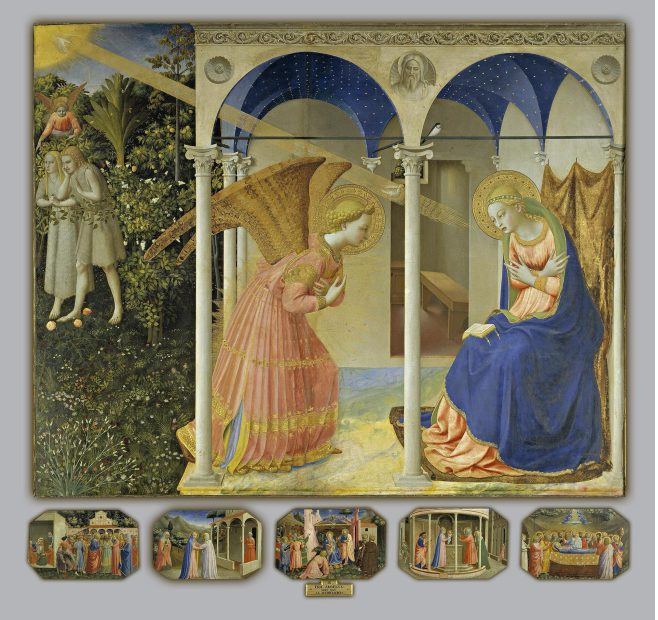
The Annunciation
1425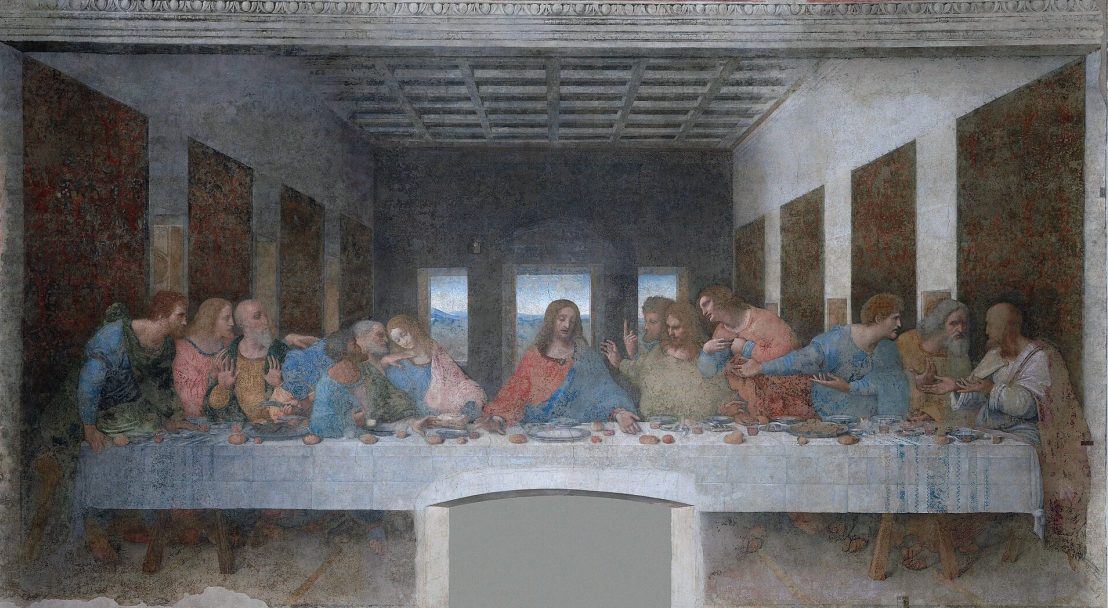
The Last Supper
1475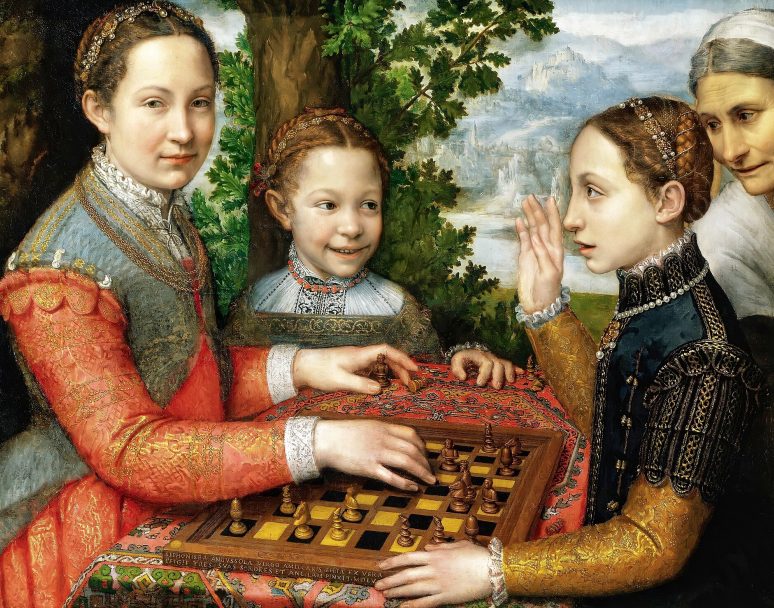
The Chess Game
1555Immersive Experience
Walk through this gallery in 3D
Step inside a virtual gallery space. Walk up to each artwork. See them as they were meant to be seen.
React to this gallery
Guestbook
Sign in to leave a comment.
Loading…
Galerra
Create your own exhibition
Upload your work and we build a walkable 3D show in about a minute. Free to start.