

The Art of Ordinary Labor
For many years, art has been used to celebrate wealth, power, and important historical figures, but many artists have instead chosen to look at the beauty of ordinary people's lives. This exhibition brings together artworks from different time periods and regions that explore the realities of working-class life. Through their scenes of labor, daily survival, and domestic responsibilities, these works highlight the resilience and humanity of individuals whose contributions are often overlooked yet essential to society. Rather than presenting the achievements or luxury that people had, this exhibition asks viewers to consider the value of ordinary labor and the people who perform it. The exhibition is viewed through a Marxist theory, which examines how social class and labor shape human experiences. Philosopher Karl Marx argued that labor is the foundation of society, yet workers are often denied recognition for the value they create. The idea provides a useful framework for our understanding of these artworks in this exhibition. Each piece draws our attention to the people whose lives are shaped by their work and economic conditions, revealing both the hardships they face and the dignity they maintain. The exhibition also reflects Vincent Van Gogh's belief that labor deserves recognition and respect. While we discussed The Potato Eaters, Van Gogh explained that the figures had “ dug the earth with the same hands they are now putting into the dish”. Van Gogh believed that people's labor deserved recognition, and in that quote, he emphasized the connection between labor and survival. In this exhibition, the artworks differ in style, historical context, and cultural background; they all share a common concern for representing ordinary people. The first work introduces viewers to the physical realities of labor and poverty, showing how work is directly connected to their survival. As the exhibition progresses, the focus expands to include domestic life and the social conditions that shape working-class experiences. These scenes reveal that labor extends beyond factories and fields. Together, the artworks challenge traditional ideas about what subjects are worthy of artistic representation. The exhibition is arranged chronologically to demonstrate how artists from different eras approached similar themes. While artistic styles evolve over time, the experiences of labor remain constant. This arrangement allows the viewer to observe the changes in artistic expression and enduring concerns about social class and human dignity across our time, showing how artists have consistently recognized ordinary people and their importance in our society. Overall, The Art of Ordinary Labor encourages viewers to look beyond status and wealth and to appreciate the humanity found in everyday life. The exhibition demonstrates the ordinary moments and the workers who are always worthy of our attention through artistic celebration, revealing the real strength and dignity that sustain our society.
Artworks
- Migrant Mother, 1936, Dorothea Lange, Gelatin silver photograph, 11 × 14 in. (27.9 × 35.6 cm). (2026) — Migrant Mother is a very powerful way to capture the emotional and physical difficulties of surviving the great depression. In the picture we can see it scaled up close to a mother with what is to be three children. She is facing the camera but looking off into the distance with a weird worried look on her face. Her hand is propped up on her chin making her look unsure of how she is going to manage the uncertainty of the future. She is supposedly holding a child in her lab but we cannot see it. There are also her two other children resting on both of her shoulders, one on each side looking away from the camera, almost hiding. The composition is also in black and white and their clothes are rather simple so it gives the family a sense of struggle to them. When looking at the mother, we don't just see the woman's struggle; we also see the determination on her face, giving hope to the family.
- The Flower Carrier, 1935, Diego Rivera, Oil and tempera on masonite, 48 × 48 in. (121.9 × 121.9 cm). (2026) — The flower carrier is a powerful depiction of the endurance of the working class. Diego uses scale and color to show the view the weight of the burdens the worker carries and the sacrifice they make just by trying to live. The main male figure is kneeled down on the ground and is wearing a plain white outfit with a yellow hat. He is carrying an oversized basket filled with flowers and he looks to be struggling to get up. The flowers in the basket are brightly colored and are repeated as the goods that are being produced by these people. This image shows that from an everyday object we might overlook that pain and struggle that one is having to do to give it to use. There is also a woman on the right side trying to help the man up. She represents the unity, the strength, and cooperation that these people have with one another, which is the true beauty.
- The Potato Eaters, 1885, Vincent van Gogh, Oil on canvas, 32 × 45 in. (82 × 114 cm). (2026) — The potato eaters is a powerful piece that represents the strength and unity that are people from the working class. Van Gogh portrayed this by using earthy colors like muted yellows, greens, and brown in his painting and rough brush strokes to give it more of a worn or dusty feeling to it. He painted a family of five in the center of the painting enjoying a nice meal together out of potatoes and some other beverage. The characters are painted very exaggerated with their facial features and their hands which are not painted to scale. In the foreground it seems to be a very simple home with only one light fixture that is above the family's table lighting up the home. The family seems to be tired from working all day but they seem to be brought together which shows unity and peace from their everyday survival. Van Gogh transforms this simple moment from a family into a reflection into real humanity and their everyday life. It shows the beauty of such a moment with their beautiful bond that connects them all, but it also shows the hardships that brought them there. This painting still makes a very big impact on us now because it represents the strength, dignity, and honor of these people's daily lives even though most of these efforts go unnoticed. This painting notices all of those people today.
- The Gleaners, 1857, Jean-François Millet, Oil on canvas, 32.5 × 43.5 in. (83.8 × 111 cm). (2026) — The Gleaners is a painting which shows the strength of the lower class. It shows three women that were sent out at the end of the day to pick up the leftover grains from the harvest. It shows them in a repetition of one woman bending down to grab the grain, the other grabbing it, and the last one bringing it back up to secure it. It shows a very tiring process with heavy shadows on them. In the background there is a blurred out town or houses painted reverie softly with pastels. In the field still behind the women there is still a cart of her being pulled and an isolated man still on horseback. That act could be seen as that they are being supervised and to conduct their jobs accurately. The distance of the man could be a reminder of the landlord that he is representing and to take accountability. Millet uses this painting very well in showing that every struggle and labor back in the day also demands representation in their story, too, because it can also show its beauty and strength.
- Nighthawks, 1942, Edward Hopper, Oil on canvas, 33.1 × 60 in. (84.1 × 152.4 cm). (2026) — Nighthawk is shown to be in the middle of a big city after hours. There seems to be no one around and all the shops closed other than a diner on the right side. The viewer seems to be outside of the diner looking in. The building's glass has a slight curve, drawing the viewer in. There are only four people in the diner. There is one man sitting alone, a waiter preparing something and a man and woman sitting together. None of these people are talking together and almost make them feel distant from one another. The lighting in the room is warm with yellows and reds, making it feel comfortable compared to the dark outside. Yet without the conversation, the painting looks very lonely.
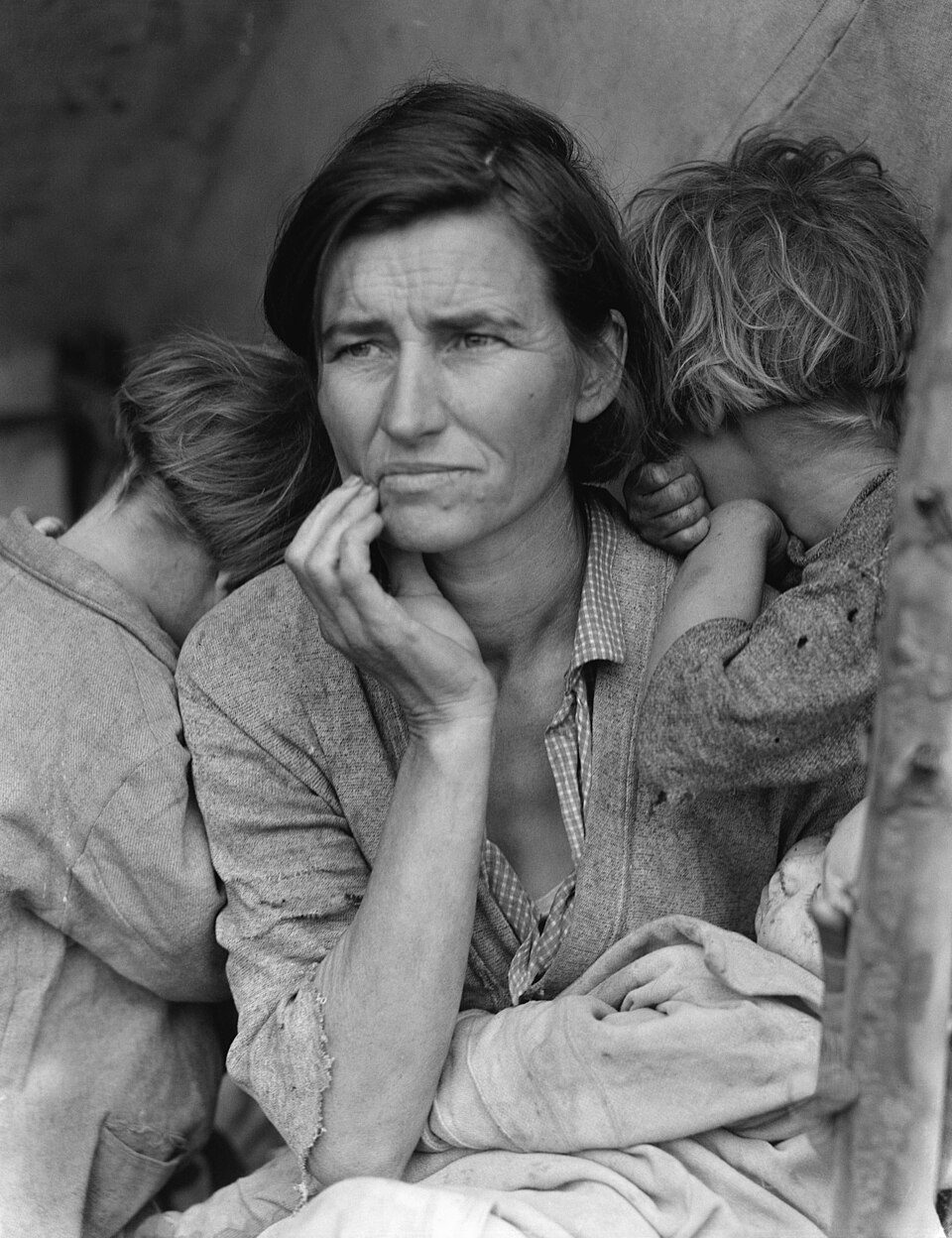
Migrant Mother, 1936, Dorothea Lange, Gelatin silver photograph, 11 × 14 in. (27.9 × 35.6 cm).
2026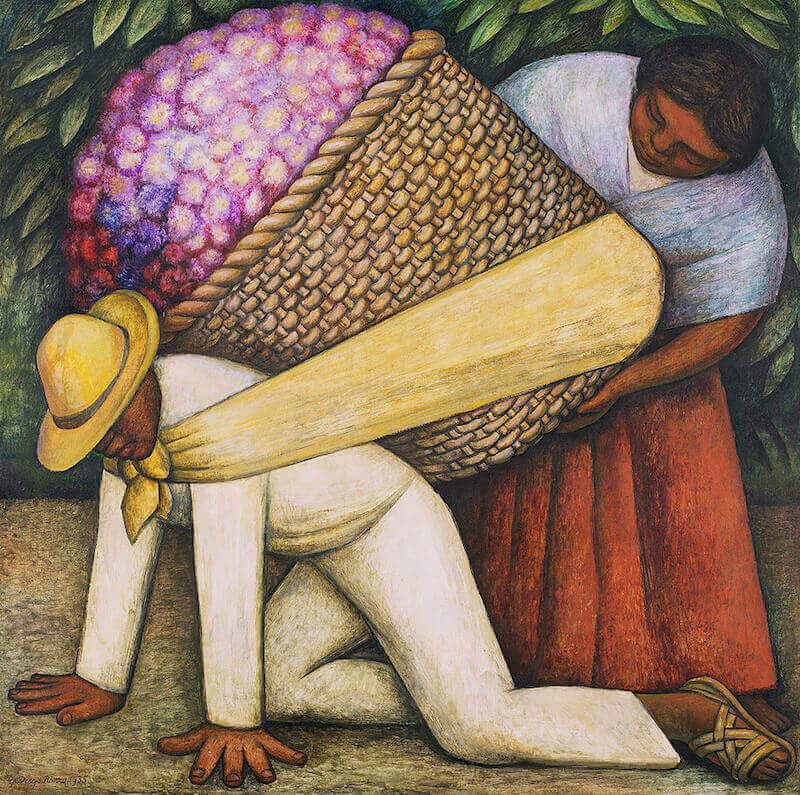
The Flower Carrier, 1935, Diego Rivera, Oil and tempera on masonite, 48 × 48 in. (121.9 × 121.9 cm).
2026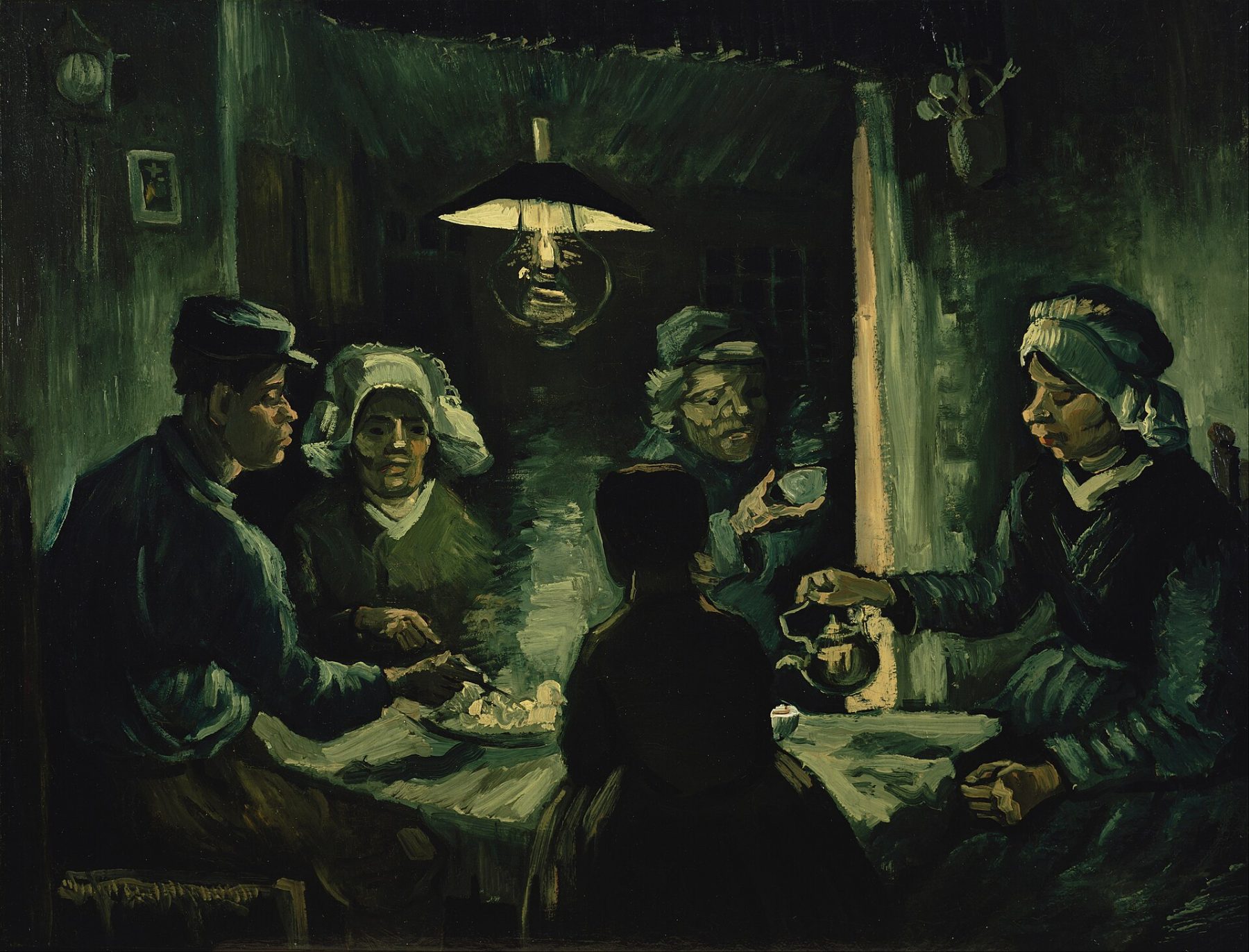
The Potato Eaters, 1885, Vincent van Gogh, Oil on canvas, 32 × 45 in. (82 × 114 cm).
2026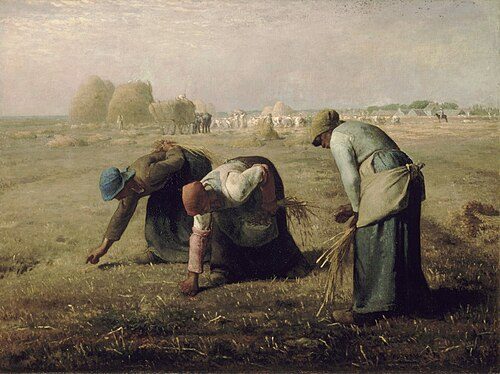
The Gleaners, 1857, Jean-François Millet, Oil on canvas, 32.5 × 43.5 in. (83.8 × 111 cm).
2026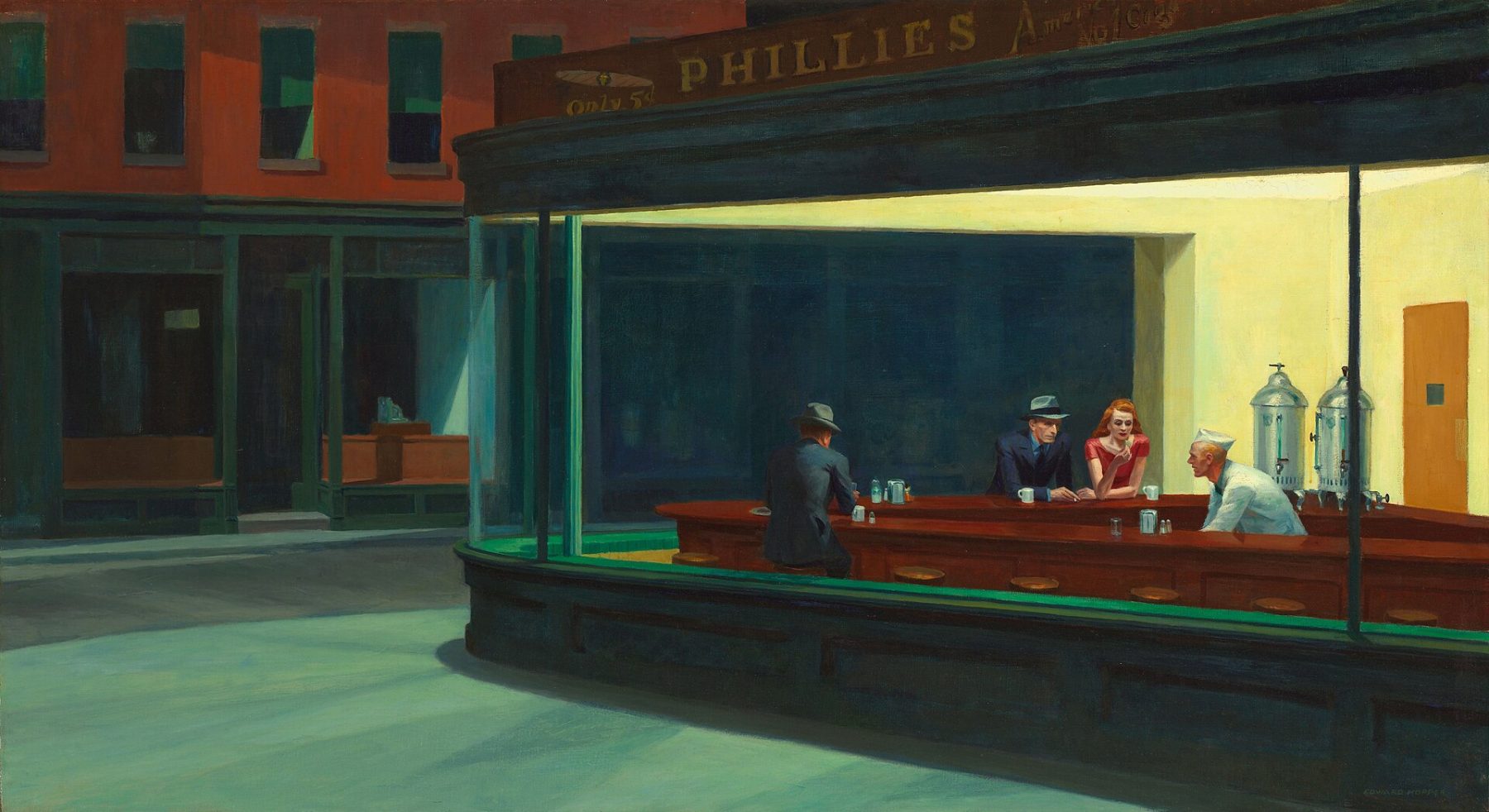
Nighthawks, 1942, Edward Hopper, Oil on canvas, 33.1 × 60 in. (84.1 × 152.4 cm).
2026Immersive Experience
Walk through this gallery in 3D
Step inside a virtual gallery space. Walk up to each artwork. See them as they were meant to be seen.
React to this gallery
Guestbook
Sign in to leave a comment.
Loading…
Galerra
Create your own exhibition
Upload your work and we build a walkable 3D show in about a minute. Free to start.