

Artworks
- Insurrection! (Our Tools Were Rudimentary, Yet We Pressed On), Kara Walker, 2000, Cut-paper silhouettes and light projections (2026) — Kara Walker’s Insurrection! (Our Tools Were Rudimentary, Yet We Pressed On) stands out because the black silhouette figures spread across the white gallery walls in both dramatic and chaotic scenes. In many of the figures, they appear to be dancing, fighting, acting out violent moments, or are just simply interacting with each other. This connects directly to themes about slavery, violence, and oppression in American history. Silhouettes being used here helps make them very recognizable but also anonymous. Walker removes any important facial details from the figures so that this can be achieved. Also, the red and orange lighting that is seen behind the figures helps add tension to the installation and makes the space feel more uncomfortable for the people that may view it. The way she uses these simplified silhouettes instead of realistic figures help connect to her ideas that surround both racial stereotypes and identity. When Walker combines historical imagery with disturbing scenes, the artwork helps encourage viewers to think more deeply about the harsh realities of our history that are often ignored or simplified.
- George Floyd Memorial Mural – Cup Foods, Xena Goldman, Cadex Herrera, Greta McLain, 2020, Public mural (2026) — In Goldman, Herrera, and McLain’s George Floyd Memorial Mural, it stands out due to its bold colors, large scale, and emotional message. Floyd instantly becomes the focal point of the mural because he is placed at the center of the composition. But that isn’t all why he is the focal point. The bright colors and the large and bold text that surrounds Floyd really enhances why he is the focal point. The names in the flower bud behind Floyd’s head helps connect this piece of art to larger themes about both racial violence and police brutality in the U.S. Also, seen throughout the mural and in the bold are raised fists by smaller figures. Those raised fists help with reinforcing ideas about protest, unity, and resistance. Because this mural was painted at the site of his murder, it becomes something much more than just a painting as it becomes a memorial space for the community. The mural doesn’t just honor Floyd's memory, but it also reminds people that walk past it about the ongoing issues surrounding racial injustice and police brutality.
- Wuppertal Photo Booth (Wuppertal, Germany), JR, 2014, Public photographic installation, 700 portraits (2026) — In JR’s Wuppertal Photo Booth as part of the Inside Out Project, it shows hundreds of black and white portraits as they cover the outside of a large building. This really helps draw immediate attention through their scale and repetition. The repeated photographs in this art piece create unity throughout it while it also highlights the individuality of each person shown. The black and white imagery helps keep the focus on the faces and their expression rather than other distractions going on. Because this installation was created as part of the Inside Out Project by JR, it becomes more than just a collection of photographs. It now becomes and serves as a public space that highlights both identity and representation. Also, where the portraits are placed on the large public building helps make sure that everyday people become the focus of the art piece. Through the photography and public participation, JR encourages people that pass by to think about identity, community, and the people around them.
- Untitled (Your body is a battleground), Barbara Kruger, 1989, photographic silkscreen on vinyl 112 x 112 in. (284.48 x 284.48 cm) (2026) — In Barbara Kruger’s Untitled (Your body is a battleground), the art piece stands out from its bold text, contrast, and graphic imagery. The close-up image of the woman’s face helps capture attention while the face split with positive and negative effects creates tension and division within the composition. The bright red text boxes that are placed across parts of the face make the political message really hard to ignore, and it connects directly to themes like gender, identity, and power. Since this piece was created for the women’s rights march in D.C, the direct design and wording help reinforce its activist purpose. Kruger combining both photography and graphic design has allowed the artwork to feel both artistic and like posters or advertisements. Using strong visual contrast and direct language helped encourage viewers to think more deeply about political control, identity, and women’s rights within society.
- Barack Obama “HOPE” Poster, Shepard Fairey, 2008, Color lithograph on white wove paper 86 x 61 cm (36 x 24 in.) (2026) — In the HOPE poster done by Shepard Fairey, Barack Obama is shown in this as a large close-up portrait that draws immediate attention. The colors red, blue, black, and white that is seen throughout the image connects strongly to American politics and patriotism while still helping the poster visually stand out. Looking at Obama, he is looking upward and to the side but also has this serious expression. This helps create a feeling of both confidence but also optimism. HOPE is placed at the bottom of the poster right under Obama’s portrait. Because of this, it has helped make the image more memorable for the viewers but it also strengthens the message as well. In 2008 when Obama had his presidential campaign, this poster was created for that, and it quickly became connected to public ideas surrounding political change and progress. This piece has a bold graphic style and simple composition that helped with turning this into a very recognizable political poster from the election. Through its simple design and political imagery, the poster helped many people connect Obama with both hope and political change.
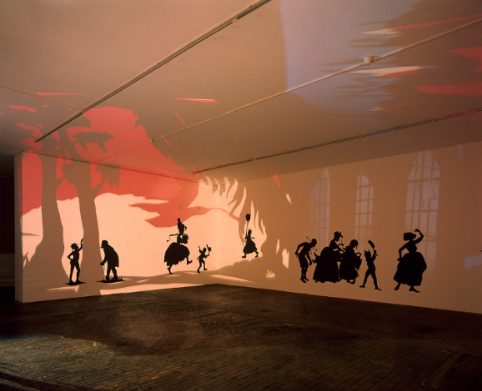
Insurrection! (Our Tools Were Rudimentary, Yet We Pressed On), Kara Walker, 2000, Cut-paper silhouettes and light projections
2026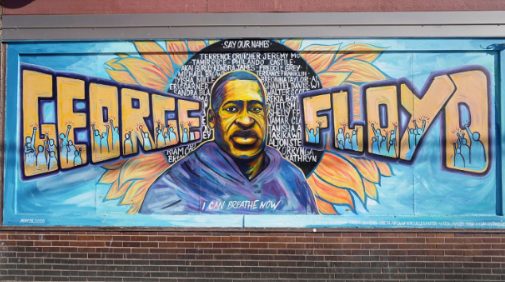
George Floyd Memorial Mural – Cup Foods, Xena Goldman, Cadex Herrera, Greta McLain, 2020, Public mural
2026
Wuppertal Photo Booth (Wuppertal, Germany), JR, 2014, Public photographic installation, 700 portraits
2026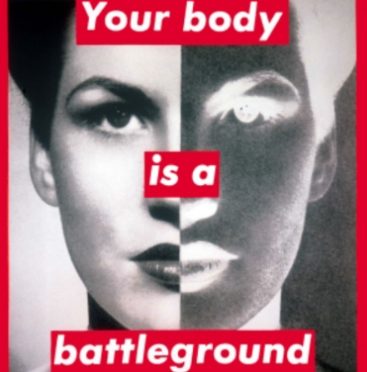
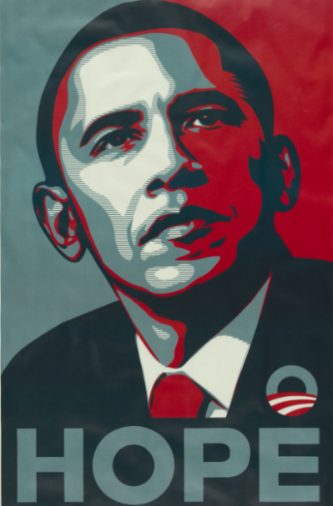
Barack Obama “HOPE” Poster, Shepard Fairey, 2008, Color lithograph on white wove paper 86 x 61 cm (36 x 24 in.)
2026Immersive Experience
Walk through this gallery in 3D
Step inside a virtual gallery space. Walk up to each artwork. See them as they were meant to be seen.
React to this gallery
Guestbook
Sign in to leave a comment.
Loading…
Galerra
Create your own exhibition
Upload your work and we build a walkable 3D show in about a minute. Free to start.