

Who Gets to Define Her?
Artworks
- La Grande Odalisque, Jean-Auguste-Dominique Igrnes, 1814. Oil on canvas (1844) — The focal point of this painting would be the nude woman that is lying across the central part of the painting. The front of her body is facing away from the viewer, and the look on her face is cold and detached. The fabrics she is laying on are very nice looking, and she also has a white cloth on her head. Along with her unrealistic proportions, it makes her appear less like a real individual and more like an ideal image of what a woman should look like. This connects the painting to its meaning because the way her body is emphasized shows how women were often represented based on their appearance rather than their own identity. Since Ingres created this work for Napoleon’s sister and intended it to show an idealized woman in an Eastern setting, the painting reflects the expectations of the time surrounding how women could be represented. This is important to the context of my exhibition, Who Gets to Define Her?, because it represents the beginning of the journey of women being defined and showcased through the view of others and their expectations, to bigger and better ways of defining women.
- Frau (Woman), Birgit Jürgenssen, 1972. Gelatin silver print with applied red ink. (1972) — In this piece of art, Jürgenssen uses four photographs of herself in different poses to spell out the word “FRAU,” which means woman. The repetition of her body across the four sections creates a pattern, while the black and white photographs contrast with the red markings scribbled over top of them. The artist using her own body in this piece of artwork is extremely important. She is using herself to explore what it means to be a woman rather than letting someone else represent her. The red markings also make the word “FRAU” stand out as the rest of the picture is blank and white. This connects to my exhibition because it represents the final stage, where a woman is able to define herself instead of having her identity defined by someone else. Jürgenssen uses her own body and identity to decide how women are represented. This helps conclude the exhibition by showing how women can move beyond the stereotypes and expectations that have traditionally been placed on them and have more control over defining who they are.
- Propped, Jenny Saville, 1992. Oil on canvas. (1992) — In this painting, there is a nude woman sitting on what seems to be a stool, and she is grabbing her legs while her head is tilted backwards. Her large figure takes up most of the canvas, which makes it the focal point. The writing across the image that’s scribbled into the painting says, ““if we continue to speak in this sameness - speak as men have spoken for centuries, we will fail each other.” The writing is important because it talks about how women have been speaking in the same way men have for centuries, which connects to how women have often been represented based on ideas created by men. The artist challenges this by showing a body that does not fit the typical ideal of what a woman's body should look like, and fights back against standards. In 1992 (the year this painting was painted in), it reflects more modern ideas about beauty standards and how women's bodies are judged. This fits into my exhibition because Saville is able to represent a woman's body from her own perspective instead of showing the traditional idealized female nude. Compared to the earlier artworks in the exhibition, this shows more of a shift toward women having control over how their bodies are represented and questioning the standards that have been placed on them.
- Olympia, Édouard Manet, 1863. oil on canvas. (1863) — There is a nude woman laying on a mattress with multiple pieces of white fabric, along with a beige and flowery blanket. She is also facing towards the viewer instead of away, and is looking directly at the viewer. In the background, there is a darker woman in the background, holding a bouquet of flowers. The nude woman’s pale skin contrasts with the darker background and the woman standing behind her, which makes her stand out, making her the focal point. The horizontal bed creates a sense of stability, while her direct gaze creates tension and makes the viewer more aware that they are looking at her naked body. This changes the meaning of the female nude from pleasing to look at to unsettling.Olympia is not there to exist for the viewer’s pleasure, rather her purpose is to challenge the viewer and make them think about the fact that they are looking at a naked woman’s body, and they should feel like they are violating her privacy merely by looking. In 1863, the year this was painted, this work challenged the idealized female nudes that were common in 19th-century French art and caused controversy because of its modern and confrontational representation of a woman. This connects to my exhibition because Olympia represents the early challenge of women being perceived compared to the first painting in this exhibition. While she is still being represented by a male artist rather than a female artist, her direct gaze give her almost a sense of self awareness and control over the viewer.
- Rhythm 0, Marina Abramović, 1974. Performance art. (1974) — In this performance, Abramović stands completely still while 72 objects are placed on a table beside her, allowing the audience to decide how they will interact with her body. The objects range from everyday household items to weapons. The contrast between Abramović’s body and the movement of the audience makes her the focal point, while the empty white space surrounding her draws more attention to what the audience is doing to her. This connects to the meaning of the performance because Abramović intentionally gives up control over her body, allowing the audience to reveal how they behave when they behave when given power over another person. Abramović is a Serbian performance artist known for using her body and physical endurance as part of her artwork. During the time she performed this piece, (1974) performance art became more focused on the body, audience participation, and challenging traditional ideas about what art could be. This connects to my exhibition because it continues the challenge of how women are being perceived. Abramović takes the idea of the previous two art pieces further by physically giving the audience control over her body. In contrast to the prior pieces, Abramović chooses to put herself in this position. This makes the artwork an important step forward through the journey.
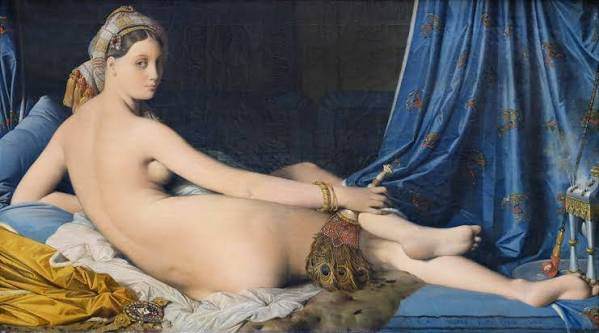
La Grande Odalisque, Jean-Auguste-Dominique Igrnes, 1814. Oil on canvas
1844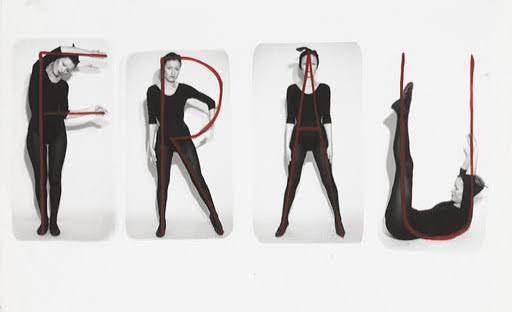
Frau (Woman), Birgit Jürgenssen, 1972. Gelatin silver print with applied red ink.
1972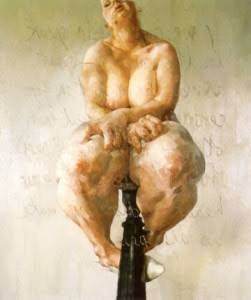
Propped, Jenny Saville, 1992. Oil on canvas.
1992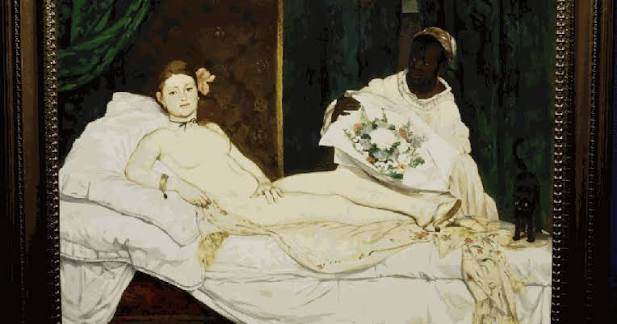
Olympia, Édouard Manet, 1863. oil on canvas.
1863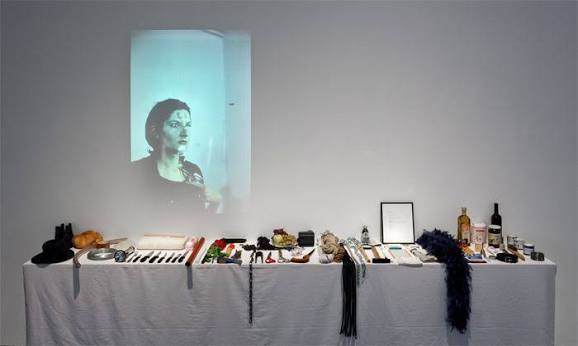
Rhythm 0, Marina Abramović, 1974. Performance art.
1974Immersive Experience
Walk through this gallery in 3D
Step inside a virtual gallery space. Walk up to each artwork. See them as they were meant to be seen.
React to this gallery
Guestbook
Sign in to leave a comment.
Loading…
Galerra
Create your own exhibition
Upload your work and we build a walkable 3D show in about a minute. Free to start.