ruhildeep singh's 3D Art Galleries on Galerra

ruhildeep singh has 1 public gallery with 1 total views on Galerra.

Galleries by ruhildeep singh

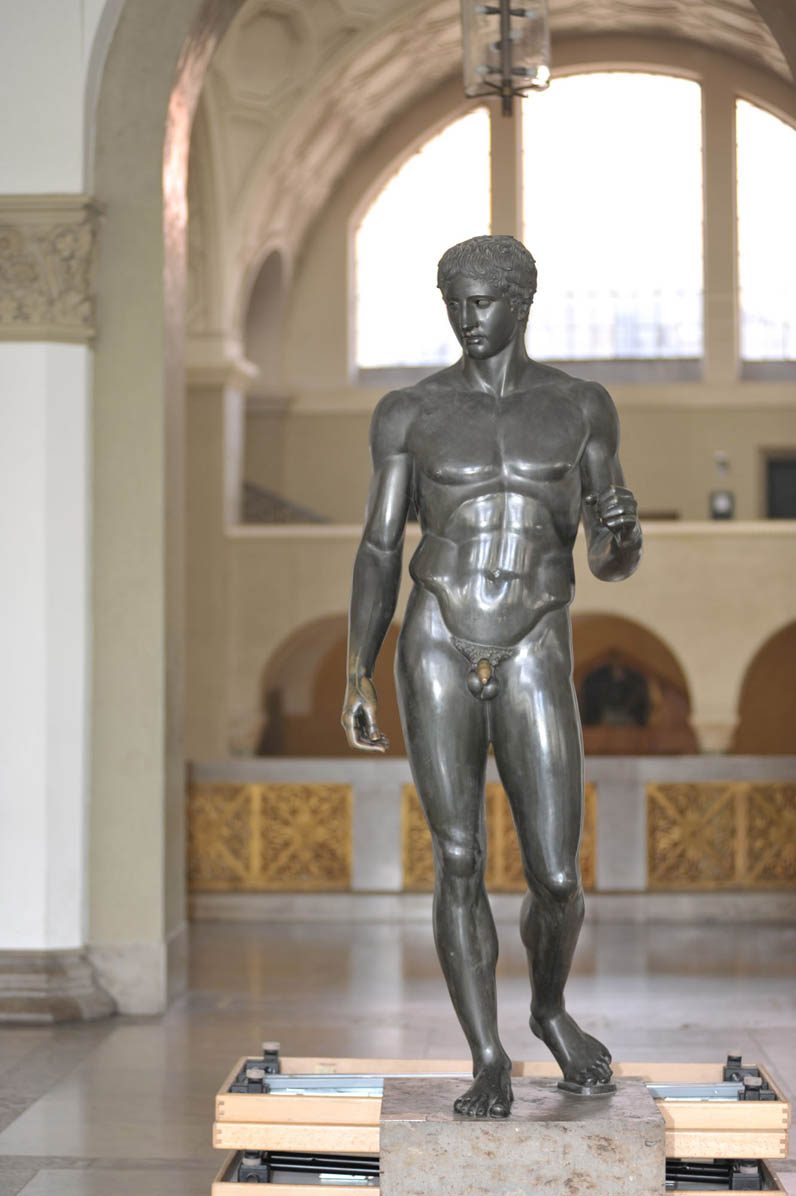
  • From Body to Mind: The Idealized Human Figure — Throughout Greek and Renaissance art, the human figure became one of the primary ways artists expressed cultural values, beliefs, and ideals. This exhibition explores how artists used the idealized body to represent many different forms of the human excellence. While many of these works focus on physical beauty, strength, and proportion, they also reveal changing ideas about what it means to be an ideal human being. Rather than simply depicting real people, these artists created figures that embodied qualities their societies admired and sought to emulate. One theoretical framework that helps explain this process is Aristotle's concept of mimesis. Aristotle argued that art imitates reality, but artists do not merely copy the world around them. Instead, they often create idealized versions of reality that communicate larger truths and values. This idea can be seen throughout Greek and Renaissance art, where artists carefully studied anatomy, movement, proportion, and beauty while presenting figures that appear more perfect than ordinary people. Through mimesis, the human body becomes a vehicle for expressing cultural ideals. The figures selected for this exhibition are not just ordinary representations of humans. Instead, they represent different forms of perfection that each culture valued. Some artwork emphasize the athletic excellence and the physical strength, while other artworks focus on beauty, harmony, wisdom, or intellectual achievement. Although the artworks differ in medium, subject matter, and historical context, they are all connected by their use of the human figure as a symbol of cultural ideals. By examining these artworks together, this exhibition explores how artists used the human body to communicate broader ideas about what humanity should or could aspire to become. This exhibition begins with the artwork Polykleitos' Doryphoros, which establishes the Greek ideal of athletic perfection through balance, symmetry, and proportion. The sculpture presents a model of physical excellence that would influence artists for centuries. Michelangelo's David follows and demonstrates how the Renaissance arts revived classical ideals while also combining them with humanism and the individual achievement. Together, these artworks explore masculine perfection through strength, discipline, and human potential. The Birth of Venus introduces a different form of idealization. Botticelli shifts the focus from athletic power toward beauty, grace, and femininity. While the figure remains idealized, the meaning of perfection expands beyond physical strength. Leonardo da Vinci's Vitruvian Man then transforms the body into an object of scientific observation and mathematical inquiry. Here, perfection is connected to proportion, reason, and universal harmony rather than mythology alone. This exhibition concludes with Raphael's The Schools of Athens. Although the figures remain idealized, they are primarily for their wisdom and intellectual achievement. The focus moves from the perfection of the body to the perfection of the mind. By presenting the works in the sequence, the exhibition traces a progession from physical excellence toward the intellectual excellence. Ultimately, these artworks demonstrates that while definitions of perfections changed between Greek and Renaissance cultures, the idealized human figures remained one of the most powerful ways artists explored what humanity could become. (1 views)
Artist · @ruhildeep singh1 gallery
ruhildeep singh

ruhildeep singh

1
Galleries
1
Total Views
0
Followers
All Works
1 Gallery
From Body to Mind: The Idealized Human Figure
See Artworks

From Body to Mind: The Idealized Human Figure

Throughout Greek and Renaissance art, the human figure became one of the primary ways artists expressed cultural values, beliefs, and ideals. This exhibition explores how artists used the idealized body to represent many different forms of the human excellence. While many of these works focus on physical beauty, strength, and proportion, they also reveal changing ideas about what it means to be an ideal human being. Rather than simply depicting real people, these artists created figures that embodied qualities their societies admired and sought to emulate. One theoretical framework that helps explain this process is Aristotle's concept of mimesis. Aristotle argued that art imitates reality, but artists do not merely copy the world around them. Instead, they often create idealized versions of reality that communicate larger truths and values. This idea can be seen throughout Greek and Renaissance art, where artists carefully studied anatomy, movement, proportion, and beauty while presenting figures that appear more perfect than ordinary people. Through mimesis, the human body becomes a vehicle for expressing cultural ideals. The figures selected for this exhibition are not just ordinary representations of humans. Instead, they represent different forms of perfection that each culture valued. Some artwork emphasize the athletic excellence and the physical strength, while other artworks focus on beauty, harmony, wisdom, or intellectual achievement. Although the artworks differ in medium, subject matter, and historical context, they are all connected by their use of the human figure as a symbol of cultural ideals. By examining these artworks together, this exhibition explores how artists used the human body to communicate broader ideas about what humanity should or could aspire to become. This exhibition begins with the artwork Polykleitos' Doryphoros, which establishes the Greek ideal of athletic perfection through balance, symmetry, and proportion. The sculpture presents a model of physical excellence that would influence artists for centuries. Michelangelo's David follows and demonstrates how the Renaissance arts revived classical ideals while also combining them with humanism and the individual achievement. Together, these artworks explore masculine perfection through strength, discipline, and human potential. The Birth of Venus introduces a different form of idealization. Botticelli shifts the focus from athletic power toward beauty, grace, and femininity. While the figure remains idealized, the meaning of perfection expands beyond physical strength. Leonardo da Vinci's Vitruvian Man then transforms the body into an object of scientific observation and mathematical inquiry. Here, perfection is connected to proportion, reason, and universal harmony rather than mythology alone. This exhibition concludes with Raphael's The Schools of Athens. Although the figures remain idealized, they are primarily for their wisdom and intellectual achievement. The focus moves from the perfection of the body to the perfection of the mind. By presenting the works in the sequence, the exhibition traces a progession from physical excellence toward the intellectual excellence. Ultimately, these artworks demonstrates that while definitions of perfections changed between Greek and Renaissance cultures, the idealized human figures remained one of the most powerful ways artists explored what humanity could become.