
In Defiance of Silence
In Defiance of Silence brings together five different works to recognize and appreciate Black achievement and resilience. In a systemically unfair world where bias is embedded, where throughout history, legislation, photography, and cultural institutions have been used to stereotype, minimize, and sometimes even erase Black achievement, these five Black artists and their artworks act as resilience and record-keeping. I’m targeting Black experiences translated into art, while recognizing how these experiences were collectively overcome, and developing strong representations of determination, resistance, and survival. The cultural philosopher, art critic, and author Stuart Hall wrote an essay named New Ethnicities. In this, he wrote, “The struggle to come into representation was predicated on a critique of the degree of fetishization, objectification and negative figuration which are so much a feature of the representation of the black subject. There was a concern not simply with the absence or marginality of the black experience but with its simplification and its stereotypical character… [This marks] a shift from a struggle over the relations of representation to a politics of representation itself.” Stuart Hall’s quote grounds my concept because it shifts the focus from simply demanding more visibility to reclaiming control over the meaning of that visibility, allowing Black artists to deconstruct stereotypes and archive authentic histories of their survival. By treating representation as a political ground, these artists can use their work to challenge historical erasure and reshape the narrative around Black achievement, transforming their art into a powerful record of collective resilience and triumph. These specific works each have a meaning and purpose; they reveal the truth, and they are not pieces just to be physically appealing to the audience or pleasing to the eye. Each of these works connects to the others in a way that is important to recognize; they connect because they refuse to let a systemically unfair world and society write their history for them. Their order works as a symbol to show a repeating cycle and a general repetition, unfortunately, reflecting the repeating issues I’ve addressed in our world today. The specific order of the artworks helps show this small repetition in a way by making them contrast one another mainly by color, switching from dull to vibrant. I think it’s captivating to the eye, rather than the usual placement of artworks that relies on them flowing with each other as you go along. David Hammons’ America the Beautiful (1968) confronts the contradictions of Black identity and systemic oppression during the Civil Rights era. The piece serves as a critique of America’s unfulfilled ideals and as a resilient assertion of Black presence and survival. Thomas E. Askew’s Four African American women seated on steps of building at Atlanta University, Georgia (1899 or 1900) counters dehumanizing Jim Crow-era stereotypes by photographing Black female university students with elegance and self-assurance, creating a resilient and self-determined record of Black intellect and dignity. Romare Bearden’s The Block (1971) celebrates Harlem’s lively complexity and resilience by documenting its daily rituals and intimate lives. Augusta Savage’s Lift Every Voice and Sing (The Harp) (1939) celebrates generational resilience, spiritual endurance, and collective Black voice against oppression. Bisa Butler’s I Know Why The Caged Bird Sings (2019) transforms Thomas E. Askew’s vintage photograph into a vibrant tribute to education, liberation, and Black female empowerment.
Artworks
- I Know Why The Caged Bird Sings, Bisa Butler, 2019. Cotton, wool, and chiffon, appliquéd and quilted. (2026) — Bisa Butler’s I Know Why The Caged Bird Sings (2019) is a technical and conceptual work within Contemporary African American Art and fiber art. The artist demonstrates formal control by employing highly saturated hues, layering cool blues and purples against the vibrant oranges, pinks, and yellows, to completely reinvent her subjects. This bold manipulation of color, paired with complex floral and geometric textile patterns, introduces a rich texture that clashes against the piece’s flat background, positioning the four seated figures as an unavoidable visual focal point. Structurally, the precise vertical and curved lines of the quilted stitching grant the figures an impressive three-dimensional volume, establishing a harmonious composition through the rhythm and repetition. This style serves its contemporary, post-Black Lives Matter context; by transforming a flat, monochromatic archival photograph into a monumental Afrofuturist portrait, Bisa Butler achieves profound philosophical and conceptual weight. The piece fulfills its creative aim with outstanding sophistication, communicating an enduring message of Black visibility, reclaimed historical narratives, and the radiant complexity of Black womanhood. By translating a monochromatic archival photograph into a vibrant, textile masterpiece, Butler’s quilt functions as a potent form of record-keeping that actively counters historical omission. This radiant portrayal transforms the forgotten scholars into a monumental symbol of determination, ensuring their intellectual legacy and collective survival are permanently recognized against a setting of institutional exclusion.
- Four African American women seated on steps of building at Atlanta University, Georgia, Thomas E. Askew, 1899 or 1900, matte collodion silver print. (2026) — Thomas E. Askew’s Four African American women seated on steps of building at Atlanta University, Georgia (1899 or 1900) is a highly sophisticated work of early social documentary photography. The artist expertly balances his formal elements, utilizing a rigid geometric grid and architectural lines to structure the compositional space. This type of calculated arrangement can create a harmonious formal relationship where the horizontal lines of the stone steps and the vertical masonry frame the four seated figures, which, in return, makes them appear structurally inseparable from the institution of higher learning. By carefully using grayscale values, the sharp contrast between the stark white and deep black Victorian fabrics effortlessly establishes a clear focal point on the women's poised expressions. This precision serves its historical context appropriately; commissioned by W.E.B. Du Bois for the 1900 Paris Exposition, the photograph deliberately weaponizes elite, classical aesthetics to dismantle the era’s dehumanizing Jim Crow caricatures. This piece achieves conceptual depth, connecting its subject matter with an unassailable message of Black intellect and human dignity. Thomas E. Askew's execution proves that careful formal design can transform a regional portrait into a monumental, lasting archive of social resistance. By archiving Black intellectual achievement against a backdrop of systemic erasure, Askew’s photograph works as a powerful record of collective survival. This elegant framing transforms the portrait into a monument of determination that directly refutes racial bias.
- Lift Every Voice and Sing (The Harp), Augusta Savage, 1939. Metal sculpture. (2026) — Augusta Savage’s Lift Every Voice and Sing (The Harp) (1939) is a work of Social Realism that synthesizes formal execution with a deeply layered concept. The artist demonstrates exceptional technical skill by including a highly structured, rhythmic repetition, arranging the figures of singing children in graduating heights to construct the vertical strings of a harp. This relationship between the human anatomy and musical architecture smoothly guides the viewer's attention upward, creating a sense of negative space and soaring movement. Strategically anchored by the heavy, protective volume of the "hand of God" acting as an actual pedestal, the composition achieves a perfect structural balance. This design certainly serves its historical context; it translates James Weldon Johnson’s Black National Anthem into a tangible monument of the Harlem Renaissance. The heavy contrast between the stylized lines of the instrument's frame and the deeply expressive, textured faces of the youth can emphasize their humanity and determination. Augusta Savage’s detailed and careful alignment of form and meaning fulfills its artistic purpose, which communicates the emotional message of Black resilience, faith, and collective triumph over systemic oppression. By materializing the Black National Anthem into a permanent monument, Savage’s sculpture operates as a strong method of record-keeping that preserves African American cultural triumphs against systemic erasure. This fusion of human form and musical architecture stands as an enduring testament to collective survival, celebrating the determination of a generation that refused to be silenced by institutional bias.
- America the Beautiful, David Hammons, 1968. Lithograph and body print. (2026) — David Hammons’s America the Beautiful (1968) reveals a deep and meaningful concept that balances its formal elements to fulfill its artistic intent. By synthesizing a literal body print with lithography, he creates a powerful compositional tension where the fluid, organic values of the human silhouette directly contrast against the rigid, geometric lines of the American flag. This relationship operates as a formal framework for its historical context, translating the sociopolitical friction of the Civil Rights era into an impactful narrative on paper. The artistic choice to use the indexical trace of his own skin, instead of a detached paintbrush, creatively introduces a raw presence that grounds the piece’s commentary on social invisibility and institutional erasure. While the loud, saturated colors of the flag could easily overwhelm the composition, Hammons handles this value contrast to establish a clear focal point, turning what could be a simple graphic into a heavy critique of national standards. The piece works as a monumental contribution to the Black Arts Movement, demonstrating an exceptional alignment of innovative technique, historical urgency, and conceptual depth to communicate its message. By transforming his own physical presence into an unwashable archive of the Black experience, Hammons uses this visual tension to turn a symbol of national exclusion into a site of profound resistance and survival. Ultimately, the artwork acts as a commanding form of record-keeping that refuses erasure, demanding that its audience recognize both the systemic struggles and the enduring, unbreakable determination of Black achievement.
- The Block, Romare Bearden, 1971. Cut and torn, pasted, printed, colored and painted papers, metallic papers, graphite, porous point pen, watercolor, gouache, and ink on Masonite. (2026) — Romare Bearden’s The Block (1971) is a work of Modernist Collage and Social Realism that completely aligns its intricate form with its conceptual intent. The creator handles the massive six-panel composition with technical skill, using a rigid architectural grid of windows and tenements to pull out a highly dynamic narrative space. Within this structural framework, the formal relationship between the muted buildings and the very vibrant elements of saturated blues, oranges, and greens creates multiple, shifting focal points that prevent the work from feeling dull. This technique of layering cut paper, fabric, and photographs definitely mirrors its historical context, translating the complex, syncopated rhythms of jazz and Harlem street life into a visual language. Additionally, the inclusion of cross-sectioned rooms and faceless, soaring angels merges the public, private, and spiritual dimensions of the community. Romare Bearden achieves conceptual depth by refusing to depict urban life through a lens of isolation or despair; instead, his sophisticated execution loudly communicates a message of Black cultural vitality and collective resilience. By documenting the complex layers of daily, spiritual, and institutional life on a single city block, Bearden’s collage serves as an influential act of record-keeping that actively resists cultural erasure. This vibrant depiction transforms Harlem into a monument of collective survival, proving that Black communities continuously find ways to thrive and maintain their dignity despite systemic disadvantages.
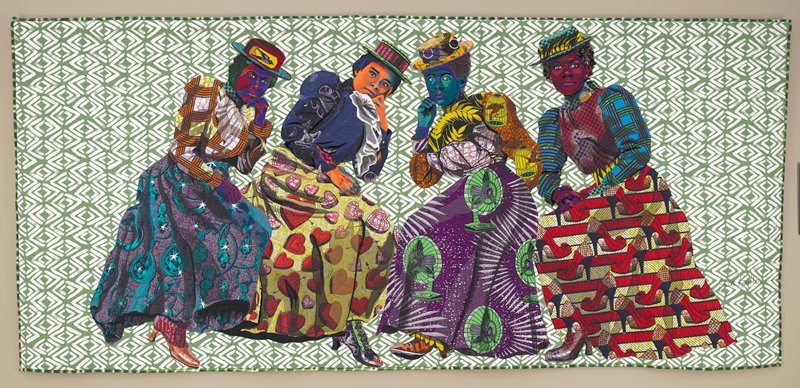
I Know Why The Caged Bird Sings, Bisa Butler, 2019. Cotton, wool, and chiffon, appliquéd and quilted.
2026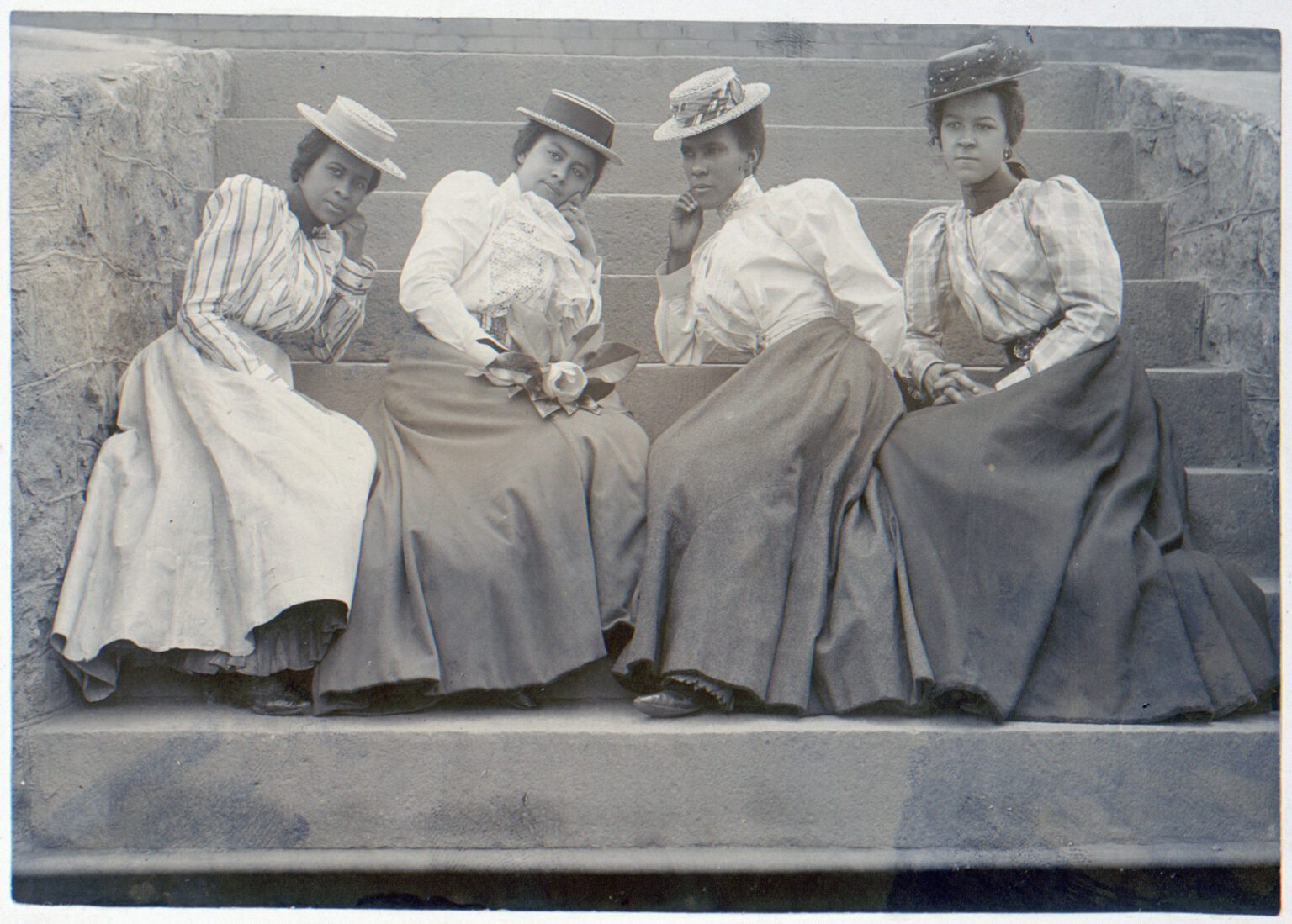
Four African American women seated on steps of building at Atlanta University, Georgia, Thomas E. Askew, 1899 or 1900, matte collodion silver print.
2026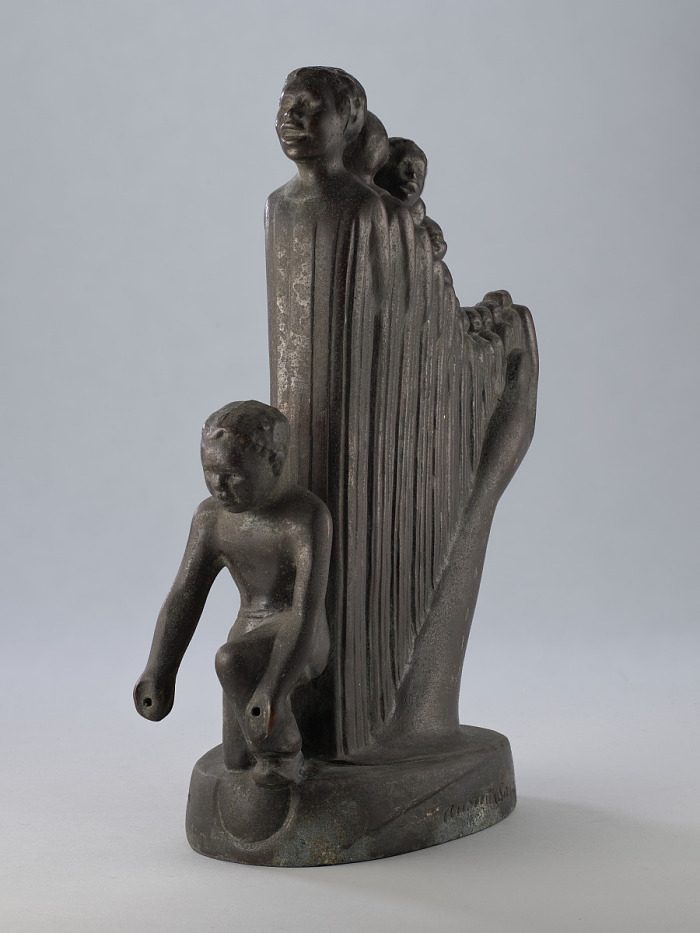
Lift Every Voice and Sing (The Harp), Augusta Savage, 1939. Metal sculpture.
2026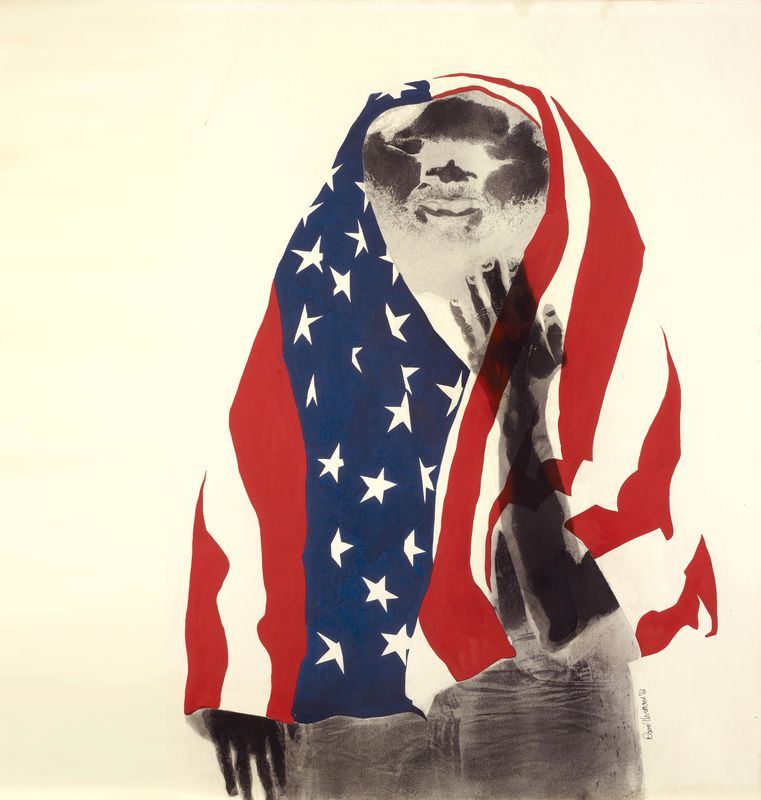
America the Beautiful, David Hammons, 1968. Lithograph and body print.
2026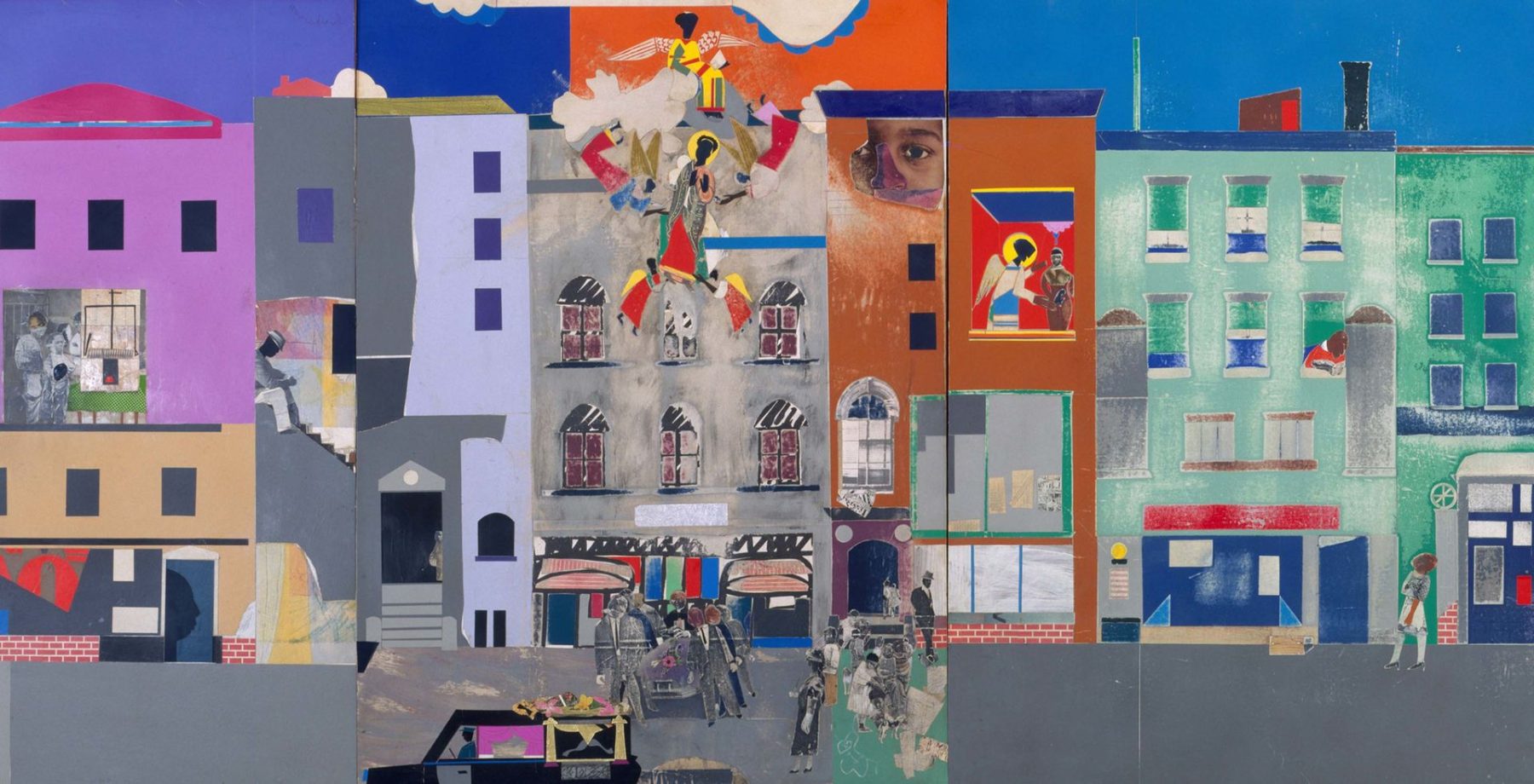
The Block, Romare Bearden, 1971. Cut and torn, pasted, printed, colored and painted papers, metallic papers, graphite, porous point pen, watercolor, gouache, and ink on Masonite.
2026Immersive Experience
Walk through this gallery in 3D
Step inside a virtual gallery space. Walk up to each artwork. See them as they were meant to be seen.
React to this gallery
Guestbook
Sign in to leave a comment.
Loading…
Galerra
Create your own exhibition
Upload your work and we build a walkable 3D show in about a minute. Free to start.